The most interesting homes right now aren’t the ones shouting “I’m smart!” from every corner—they’re the ones that feel effortless. Lights shift with your mood, sound follows you from room to room, and the tech almost disappears into the background. This is the new wave of ambient living: home tech that shapes your day without turning your space into a gadget showroom.
Below are five future-forward ideas that feel less like “installing devices” and more like curating a lifestyle.
1. Mood‑Responsive Lighting That Knows Your Day Better Than You Do
Think beyond “smart bulbs you control with your phone.” The new sweet spot is layered, automated lighting that quietly tracks your day and energy levels.
Start with circadian-friendly lighting in your main spaces. These systems slowly shift color temperature—from cool, bright light in the morning to warm, cozy tones in the evening—mirroring natural daylight and helping support your sleep/wake rhythm. Pair this with motion sensors in transition zones (hallways, entry, closets) so light appears exactly when you need it, hands-free.
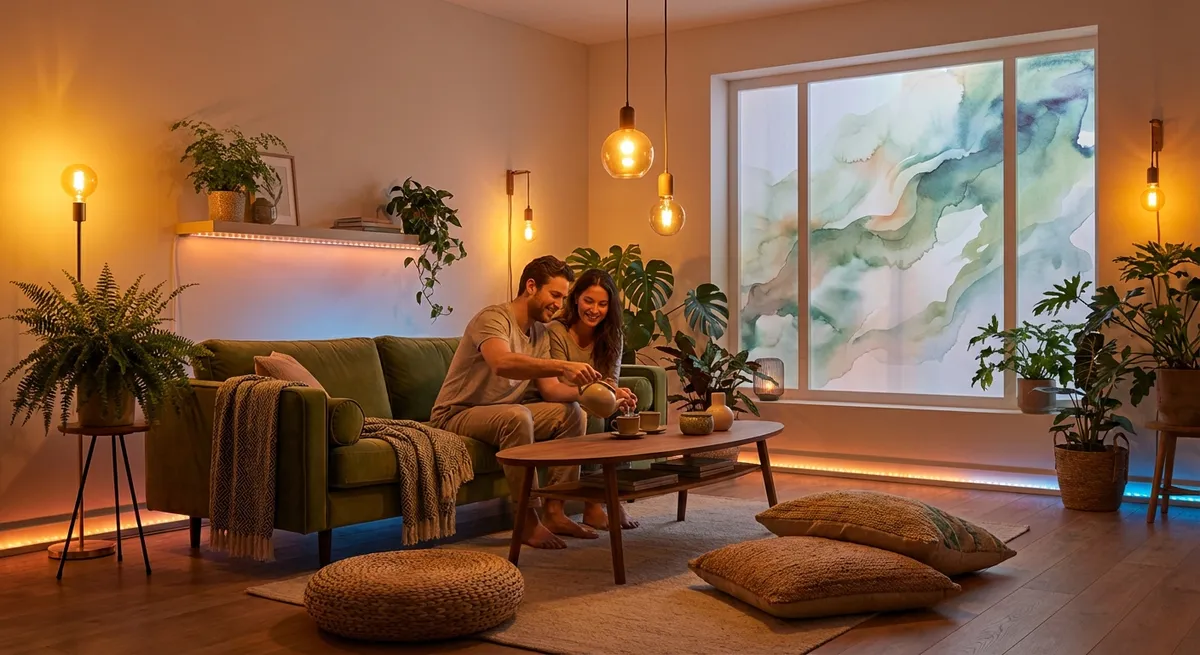
For living rooms and bedrooms, pre-set curated “lighting scenes”: a low, golden wash for wind-down evenings, a clean, bright setup for tidying or working from the sofa, and a dim, cinematic look for movie nights. Once dialed in, trigger them with a single voice command or at scheduled times.
The goal: lighting that subtly nudges your body into the right gear—alert, focused, or relaxed—without you constantly opening an app.
2. Soundscapes That Personalize Every Room, Not Just the Living Area
Whole-home audio used to mean big speakers and visible hardware. Now, it’s about invisible, intuitive sound that layers over your day like a soundtrack.
In-ceiling or low-profile speakers can be zoned by room, so your partner can listen to a podcast in the kitchen while you play ambient piano in the bedroom. Add smart speakers in “transit” areas (entryway, hallway, bathroom) so music or news naturally follows you as you move—no more competing audio from room to room.
For modern homeowners, the real upgrade is sound with intention:
- Calm, noise-masking playlists in the home office during work hours
- Nature soundscapes in the bathroom to turn a quick shower into a mini reset
- “Welcome home” audio cues—soft music and a quick news recap—as you walk in the door
Tie it all together with voice control and simple routines. Instead of hunting for remotes, you’re saying “Goodnight” once and the house lowers volume, pauses playback, and shifts into quiet mode.
3. Kitchen Tech That Streamlines Life Without Taking Over the Counter
The smartest kitchens now are less about flashy appliances and more about flow. Tech should reduce friction, not add clutter.
Hidden power strips in drawers or under cabinets keep charging and small devices off the countertop. Smart plugs bring older appliances—like kettles or slow cookers—into your routine: start heating water from bed, or have a slow-cooked meal ready as you walk in.
Connected fridges and smart displays can help with inventory and recipes, but the key is not to let them boss you around. Use them selectively:
- A shared digital grocery list that updates automatically as items run low
- Timers you can set with your voice while your hands are messy
- Step-by-step recipe displays you can glance at from across the room
Consider low-profile tech like induction cooktops for faster, safer cooking, and water filtration systems with usage tracking so you can see exactly how much water you’re consuming. It’s about a kitchen that feels like a quiet co-chef, not a control center.
4. Micro-Wellness Zones Powered by Subtle Tech
Wellness at home doesn’t have to mean building a full gym or spa. The modern move is micro-zones—small, tech-assisted pockets of calm woven into your existing layout.
A bedroom corner can become a wind-down zone with:
- A smart diffuser that schedules calming scents at night
- A small, warm-glow lamp synced with your bedtime routine
- A guided meditation or sleep story triggered by a simple voice cue
A bathroom can double as a recovery space with app-controlled heated floors, smart mirrors with dimmable lighting, or a shower head set to your ideal temperature profile. In living rooms, smart air purifiers and indoor air-quality sensors can quietly optimize what you’re breathing while you relax or host.
The mindset shift: less “biohacking lab,” more “soft wellness upgrades” that plug into things you already do—shower, rest, read, stretch—adding a layer of comfort and intention.
5. Quiet Security That Protects Without Feeling Paranoid
For a lot of homeowners, home security used to mean bulky cameras and constant alerts. The next wave is calm, discreet, and smarter about what actually matters.
Video doorbells and outdoor cameras are standard now, but the real quality-of-life gain comes from thoughtful settings:
- Smart notifications that only ping you when a person is detected, not every time a car passes
- Package detection so you know when deliveries arrive without obsessively checking
- Shared access for guests or cleaners via temporary codes instead of physical keys
Inside the home, smart locks and contact sensors can give you peace of mind without turning your place into a fortress. Think: a gentle alert if a window is left open before bedtime, or an auto-lock routine at night that engages without you needing to remember.
The best security setups blend safety with ease—you feel protected, but your home still feels like a sanctuary, not a server room.
Conclusion
Home tech doesn’t have to be loud, complicated, or “look at me” to be impactful. The most livable setups are the ones where your lighting nudges your mood in the right direction, sound moves with you, the kitchen quietly has your back, wellness is woven into daily rituals, and security feels calm and under control.
When you treat tech as part of your home’s atmosphere—not the main event—you end up with a space that feels more like you, just a little more tuned in, responsive, and future-ready.
Sources
- U.S. Department of Energy – Lighting Choices to Save You Money - Overview of efficient lighting options and how they affect comfort and energy use
- Harvard Medical School – Blue light has a dark side - Explains how light exposure impacts circadian rhythm and sleep, relevant to smart lighting choices
- Mayo Clinic – Home workouts - Background on building simple wellness routines at home, complementary to tech-enabled wellness zones
- National Institute of Standards and Technology (NIST) – Smart Home Cybersecurity - Guidance on securing smart home devices and networks
- Consumer Reports – How to Boost Your Home WiFi - Discusses network reliability, essential for stable performance of modern home tech
Key Takeaway
The most important thing to remember from this article is that this information can change how you think about Home Tech.