Minimalism had its moment. Now it’s all about spaces that feel intentional, warm, and quietly impressive—like your home’s been “edited,” not stripped. Think: fewer things, better choices, and rooms that support how you actually live, not how a catalog thinks you should.
For modern homeowners, design isn’t just about how a space looks on Instagram; it’s about how it works at 7 a.m. on a Tuesday. These five innovative home ideas lean into comfort, flexibility, and low-key luxury—without feeling try-hard.
1. The “Second Life” Room: Designing for How You Really Live
Most homes have at least one underused room: the formal dining space, the extra bedroom, the catch‑all office. Instead of letting it become storage with a better view, design it with a “second life” in mind.
Start by listing what your life actually needs more of—movement, deep work, creative time, or connection. Then give your room a dual identity: dining room + library, office + yoga studio, guest room + content corner. Anchor each function with one strong piece (a generous table, a wall of shelving, a sleeper sofa) and let everything else flex around it.
Use lighting to separate the room’s “modes.” Bright, even light for productivity; dimmed, warmer light for relaxing or hosting. Smart bulbs or smart switches make it easy to flip the vibe with one tap instead of wrestling multiple lamps.
Suddenly, that forgotten room becomes the most useful square footage in your home—and it feels less like clutter control and more like lifestyle design.
2. Texture-First Styling: Making Spaces Feel Expensive Without Going Maximal
If color is the first thing people notice, texture is what makes them stay. A texture‑first approach is a subtle way to add depth and luxury without overfilling your space or blowing your budget.
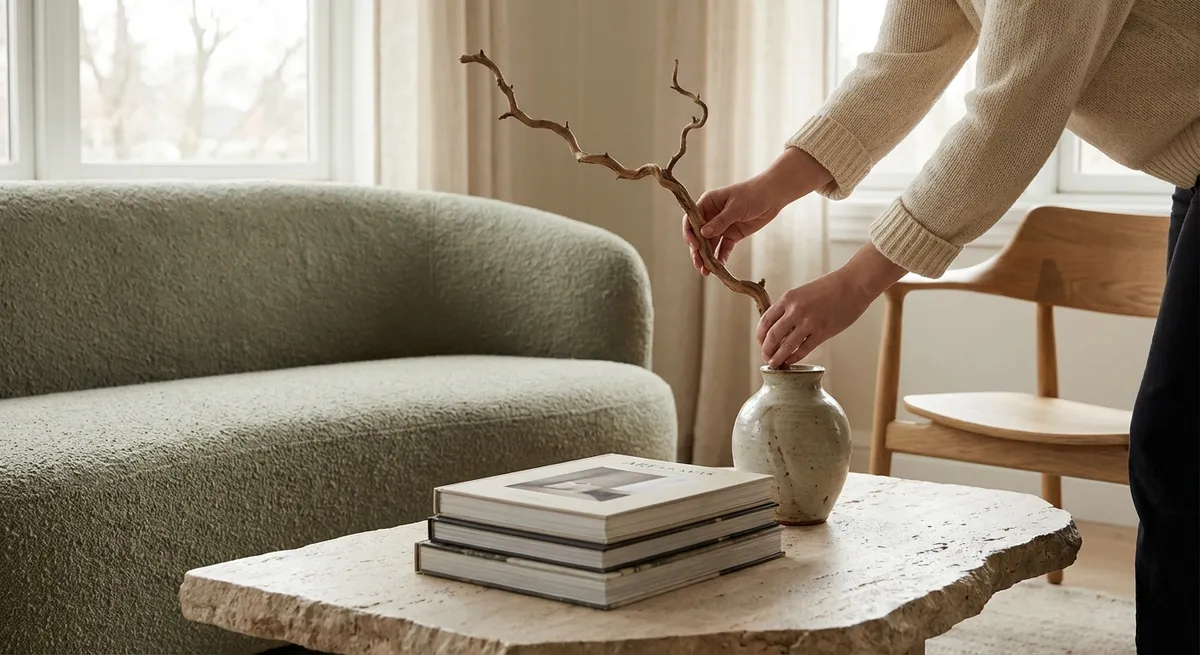
Start by choosing a tight, neutral palette—think three to four shades of the same color family (warm whites, stone greys, or soft browns). Then layer contrasting textures inside that palette: boucle against smooth leather, raw wood beside polished metal, matte paint next to glossy tile.
For living rooms, swap a busy gallery wall for one large artwork and let the surrounding materials do the talking: a chunky knit throw, linen curtains that puddle slightly on the floor, a textured jute or wool rug with a visible weave. In bedrooms, prioritize tactile comfort—crisp cotton or percale sheets, a heavier woven blanket, and a headboard in a tactile fabric like velvet, linen, or suede.
This approach instantly makes even a simple space feel thought‑through and quietly elevated—like a boutique hotel, but designed for real life.
3. Hidden Utility, Visible Style: Making Storage Part of the Aesthetic
Modern homes do double (and triple) duty—office, gym, studio, classroom—which means storage can’t just be functional; it has to look good while working hard.
Instead of defaulting to generic cabinets, treat storage as a design feature. Open shelving mixed with closed doors keeps visual noise down while still letting you display your favorite pieces. Use attractive containers—ceramic jars, woven baskets, lidded boxes—to hide the “ugly” essentials like remotes, chargers, and random cables.
In living spaces, opt for coffee tables with hidden compartments, ottomans with storage inside, or benches with lift‑up lids. In small entryways, a slim console paired with wall‑mounted hooks and a closed shoe cabinet can keep things visually clean while still landing all your daily essentials.
The goal: a home that looks calm at first glance, with everyday life quietly tucked behind beautiful surfaces. When storage feels intentional, staying organized stops being a constant battle.
4. Sensory Zoning: Designing by How You Want a Room to Feel
Instead of asking, “What style do I want?” ask, “How do I want to feel here?” Energized? Grounded? Cocooned? Designing for mood first leads to spaces that support you instead of just impressing guests.
For focused work zones, think cooler color temperatures, straight lines, and minimal visual distractions. Position your desk near natural light if possible, and keep your background clean for video calls with one or two sculptural pieces that feel like you.
For wind‑down areas—like bedrooms, reading corners, or lounges—lean into softer edges, rounded furniture, and warmer lighting. Swap bright overhead lights for wall sconces, floor lamps, or warm LED strips hidden behind headboards or shelving. Add scent strategically: a calming diffuser near the bed, a brighter citrus or herbal candle in the kitchen or breakfast nook.
Even if you live in a studio, you can “zone” with small moves: a rug defining a lounge space, a floor lamp marking your reading corner, or a folding screen that separates sleep from screen time.
Mood-driven spaces are easier to maintain because they’re built around how you naturally use them, not just what looks good in a photo.
5. Statement Function: One Bold Piece That Does the Heavy Lifting
Instead of filling your home with lots of small, forgettable items, choose one or two statement pieces per room that carry both style and function.
In the living room, this might be a sofa with a strong shape in a versatile, hardworking fabric, or a sculptural armchair that instantly anchors the space. In the dining area, a generous table with a simple, strong silhouette can outlast multiple trend cycles—and instantly makes the room feel intentional, even if the chairs and decor are minimal.
In smaller spaces, a standout pendant light, a dramatic floor lamp, or a striking mirror can play the lead role, reflecting light and visually expanding the room. In the bedroom, a bold headboard or a single oversized piece of art above the bed can shift the entire energy without crowding the space.
Build the rest of the room around that statement: quieter textiles, complementary shapes, and just a few styled objects. The result is a home that feels designed, not decorated—and that kind of restraint reads as modern and elevated.
Conclusion
Today’s most interesting interiors aren’t about perfection; they’re about intention. Rooms that serve multiple roles without feeling chaotic. Storage that works overtime without shouting. Textures and moods that make you want to stay home a little longer.
By editing instead of overfilling, designing for how you actually live, and letting a few strong choices lead the way, you create a home that feels calm, current, and deeply personal—no major renovation required.
Sources
- Harvard Joint Center for Housing Studies – Remodeling Trends – Insights into how homeowners are rethinking spaces and functionality
- American Society of Interior Designers (ASID) – Industry Reports – Research on current interior design and lifestyle-led design trends
- U.S. Department of Energy – Lighting Choices to Save Money & Energy – Useful guidance on lighting types and how they affect spaces and mood
- IKEA Life at Home Report – Global research on how people actually use and feel about their homes
- The New York Times – Interior Design Coverage – Articles exploring contemporary design approaches, materials, and lifestyle-focused interiors
Key Takeaway
The most important thing to remember from this article is that this information can change how you think about Interior Design.