Sustainable living doesn’t have to look like a cabin in the woods or an all‑beige, zero-waste fantasy. For modern homeowners, it’s about quiet upgrades that feel stylish, work with your routines, and actually make your place more comfortable. Think: less lecture, more lifestyle.
Below are five innovative, aesthetic-first ideas that fold sustainability into your home in ways you’ll want to show off on your feed—without feeling like you’ve signed up for a part-time eco degree.
1. Material Swap: Curated Pieces With a Lower Footprint
Instead of buying “eco” as a separate category, start treating sustainability like part of your design brief. When you’re choosing furniture or finishes, focus on three things: material, lifespan, and story.
Look for pieces made from FSC-certified wood, recycled metals, or natural fibers like linen, wool, or jute instead of synthetics that shed microplastics. Many contemporary brands now highlight their material sourcing and traceability right on the product page—use that as your filter, not just color and size. Vintage and pre-loved furniture is another quiet power move: it bypasses manufacturing emissions, usually comes with better craftsmanship, and gives your home character that “fast furniture” can’t touch.
When it comes to big-ticket items—sofas, dining tables, beds—pick designs you can see yourself loving for a decade, not just a season. Versatile neutrals with interesting texture, modular designs that can be reconfigured, and pieces with replaceable covers or parts all extend the life of what you own. The goal isn’t a perfect eco aesthetic; it’s a home that feels layered, intentional, and noticeably less disposable.
2. The New Kitchen Rituals: Low-Waste, High-Style
The kitchen is where sustainable living actually becomes a habit, not a hashtag. Instead of trying to overhaul everything at once, build in tiny, design-forward upgrades that you’ll enjoy using daily.
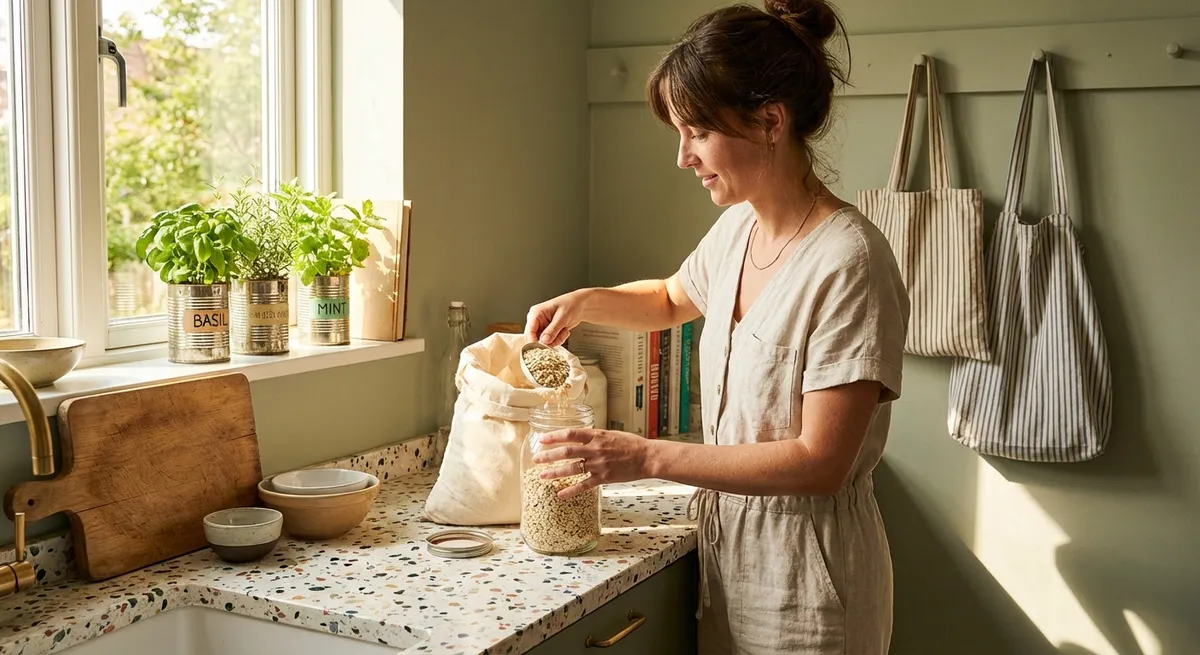
Start with your “stations.” A refill corner with glass jars, labeled canisters, and a simple funnel turns bulk-buying into a mini ritual that looks great on the counter. A countertop compost crock in a material you love—stoneware, matte steel, or enamel—makes food-scrap collecting feel less like a chore and more like part of cooking. Pair that with a compact under-sink or outdoor compost system if your city supports it, or a community drop-off if it doesn’t.
Upgrade disposables slowly: a set of beautiful cloth napkins, washable paper towels, and sleek glass or stainless containers for leftovers feel more luxe than plastic cling wrap ever has. If you’re renovating, induction cooktops are becoming the modern standard—faster, precise, easier to clean, and significantly more energy-efficient than traditional electric, with health benefits compared to gas. Even if a remodel isn’t on the horizon, swapping to energy-efficient appliances when old ones retire and using your dishwasher on eco modes can quietly slash your everyday impact.
3. Bio-Positive Interiors: Designing With Nature, Not Just Plants
Houseplants are great, but the next wave of sustainable interiors goes deeper than a fiddle-leaf fig in the corner. It’s about designing your space to work with natural systems—light, air, temperature—so your home feels better while your energy use drops.
Start with daylight. Rearranging furniture to maximize natural light in work and lounge zones can reduce the need for overhead lighting and improve mood and focus. Sheer curtains or layered window treatments let you control glare without shutting out the sun entirely. In hotter climates, exterior shading—awnings, exterior blinds, or even strategic planting—can cool your home naturally and reduce AC demand.
For air quality, think beyond the diffuser. Low-VOC paints, natural-fiber rugs, and solid wood over particleboard help cut indoor pollutants. Cross-ventilation—opening windows on opposite sides of your home when the weather allows—can refresh your air quickly without running fans all day. If your budget allows, a high-quality air purifier in high-traffic rooms is an investment in both health and comfort. Add thoughtfully chosen plants like snake plant, pothos, or rubber tree mainly for their psychological and aesthetic benefits: greenery makes spaces feel calmer, more grounded, and less “manufactured,” which is its own kind of sustainable.
4. Water Smarts: Invisible Upgrades With Real Impact
Water efficiency is one of those quiet sustainability wins that doesn’t have to mess with your aesthetic. Done right, it just makes your home feel more dialed-in—and can free up budget for the fun stuff.
Modern low-flow showerheads and faucets no longer feel like a trickle. Many contemporary designs maintain water pressure while cutting use significantly, and they tend to look sleeker than older fixtures. If you’re updating a bathroom or kitchen, check for WaterSense or similar certifications alongside style and finish. Pair that with a dual-flush or high-efficiency toilet and you’ve just drastically lowered your daily water use without changing your routines.
In climates where it makes sense, rainwater collection or simple rain barrels can take care of outdoor watering needs without tapping your main supply. For gardens or balconies, drip irrigation and moisture sensors help avoid overwatering while keeping your plants thriving. Even small habits—like washing full loads of laundry on cold or fixing that “not a big deal” leak—add up. The modern luxury here isn’t abundance for the sake of it; it’s systems that are thoughtfully tuned, so nothing is wasted.
5. Circular Mindset: Designing a Home That Can Evolve
The most sustainable homes aren’t the ones frozen in a single perfect moment—they’re the ones designed to adapt. A circular mindset means asking, “What happens to this later?” and “How can this flex as my life changes?”
Choose pieces that can move with you or change functions: a bench that can live at the dining table, in the entryway, or at the foot of a bed; side tables that can act as nightstands; stackable or nesting pieces that work in larger or smaller spaces. This flexibility means you’re less likely to toss things when your life shifts—new job, new city, new layout. Look for furniture built with mechanical fasteners (screws, bolts) instead of heavy glues, so items can be repaired or disassembled for recycling instead of heading straight to landfill.
Get comfortable with “re-homing” as part of your design cycle. Local buy-sell groups, high-quality consignment, and neighborhood “free” forums keep items in circulation and make it easier for you to edit your home without guilt. When you do buy, favor brands that offer repair programs, take-back schemes, or published details on how their products can be recycled. Your home becomes less of a final destination for stuff, and more of a stylish, ever-evolving stop in a longer, more thoughtful lifecycle.
Conclusion
Sustainable living at home isn’t about perfection or performing your values online—it’s about creating a space that feels good to live in, runs smarter in the background, and quietly lowers your impact with every day you’re there.
Start with one or two ideas that feel exciting, not overwhelming: maybe it’s finally upgrading to that low-waste kitchen setup, or rethinking your next furniture purchase through a materials lens. Over time, these small, well-designed shifts stack up, reshaping your home into a place that reflects not just your taste, but the future you actually want to live in.
Sources
- U.S. Environmental Protection Agency – WaterSense Program – Details on water-efficient fixtures, labeling, and potential household water savings
- U.S. Department of Energy – Energy Saver – Guidance on efficient appliances, induction cooking, and home energy use
- Forest Stewardship Council (FSC) – Information on responsibly sourced wood and why FSC certification matters for furniture and building materials
- Harvard T.H. Chan School of Public Health – The Impact of VOCs on Indoor Air Quality – Overview of volatile organic compounds in home materials and their health implications
- U.S. Environmental Protection Agency – Sustainable Management of Materials – Insights into circular economy concepts and strategies for extending product life and reducing waste
Key Takeaway
The most important thing to remember from this article is that this information can change how you think about Sustainable Living.