Your home doesn’t have to look like a showroom or a set from a design show to feel current. The most interesting spaces in 2026 are lived-in, layered, and quietly clever—designed to flex with your lifestyle instead of locking you into one aesthetic. Think less “perfect reveal,” more “edit-ready”: interiors that can pivot with you as your life, taste, and tech change.
This isn’t about chasing trends; it’s about setting up your space so it can evolve—without a full reno every two years. Here are five innovative home-living ideas modern homeowners are leaning into right now.
1. Adaptive Rooms: Spaces That Change With Your Week
The old “formal living room” is officially retired. Today’s interiors are built around how you actually live day-to-day—and the best rooms now are multi-hyphenates.
Design with modes in mind: work mode, hosting mode, solo-reset mode. A slim console can be a desk by day and a bar or serving station by night. Nesting tables let you pull out surfaces when you’re working from the sofa, then tuck them away for yoga, movie nights, or kids’ playtime.
Look for pieces with a small footprint but big flexibility: ottomans with storage that double as coffee tables, benches that slide under dining tables, or sideboards that hide tech gear and office clutter. Use plug-in sconces and floor lamps instead of committing to hardwired layouts, so your lighting can shift as furniture does.
The mindset shift: stop designing “rooms,” start designing “roles.” When each space can take on more than one role, your home feels bigger, smarter, and a lot more liveable—without adding a single square foot.
2. Material Mixology: Pairing High-Contrast Textures, Not Just Colors
Color gets all the attention, but texture is what makes a room feel expensive, calm, or cozy on arrival. The most modern spaces right now lean into high-contrast materials rather than just bold paint colors.
Think: polished stone next to raw linen, ribbed glass with matte metal, boucle against sleek leather, smooth plaster beside open-grain wood. This mix keeps neutral palettes from feeling flat and gives colorful spaces more depth and intention.
Start small: swap in a fluted side table next to a simple sofa, a microcement-style sideboard with woven baskets, or clay vases on a glossy lacquer tray. In the kitchen, a honed countertop against a textured tile backsplash instantly upgrades the entire room.
If you’re renovating, consider finishes that age gracefully: real wood that can be refinished, natural stone that develops patina, limewash or mineral paints that feel softly imperfect. These choices don’t just look good in photos—they look better the longer you live with them.
Texture-first decorating means your home still feels rich and layered even when the color trends inevitably change.
3. Display With Intention: Styling Shelves Like a Gallery, Not Storage
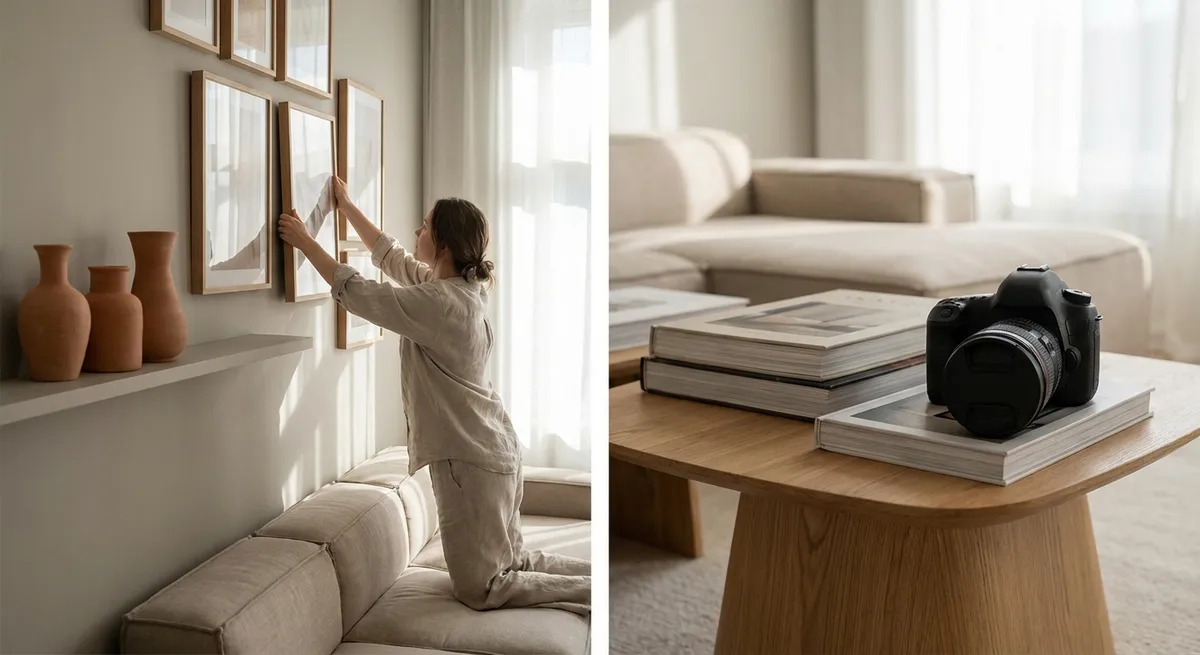
Open shelving and built-ins are no longer just for books and random decor—they’re becoming visual storytelling moments in modern homes. The difference between clutter and curation is intention.
Think in “mini stories” across each shelf: a stack of books, a sculptural object, something organic (like a branch, coral, or stone), and something personal (a small framed photo, travel find, or inherited piece). Repeating these categories in different combinations keeps the whole wall feeling cohesive without being too matchy.
Play with negative space. Every shelf doesn’t need to be full; leaving intentional gaps gives your eye room to rest and makes each piece feel more special. Vary heights and shapes—tall vases beside low bowls, vertical books anchored by a horizontal stack.
Lighting is your secret weapon. A slim picture light over a shelf, LED strips tucked under a built-in, or a single spotlight on a favorite object can turn everyday items into design moments that feel gallery-level without being precious.
The goal isn’t perfection; it’s editability. Curated shelves are easy to refresh seasonally or whenever you want your home to feel new—without buying an entirely new set of decor.
4. Mood-Zoned Lighting: Designing the Vibe, Not Just the Brightness
Overhead lighting alone is one of the fastest ways to make a space feel harsh and dated. Current interiors are all about layered lighting—designed around moods, not just tasks.
Start by mapping your room into “light zones”:
- Ambient: Soft overall glow (floor lamps, wall washers, dimmable ceiling fixtures)
- Task: Focused light where you read, cook, or work (desk lamps, under-cabinet lights)
- Accent: Drama and depth (picture lights, uplights behind plants, small table lamps)
Instead of one big switch that floods the room, aim for multiple small sources you can turn on or off depending on the time of day. A low table lamp in the corner plus a single sconce can feel more luxurious than a ceiling full of recessed cans.
Bulb choice matters. Warm white (around 2700K–3000K) tends to feel cozy and flattering in living spaces and bedrooms; slightly cooler temps can work in kitchens and offices. Mix smart bulbs selectively so you can dial down brightness and shift warmth without overcomplicating your setup.
When you design your lighting like a playlist—with different “tracks” for morning, work, dinner, and late-night—you can change your home’s energy in seconds, no remodel required.
5. Quiet Corners: Micro-Retreats Inside an Open-Plan Home
Open-plan living isn’t going anywhere, but people are craving pockets of privacy and calm within those big, connected spaces. Enter: micro-retreats.
You don’t need a whole room to create one. A single lounge chair in a window, a built-in bench at the end of a hallway, a deep floor cushion with a plug-in lamp in an unused corner—all of these can become intentional reset zones. The key is to treat them with as much design respect as your “main” areas.
Define your micro-retreat with a small rug, a side table, a plant, and a dedicated light source. Add a throw, a candle, or even a small speaker, and you’ve suddenly carved out a personal nook where you read, scroll, journal, or just decompress for five minutes between Zoom calls.
If sound is an issue, use soft elements like curtains, rugs, upholstered room dividers, or wall-hung textiles to absorb noise and subtly mark out the boundary of your retreat. Visually, even a change in wall color or artwork scale can signal that this corner has a different purpose.
Micro-retreats make an open home feel more human-scale and emotionally functional—giving everyone a place to land that isn’t the bed or the sofa.
Conclusion
A modern home isn’t just about what’s “in” this year; it’s about how effortlessly your space fits your life—today and three moves from now. When you design with adaptability, texture, intention, layered lighting, and micro-retreats in mind, your home stays ready for whatever version of you walks through the door next.
The best interiors don’t shout that they’re on trend. They quietly support your routines, reflect your story, and give you room to keep editing as you go. That’s the kind of “now” that actually lasts.
Sources
- Harvard Joint Center for Housing Studies – Housing Perspectives – Insights into how people are using and rethinking space at home
- American Society of Interior Designers (ASID) – 2024 Trends Outlook – Research-backed interior design and lifestyle trends
- Lighting Research Center, Rensselaer Polytechnic Institute – Information on how lighting impacts mood, health, and daily living
- The Spruce – Guide to Mixing Interior Design Styles – Practical advice on combining materials, textures, and aesthetics
- IKEA Life at Home Report – Global research on how people really live, work, and relax in their homes
Key Takeaway
The most important thing to remember from this article is that this information can change how you think about Interior Design.