Imagine walking into your place and it just…gets you. The light is right, the colors feel calm but alive, and every corner quietly does more than one job. No heavy “theme,” no over-styling—just a space that feels current, personal, and easy to live in.
This is the new wave of interior design: layered, intentional, and low-drama. It’s less about matching sets and more about mixing smart ideas that work with your actual lifestyle. Below are five innovative home moves modern homeowners are leaning into—each one designed to look good, feel good, and flex with the way you really live.
Visual Zoning: Design Your Space Like a City, Not a Showroom
Open layouts and compact apartments both have the same problem: everything blurs together. Visual zoning is the fix—using design, not walls, to define how you move, work, chill, and host in the same space.
Think of your home like a mini city. The “living district” gets a big textured rug and softer lighting. The “work district” is outlined by a slim console or a color-blocked wall. A single bench can mark the transition between dining and lounge. You’re not adding clutter; you’re adding subtle boundaries that tell your brain, “This is where we relax” or “This is where we focus.”
Play with:
- Rugs to frame zones (even layering two overlapping sizes for softness and shape)
- Ceiling lights and floor lamps that shift intensity from one area to another
- Paint or limewash to create a “halo” behind a desk or dining nook
- Low bookshelves or planter groupings as breezy dividers
The result: your home feels intentional and bigger, without building a single wall.
Mood Architecture: Lighting That Changes With Your Day
Lighting used to be an afterthought: one overhead fixture and maybe a floor lamp. Now it’s basically mood architecture—shaping how your space feels from 7 a.m. scroll to midnight wind-down.
Instead of relying on one harsh source, layer three types of light:
- Ambient: soft, general light (ceiling fixtures, diffused bulbs)
- Task: focused beams for reading, cooking, working
- Accent: warm glows that highlight art, shelves, or architectural details
Modern homeowners are experimenting with warm-to-cool bulbs, hidden LED strips under shelves or bed frames, and dimmers almost everywhere. A cooler, brighter temperature in the morning helps you wake up and feel alert; warmer, lower lighting at night signals your brain it’s time to slow down.
You don’t need a full smart system to get the effect. Swapping bulbs, adding one or two wireless lamps, and tucking an LED strip behind a headboard or media unit can completely reframe how your place feels—especially in the evening when most homes either feel too bright or too flat.
Scent Styling: Treat Fragrance Like a Design Layer
We obsess over color, texture, and furniture layouts—but scent is the quiet design move that people actually remember. Styling your home’s scent is like editing a soundtrack: subtle, but it changes the entire mood.
Start by thinking “zones” again:
- Entry: light, clean notes like citrus or soft florals to reset you when you come in
- Living area: warm woods, tea, or soft musk for a cozy, social feel
- Kitchen: fresh, green, or herbal scents that don’t fight with food
- Bedroom: powdery, skin-like, or calming botanical blends (lavender, chamomile)
Skip overpowering candles in every corner; instead, rotate a few high-quality options and mix formats—diffusers, room sprays, incense, or essential oil blends. For a more natural approach, bring in fresh herbs (rosemary, mint, eucalyptus), coffee beans in a small dish, or dried orange peels in a ceramic bowl.
Scent styling works best when it’s barely noticeable until you step out and come back in. It’s less about “wow, that candle” and more about “this place just feels good.”
Flexible Statements: Pieces That Shape-Shift With Your Life
The new status symbol isn’t a massive sectional or a marble dining table—it’s pieces that can evolve as your life changes. Instead of buying furniture for a single phase (just moved in, just had a baby, just started WFH), modern homes are leaning on modular, movable, and multi-use designs.
Think:
- A dining bench that doubles as an entry piece or window seat
- Lightweight side tables that can slide between sofa, bedside, and balcony
- Modular shelving that can expand vertically or horizontally as your storage needs shift
- Ottomans with hidden storage that moonlight as coffee tables or extra seating
The trick is to choose a few bold, sculptural shapes—curved edges, interesting legs, unexpected materials—but keep the color palette relatively calm so you can shuffle pieces between rooms without everything clashing.
You get a home that can transform for hosting, solo nights, or big life pivots—without starting from zero every time.
Edited Texture: Minimal Color, Maximum Feel
If maximal color isn’t you—but you still want your place to feel designed, not bare—texture is your best friend. “Edited texture” is all about keeping the palette tight while playing with how everything feels and reflects light.
Stay within 2–3 core colors (think warm whites, soft taupes, a muted green or charcoal) and then stack contrast through materials:
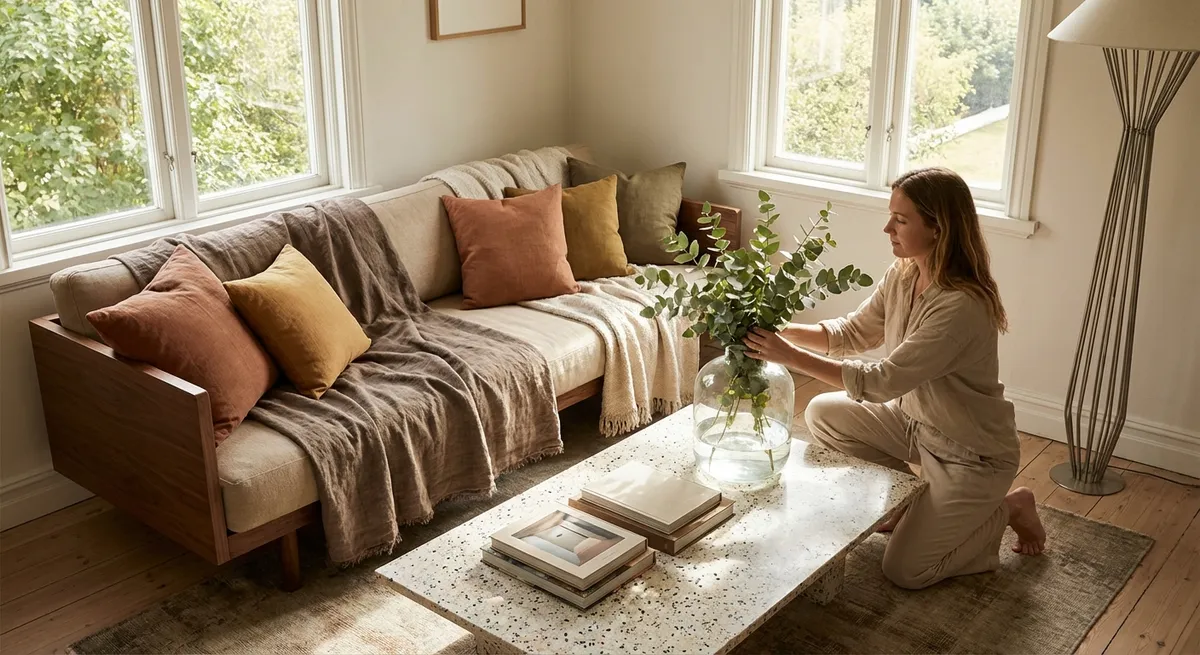
- Smooth plaster walls against chunky knit throws
- Matte ceramic vases on glossy stone or lacquered trays
- Bouclé, linen, and velvet all in the same shade range
- Slatted wood, ribbed glass, or fluted details for subtle depth
Daylight will catch each surface differently, so your space feels layered and dynamic even without loud color. At night, textured textiles and matte finishes soak up light and create that calm, cocoon-like vibe that’s trending hard right now.
The goal isn’t to have “a look” that photographs perfectly once; it’s to build a space that stays interesting every time you walk through it.
Conclusion
Modern interior design isn’t about chasing an aesthetic—it’s about editing your space so it actually fits the way you live. When you zone your rooms visually, control the light, curate scent, invest in flexible pieces, and layer texture instead of clutter, your home stops feeling like a project and starts feeling like a backdrop that’s genuinely on your side.
You don’t have to do everything at once. Pick one idea—maybe lighting, maybe scent—and shift just that. The magic of these moves is how small changes ripple through your everyday: your mornings feel smoother, your evenings feel softer, and your home starts to feel less like a set and more like a story you’re still writing.
Sources
- American Lighting Association – Layering Light in a Room – Guidance on combining ambient, task, and accent lighting for better mood and function
- Harvard Health Publishing – Blue Light Has a Dark Side – Explains how different light temperatures affect sleep and circadian rhythm
- Harvard T.H. Chan School of Public Health – Indoor Air Quality – Discusses indoor air and why being mindful about candles, diffusers, and ventilation matters
- The New School, Parsons School of Design – Interior Design Principles – Outlines contemporary approaches to space planning, materials, and modern interior thinking
- United States Environmental Protection Agency (EPA) – Volatile Organic Compounds (VOCs) – Background on VOCs in home products, relevant when choosing paints, candles, and finishes
Key Takeaway
The most important thing to remember from this article is that this information can change how you think about Interior Design.