Your home is quietly editing your life every day—how you wake up, what you cook, how you unwind, even how often you reach for your phone. Interior design is no longer just about “looking nice”; it’s about choreographing your habits. The right layouts, textures, and tiny details can nudge you toward better sleep, calmer mornings, more creative work, and friend-filled evenings—without feeling staged or high-maintenance.
Below are five innovative home living ideas that go beyond aesthetics. They’re about designing rooms that do real work for you, while still looking seriously good on camera.
1. The “Landing Zone” Layout: Design Your Daily Flow, Not Just Your Floor Plan
Most homes are organized by room labels—living room, dining room, bedroom—rather than by daily rituals. A landing-zone layout flips that thinking: you design tiny, intentional micro-spaces around what actually happens in your day.
Start at the door. Create a decompression strip: a slim bench, a catch-all tray, a wall hook or two, and a low basket. This isn’t just an entryway; it’s your transition buffer between outside and inside, commute and calm. Add a small mirror and a soft runner rug, and the whole scene becomes a gentle pause instead of a drop-and-dash mess.
Move to the living area and carve out a “reset corner”—a plant stand, a small side table, and one ridiculously comfortable chair. Keep this zone screen-light: a book stack, a candle, a wireless speaker, maybe a floor lamp with a warm bulb. When everything you need for a mini-reset is within arm’s reach, you’re more likely to actually use it.
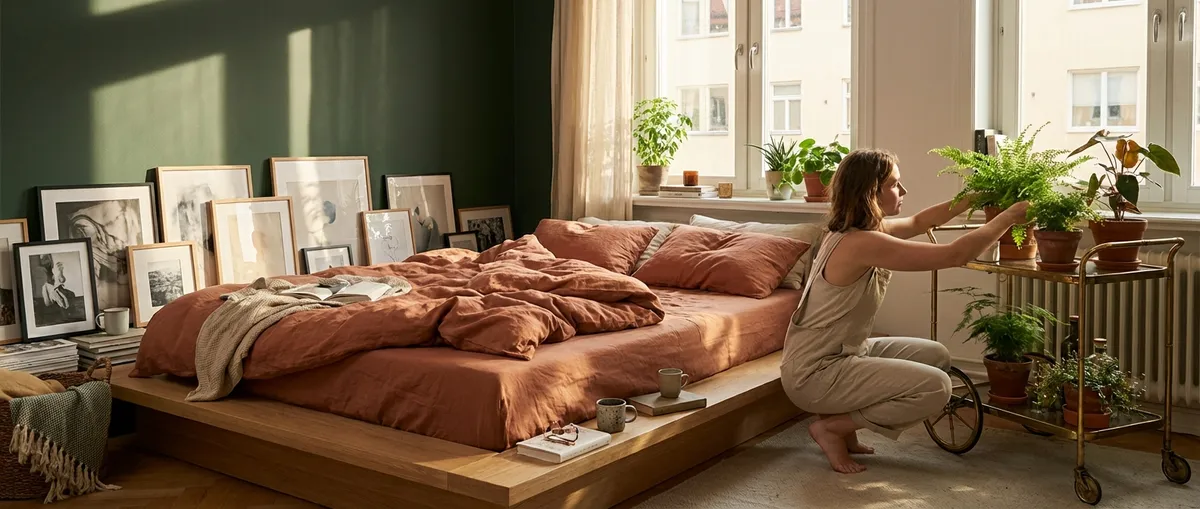
In the bedroom, think “wind-down lane.” A tray with a carafe and glass, a dimmable bedside lamp, a small drawer for your phone and charging cable, and one sensory cue (linen spray, hand cream, or a tactile throw) help your brain switch modes. Designing for transitions instead of just furniture placement turns the whole house into a series of easy, intuitive habits.
2. Material Pairing as Mood-Setting: Build a Palette That Feels Like a Playlist
Color gets all the attention, but the way materials feel changes the vibe of a room just as deeply. Think of your space like a playlist: instead of all high-energy tracks, you mix tempos. Materials can do the same—some are energizing, some grounding, some quietly luxurious.
For focus and creativity, pair matte surfaces with subtle texture: think limewash or textured paint on the walls, a lightly grained wood desk, a fabric pinboard instead of a metal one. These surfaces diffuse light, reduce visual glare, and make your workspace feel calm but not flat.
In social zones, dial up contrast. Combine something glossy (a lacquered side table, a glass coffee table, a polished metal lamp) with something soft and nubby (bouclé, wool, or chunky knit throws). The sheen catches the eye for a sense of liveliness, while the texture keeps it cozy and inviting.
For bedrooms, lean into “soft edges only.” Rounded nightstands instead of sharp corners, upholstered or padded headboards, linen or percale bedding, a low-pile rug that feels good under bare feet—all of it sends a subtle signal of safety and rest. Even hardware matters: swap harsh chrome pulls for brushed brass, matte black, or wood handles to soften the visual noise.
Curate three to five recurring materials across your home—like light oak, matte black, textured stone, and linen—and repeat them in different ways. This creates a visual rhythm that feels intentional and calm, even when real life is a little messy.
3. Slow-Shift Lighting: Let Your Rooms Change With You
Lighting can quietly make or break how you experience your home. Instead of relying on a single overhead light per room, think in layers that shift with the time of day—almost like your home has its own circadian rhythm.
By day, welcome in as much natural light as you can. Choose light-filtering curtains instead of heavy blackout drapes in shared spaces, and keep windowsills relatively clear. Position mirrors opposite or adjacent to windows to bounce light deeper into the room—especially helpful in smaller apartments or north-facing spaces.
As afternoon slides into evening, overhead lights should stop doing the heavy lifting. Bring in floor lamps, table lamps, and wall sconces at roughly eye level when seated. Warm-white LED bulbs (around 2700–3000K) create a softer, more flattering glow that’s closer to candlelight than to an office.
For late-night hours, think almost cinematic: one or two small, low-level light sources—a lamp on a dimmer, LED strip lighting under a floating shelf, or a backlit headboard. In the bathroom, a backlit mirror or sconce lighting at face level is easier on your eyes than a bright ceiling fixture right before bed.
Design your lighting like a gradient, from bright and functional to warm and intimate. It doesn’t just look better; it gently cues your body to wake, work, and wind down in sync with your space.
4. Multi-Purpose Zones That Don’t Look Multi-Purpose
Modern living means rooms have to pull double (or triple) duty, but the goal is for your home to feel cohesive—not like a storage unit with Wi-Fi. The trick: choose pieces that transform function without shouting about it.
In a living room that doubles as a workspace, anchor the space with a strong sofa and coffee table, then introduce a slender console table or compact desk behind the sofa or along a wall. Style it as decor—art, a lamp, a candle—so when the laptop closes, it reads as part of the room, not a mini office.
In a dining area, a generous table can also be a project hub. Add stackable or easily moveable chairs and a closed storage piece (like a credenza) to hide chargers, office supplies, and craft clutter. A statement pendant or art piece above the table sets the mood firmly as “dining,” even when you’re mid-spreadsheet or puzzle.
Bedrooms are where multi-purpose can feel most intrusive. If your bedroom has to double as a workout or Zoom space, use visual separation instead of walls: a folding screen, an open bookshelf used as a divider, or even a large plant cluster can subtly zone off a section. Keep the bed area soft, layered, and low-tech so the room’s primary identity is still “rest.”
The key is visual coherence: repeat colors and materials across both “versions” of the room so the transformation feels seamless, not split personality.
5. Micro-Tactile Moments: Small Details With Big Daily Impact
Tiny, touchable details shape your everyday experience more than you realize. You interact with handles, switches, textiles, and surfaces hundreds of times a day—upgrading just a few of those contact points can make your home feel quietly elevated.
Start with what your hands touch most: door handles, cabinet pulls, light switches. Swapping builder-grade hardware for something weighty and well-designed instantly changes the feel of a room. Even switching to rocker-style light switches or dimmer knobs can make the simplest action feel more considered.
Layer in tactile textiles in high-use areas: a generously sized entry mat that feels sturdy underfoot, a plush but durable rug in the living space, crisp but soft sheets, a towel that actually feels spa-level instead of scratchy. These aren’t background details—they’re the front line of comfort.
Don’t overlook surfaces you rest things on daily: a stone or wood bedside table with a subtle grain, a slightly textured ceramic tray for jewelry or keys, coasters that feel as good as they look. These details encourage small rituals—setting your phone down, removing jewelry, placing your glass—that slow you down just enough to feel present.
When in doubt, upgrade the things you touch most often, not the things you look at once and ignore. It’s a minimalist move that still feels indulgent.
Conclusion
A modern home isn’t just a backdrop—it’s a co-creator of your routines, your energy, and your mood. When you design for landing zones instead of just rooms, treat materials like a moodboard, let lighting shift with your day, hide multi-purpose functions in plain sight, and prioritize tactile details, your space starts doing quiet, consistent work for you.
The result isn’t a show home; it’s a lived-in, edited environment that supports the way you actually move through your life—mess, magic, and everything in between. That’s the real luxury: a home that feels as intentional as your favorite playlist, and just as easy to replay tomorrow.
Sources
- Harvard T.H. Chan School of Public Health – Healthy Buildings - Research on how lighting, air quality, and layout impact health and daily performance
- American Society of Interior Designers (ASID) – Resilient Interior Design - Insights into human-centered design and how interiors shape behavior and well-being
- U.S. Department of Energy – Residential Lighting - Guidance on lighting types, color temperature, and how they affect comfort and energy use
- IKEA Life at Home Report - Global survey data on how people actually live at home and what they value in modern interiors
- NYTimes – The Power of a Morning Routine (and How to Build One) - Explores how environment and small rituals shape daily habits and well-being
Key Takeaway
The most important thing to remember from this article is that this information can change how you think about Interior Design.