Sustainable living isn’t just for off-grid cabins or hardcore minimalists anymore. It’s woven into how modern homes look, feel, and function—often in ways that are almost invisible, but seriously impactful. Think: design-forward, tech-smart, and vibe-friendly, not guilt-heavy or complicated.
This is sustainable living for people who love beautiful spaces, convenient routines, and small upgrades that add up. Below are five innovative home ideas that make your everyday life feel smoother, quieter, and a lot more planet-friendly.
1. The “Always On” Energy Layer You Barely Notice
The most sustainable energy is the energy you never use in the first place—and you don’t need to live in the dark to make that happen.
Modern homeowners are building an invisible “energy layer” into their spaces:
- Smart thermostats that actually learn you: Over time, they figure out when you’re home, when you’re asleep, and when to ease off on heating or cooling—no constant tinkering, just lower bills and less waste.
- High-performance windows and insulation: These don’t scream “eco,” but you feel the difference in quiet, stable temperatures and fewer drafts.
- Induction cooktops: Faster, safer, and way more efficient than gas. They look sleek, respond instantly, and keep your kitchen cooler while you cook.
The end result: a home that feels more comfortable and luxe, while your energy use quietly drops in the background.
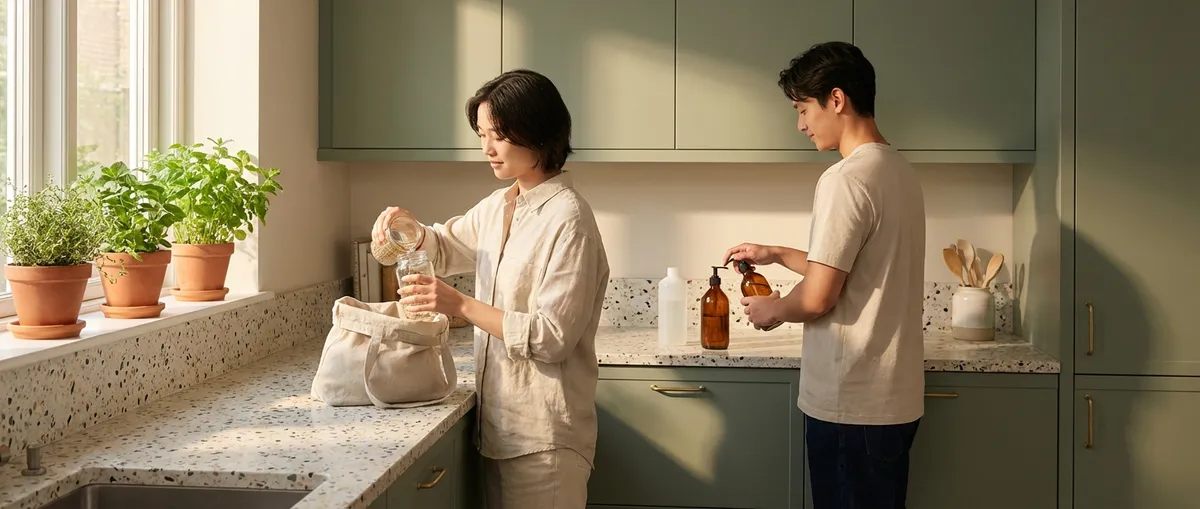
2. Refill Culture: Turning Your Kitchen Into a Zero-Waste Hub
The trend isn’t just “less plastic”—it’s designing your kitchen to make low-waste living the default.
Think of your kitchen as a refill station instead of a landfill generator:
- Refillable pantry jars for staples like pasta, oats, coffee, and snacks. Clear containers look aesthetic on open shelves and help you see what you actually have.
- Built-in or under-sink water filtration so you can ditch single-use bottles for good and still love the taste.
- Refill-friendly cleaning station: Glass spray bottles, concentrated tablets, or bulk-buy detergents that live in one streamlined spot.
Instead of an explosion of mismatched packaging, your kitchen becomes calm, intentional, and surprisingly easy to maintain. Sustainable choices shift from “big effort” to “this is just how my kitchen works.”
3. Furniture With a Future: Pieces That Grow, Shift, and Stay
Sustainability in 2025 isn’t just about what things are made of; it’s about how long they stay in your life.
Homeowners are moving toward future-proof furniture:
- Modular sofas that can reconfigure from a movie-night L-shape to a guest bed or a smaller setup in a new home.
- Drop-leaf or expandable tables that flex from solo workday to dinner party without needing a second piece.
- Timeless, repairable pieces: Solid wood tables that can be refinished. Dining chairs with replaceable cushions. Metal bedframes that survive multiple moves.
Sourcing from brands that offer replacement parts, repair kits, or buyback programs isn’t just eco-conscious—it’s smart. You invest once in pieces that evolve with you, instead of constantly starting over with fast furniture.
The aesthetic is warm, minimal, and intentional: fewer pieces, better quality, more story.
4. Water-Savvy Living That Still Feels Luxurious
Old-school “water saving” used to mean weak showers and sad lawns. Modern water-smart homes flip that script: the experience stays luxurious, the footprint shrinks.
Here’s what that looks like now:
- High-efficiency fixtures with great design: New low-flow showerheads and faucets are engineered for strong, spa-like pressure while using dramatically less water.
- Native and drought-tolerant landscaping: Instead of a thirsty lawn, think layered greenery, gravel paths, herbs, and pollinator plants. It’s lower maintenance, more character, and far better for local ecosystems.
- Smart irrigation systems that check the weather and soil moisture before watering, so you’re not sprinkling in the middle of a rainstorm.
The vibe: a home that feels like a boutique retreat, but runs like it understands climate reality.
5. The “Soft Circular” Closet: Rewear, Repair, Resell
Sustainable living doesn’t stop at your front door; your clothes are part of your home ecosystem too. Closets are going “soft circular”—not full-on capsule wardrobe, but way more intentional.
Here’s how modern homeowners are building smarter closets:
- Curated basics on repeat: High-quality pieces you actually love wearing weekly, not trends that expire in a month.
- An in-house repair setup: A small mending kit, a fabric shaver for sweaters, a handheld steamer—all tiny investments that extend the life of everything you own.
- Resell-ready mindset: Keeping items in good condition so they can have a second life on resale platforms instead of ending up in a donation pile (or worse, landfill).
Your bedroom turns into more of a “personal boutique” than a storage unit—less clutter, more clarity, and a much lighter footprint.
Conclusion
Sustainable living at home doesn’t have to look radical or feel performative. It can be quiet, stylish, and deeply practical: an energy-smart thermostat you never touch, a kitchen designed for refills, furniture that sticks with you through multiple life chapters, lush water-wise landscaping, and a closet that’s curated instead of chaotic.
The win isn’t just a smaller environmental footprint—it’s a home that runs smoother, costs less to maintain, and feels more like you. Tiny shifts, repeated daily, are where modern, effortless sustainability really lives.
Sources
- U.S. Department of Energy – Energy Saver: Appliances and Electronics - Data and guidance on energy-efficient home technologies and behavior
- U.S. Environmental Protection Agency – WaterSense - Information on water-efficient fixtures and landscaping practices
- U.S. Environmental Protection Agency – Sustainable Management of Materials - Background on circular economy, reuse, and waste reduction strategies
- Harvard T.H. Chan School of Public Health – Climate Change and Health: Housing and Buildings - Research on how building choices affect health and the environment
- Rocky Mountain Institute – Efficient Buildings and Homes - Analysis and case studies on energy-efficient, future-ready homes
Key Takeaway
The most important thing to remember from this article is that this information can change how you think about Sustainable Living.