Smart homes aren’t just about flashy gadgets anymore—they’re about designing a daily rhythm that feels smoother, calmer, and more “you.” The best tech disappears into the background and quietly levels up your life, from how you wake up to how you unwind at night.
Think less “sci‑fi showpiece,” more “this just makes sense.” Here are five innovative, real-life-ready ideas that modern homeowners are using to turn their spaces into homes that actually work for them.
1. A Morning Routine That Builds Itself Around You
Instead of one blaring alarm, imagine your entire home waking up with you.
Smart shades crack open to let in natural light, your bedside lamp warms from soft amber to bright white, the thermostat nudges a degree or two warmer, and your coffee machine starts brewing—all synced to your usual wake-up window, not just a fixed time.
The modern twist: use adaptive routines. Many smart systems now learn your behavior over time—when you usually get out of bed, when you actually leave the house—and adjust lighting, climate, and even music automatically. The result is a morning that feels tailored, not scripted.
For busy households, you can stack “micro-automations”: soft hallway lights that trigger with motion before sunrise, the bathroom mirror lighting that adjusts based on outdoor conditions, and a smart speaker that gives you a short, curated update (weather, commute, headlines) the minute it hears a specific wake-up phrase.
The goal isn’t perfection—it’s creating a home that makes early mornings feel less chaotic and more like a gentle ramp into your day.
2. Zoned Comfort: Climate Control That Matches How You Actually Live
Most of us don’t use every room in our home equally—so why heat or cool it like we do?
Smart zoning lets you create mini “climate bubbles” that match your real lifestyle. That might look like a cooler, energizing home office, a cozy living room in the evenings, and a slightly cooler bedroom at night for better sleep.
With smart thermostats, connected radiator valves, or room-specific temperature sensors, your home can:
- Prioritize the rooms you’re actually in
- Dial back spaces that sit empty most of the day
- Shift into “evening wind-down” mode automatically as sunset hits
What feels innovative right now is the layering: pairing a smart thermostat with ceiling fans, smart blinds, and even occupancy sensors. Your home can pull shades down in the afternoon to block heat, shift airflow, and gently adjust temperature without you doing anything at all.
For modern homeowners, zoned comfort isn’t just about energy savings—it’s about mood. You can set distinct vibes: a crisp, focused climate when you’re deep in work, a softer, warmer feel when friends come over, and an optimized sleep environment that quietly kicks in an hour before bed.
3. Kitchen Intelligence That Actually Reduces Decision Fatigue
The smartest kitchens now focus less on novelty and more on easing mental load.
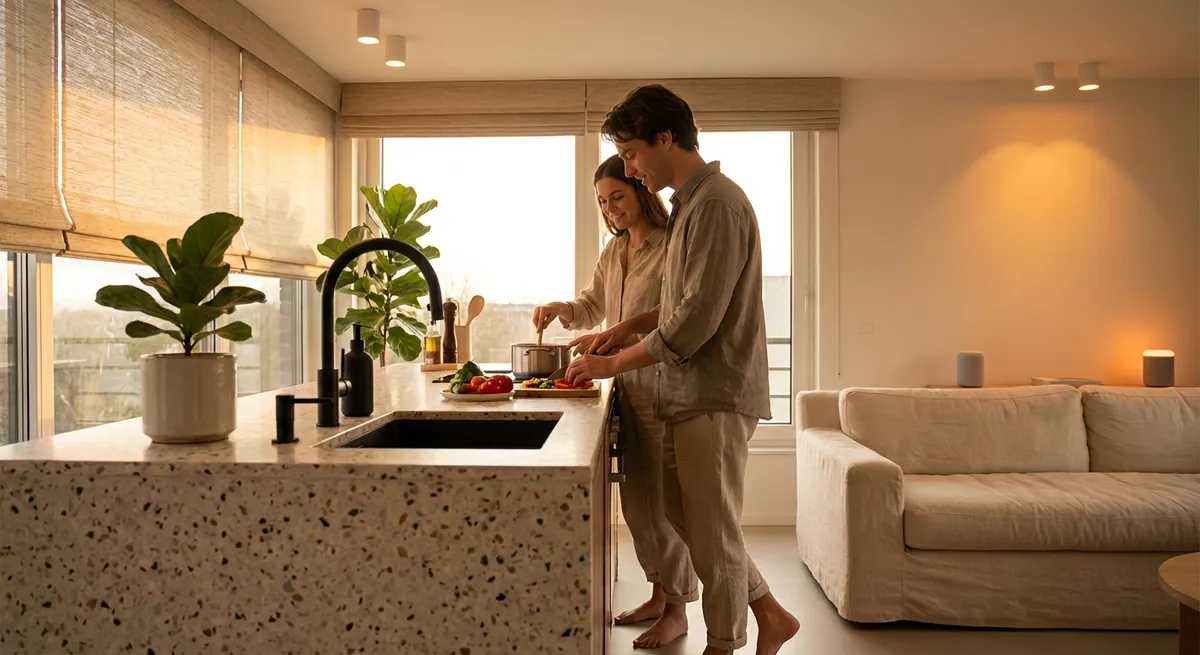
Think: your kitchen as a low-key co-pilot. Smart fridges that help track what you have, voice assistants that set multiple timers without you fumbling with buttons, and connected plugs that turn off appliances you always forget are still on.
Where it gets genuinely lifestyle-forward is in the way everything connects:
- Your smart display suggests recipes based on what’s in your fridge or pantry.
- You can say one phrase—“Let’s cook”—and your lights brighten over the counter, your smart speaker switches from podcasts to a cooking playlist, and your oven begins preheating to a default temperature.
- After dinner, a single command shifts lighting into “cleanup mode,” brightening task areas and turning on the dishwasher plug if it’s connected.
Modern homeowners are also using tech to reclaim calm: under-cabinet light strips that soften automatically at night for quiet late snacks, soundscapes that play softly during prep, or voice-controlled exhaust fans so you’re not reaching for greasy switches.
It’s not about building a “show kitchen”—it’s about building a space that makes the everyday decisions (what to cook, how long things take, what’s running) feel less heavy and more supported.
4. Layered Lighting Scenes That Change With Your Day
If there’s one smart upgrade that instantly makes a home feel elevated, it’s lighting that adjusts with your life instead of just “on or off.”
Modern smart lighting can shift color temperature, brightness, and placement throughout the day to support how you actually feel:
- Morning: cooler, brighter light in the kitchen and workspace to wake you up
- Afternoon: softer, evenly spread light for calm but steady focus
- Evening: warmer, dimmer tones that tell your brain it’s time to wind down
Instead of manually tweaking switches, you set “scenes.” A “Work From Home” scene might brighten your desk lamp, cool the light tone for alertness, and soften overhead lighting. A “Movie Night” scene might dim everything but a subtle glow behind the TV and a low-level floor lamp by the sofa.
The subtle luxury move: pairing light scenes with presence. Motion-sensor night lighting that glows just enough to guide your path. Entryway lights that fade in when you arrive home after dark. Accent lighting on shelves or art that comes alive at sunset.
This is where smart homes shift from purely functional to quietly atmospheric. You’re not just controlling lights—you’re curating how your home feels at different moments.
5. Invisible Security That Feels Reassuring, Not Paranoid
The new wave of smart security is more about peace of mind than visible hardware.
Discreet cameras, low-profile sensors, and clever automations create a home that’s quietly watchful without feeling like a surveillance zone. The key is thoughtful use, not overkill.
Some modern, lifestyle-driven approaches:
- Front doors that send a gentle notification—plus a snapshot—when packages arrive, so you don’t miss deliveries.
- Smart locks that recognize trusted guests through temporary, app-based codes instead of spare keys hidden under doormats.
- Lights that mimic your normal routines when you’re away, making your home look lived-in without you touching a thing.
For homeowners, the real innovation is blending security with convenience. Example: your smart lock can trigger an “I’m home” routine—unlocking the door, turning on a few chosen lights, and adjusting the thermostat as you walk in.
You’re not just safer; you feel more welcomed by your own space.
Conclusion
A truly modern smart home doesn’t try to impress you every time you walk in the door—it just quietly makes life smoother, gentler, and more intentional.
From adaptive morning routines to atmosphere-driven lighting and subtle security, the most interesting innovations today are about helping your home flex around you, not the other way around. As you experiment with smart tech, look for what supports your actual rhythms, your energy, and your version of comfort.
The future of home living isn’t louder. It’s smarter, softer, and far more personal.
Sources
- U.S. Department of Energy – Thermostats and Control Systems - Overview of how smart thermostats and zoning can improve comfort and efficiency
- Harvard Health Publishing – Blue Light Has a Dark Side - Explains how light temperature affects sleep and circadian rhythms, relevant to smart lighting choices
- Sleep Foundation – Ideal Bedroom Temperature for Sleep - Details on how climate control can improve sleep quality
- Consumer Reports – Smart Kitchen Appliances Guide - Independent insight into the real-world benefits of smart kitchen tech
- Federal Trade Commission – Using Home Security Cameras Safely - Guidance on privacy and security best practices for connected home devices
Key Takeaway
The most important thing to remember from this article is that this information can change how you think about Smart Homes.