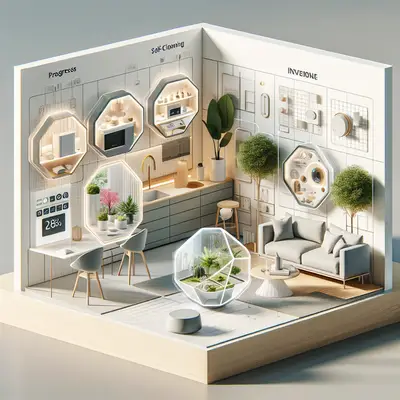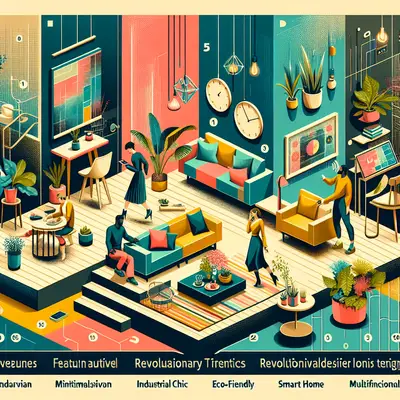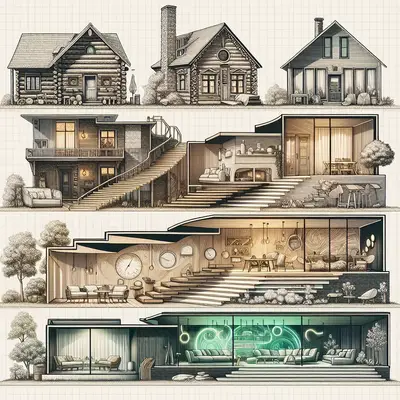
Your home shouldn’t feel “finished.” It should feel alive—shifting with your routines, your mood, your social life, and even your screen time. Instead of chasing a perfect, static aesthetic, modern homeowners are building spaces that can flex, reset, and adapt on demand.
This is interior design as a lifestyle system, not just a look. Below are five innovative home living ideas that help your space evolve with you—without feeling like a showroom or a science project.
1. The Shape-Shifter Room: One Space, Three Personalities
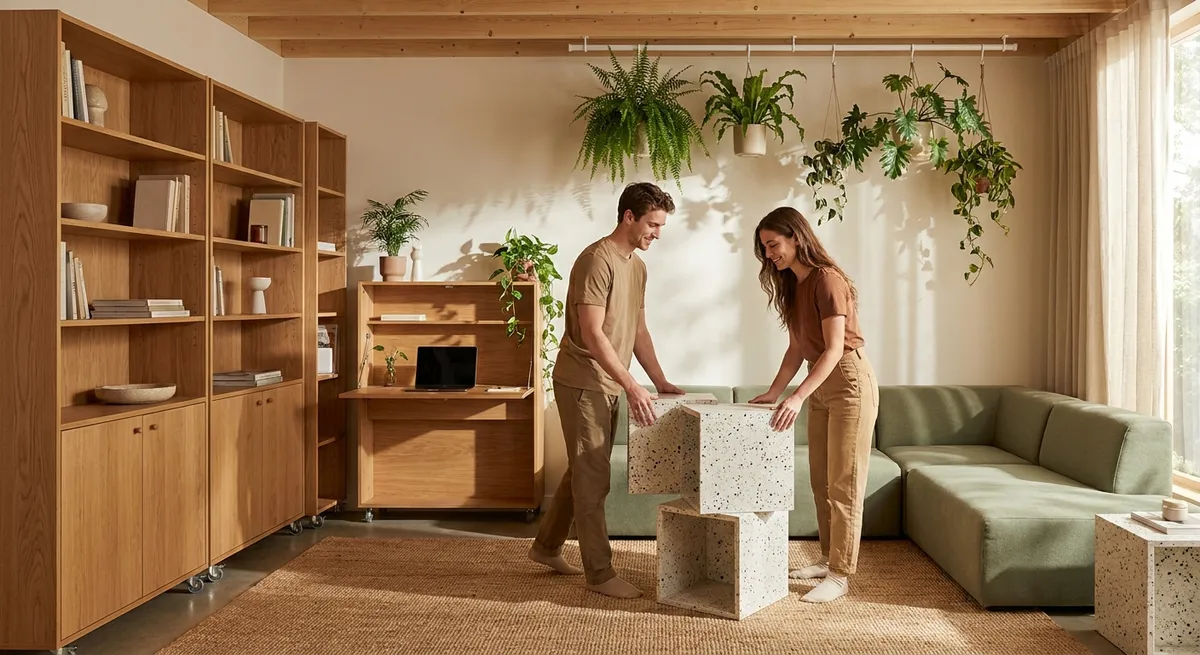
Forget locking a room into a single identity. Today’s most interesting homes treat each space like a multi-hyphenate: office-gym-lounge, dining-studio-library. The magic is in how easily it can switch roles—no heavy lifting, no dragging chairs across the floor.
Start with a neutral backbone: a simple wall color, low-profile window treatments, and a rug that works dressed up or down. Layer in modular pieces: nesting side tables that expand for hosting, a drop-leaf dining table that folds for yoga, or a slim console that becomes a standing desk with a monitor arm. Use lightweight accent chairs and stackable stools instead of bulky seating; they can migrate between rooms as needed.
Lighting is what makes the personality shifts feel intentional. Try a three-layer system: overhead lighting on dimmers, directional task lamps, and warm accent lighting on shelves or behind the sofa. Pair that with small, portable decor—trays, vases, candles, art books—that can be re-styled in minutes to signal “work mode,” “social mode,” or “reset mode.” The goal: a room that transforms in under 10 minutes without feeling chaotic.
2. The Tactile Home: Designing for How Your Space Feels, Not Just Looks
We’re spending more time at home than ever, and our nervous systems are noticing. Visual aesthetics are important, but the next wave of interior design is all about touch: how your sofa hugs you, how your kitchen island feels under your palms, the temperature of your floors at 7 a.m.
Build a “tactile palette” the same way you’d build a color palette. Mix smooth (lacquer, glass), nubby (bouclé, linen), grounded (wood, stone), and soft (velvet, jersey) across each room. A linen duvet with a chunky knit throw, a boucle accent chair next to a cool metal side table, or a matte ceramic lamp on a glossy book stack can make even a simple room feel dimensional and lived-in.
In high-use zones like the sofa or bed, invest in fabrics that are both sensory and practical—performance velvet, washable slipcovers, or tightly woven cotton that softens over time. Even small upgrades like switching to padded rug underlay, adding a cork or rubber mat under your standing desk, or using natural materials for cutting boards and trays can noticeably change how your home feels in your body, not just to your eyes.
3. Hidden Systems: Making Daily Life Feel Effortlessly Put-Together
The most “pulled together” homes rarely stay that way by accident. Instead of more decor, they rely on invisible systems that keep surfaces clear and routines simple—think attractive storage and low-friction organization that supports how you actually live.
Start by mapping your home by activity, not room label: where do keys land, where do packages get opened, where do you doomscroll, where do you drop bags after work? Create micro-stations for each: a wall-mounted mail sorter and letter opener near the entry, a small lidded basket near the sofa for chargers and remotes, a tray by the bed for books, hand cream, and a sleep mask.
Visually, lean into “closed calm, open function.” Closed storage—drawers, ottomans with lids, benches with cubbies—handles the visual chaos of cables, tools, and random objects. Open storage—curated shelves, hooks, a peg rail—can be styled with things you actually use daily: mugs, hats, frequently worn bags, or coffee gear. This mix creates a home that looks curated on Zoom but still works in real life on a Wednesday when three packages arrive and you’re eating over the sink.
4. The Curated Color Story: Using Color to Guide Energy and Focus
Instead of treating color like a single decision (“white walls or not?”), use it as a quiet tool to direct your energy. The idea isn’t just to pick trendy shades, but to create a “color story” that maps to how you want to feel in different pockets of your home.
In focus zones—work nooks, study areas, or reading corners—lean into muted, grounding hues: soft greys, mossy greens, inky blues, or earthy taupes. These colors visually recede, which can help your brain stay on tasks (or at least make distractions feel less loud). Calmer color also makes it easier to layer art and tech without the space feeling busy.
In social or creative zones—kitchens, dining areas, hobby corners—bring in more saturated notes through textiles, chairs, or art: a cobalt lamp, terracotta dining chairs, a raspberry throw, or a bold print in the hallway. You don’t need to repaint everything; even swapping pillow covers, adding a large piece of art, or painting just a door or built-in shelf can anchor a room’s energy.
To keep everything cohesive, choose a base palette of 3–4 core colors that repeat in different ways across the home. This makes your space feel intentional even if each room has its own vibe, and it’s incredibly social-friendly: your photos and videos will look more consistent and “designed” with minimal effort.
5. Ready-for-Company Design: Hosting Without the Performance
Modern hosting is less about a perfect dinner party and more about making it easy to say “come over” on a random evening. Designing for “micro-hosting” means your home can pivot from solo mode to social mode quickly, without a full reset or elaborate prep.
Focus first on flexible surfaces. A nesting coffee table, a slim bar cart, or a wide console behind the sofa can all convert into serving stations. Consider lightweight stools that tuck under tables or stack in a corner; they’re easy to pull out when people drop by and don’t visually overwhelm a small space.
Next, build a “grab-and-go” hosting kit: a set of matching glasses or mugs, a neutral serving board, a simple linen or cotton runner, and a few multi-purpose bowls or small plates. Store them together so you can dress a table in minutes. For lighting, keep a cluster of candles or a cordless table lamp ready; dim overhead lights and let the smaller light sources handle the mood.
Finally, design in zones where guests can naturally cluster: a corner chair pulled closer to the coffee table, a bench near the window, a perch at the kitchen counter. The aim isn’t perfection; it’s for your home to feel instantly shareable, both in person and on social, with minimal staging required.
Conclusion
Interior design is moving away from “set it and forget it” and into something more fluid, more personal, and more in sync with how we actually live. When your rooms can shift roles, your textures support calm, your systems keep chaos in check, your colors guide your energy, and your layout welcomes people in, your home stops being just a backdrop.
It becomes a living, evolving extension of you—ready for focus days, reset days, and spontaneous “come over” nights, all without needing a full remodel every time your life changes.
Sources
- American Society of Interior Designers (ASID) – 2022 Trends Outlook - Overview of emerging interior and lifestyle design trends
- Harvard Graduate School of Design – “The Home in the 21st Century” - Explores how living spaces are evolving with work, technology, and lifestyle shifts
- New York Times – “Designing a Home That Works Harder for You” - Discusses flexible and multi-use rooms in modern homes
- Better Homes & Gardens – Multi-Functional Room Ideas - Practical examples of designing rooms with multiple uses
- Architectural Digest – The Rise of Warm Minimalism - Context on tactile, comfort-focused aesthetics in current interior design
Key Takeaway
The most important thing to remember from this article is that this information can change how you think about Interior Design.