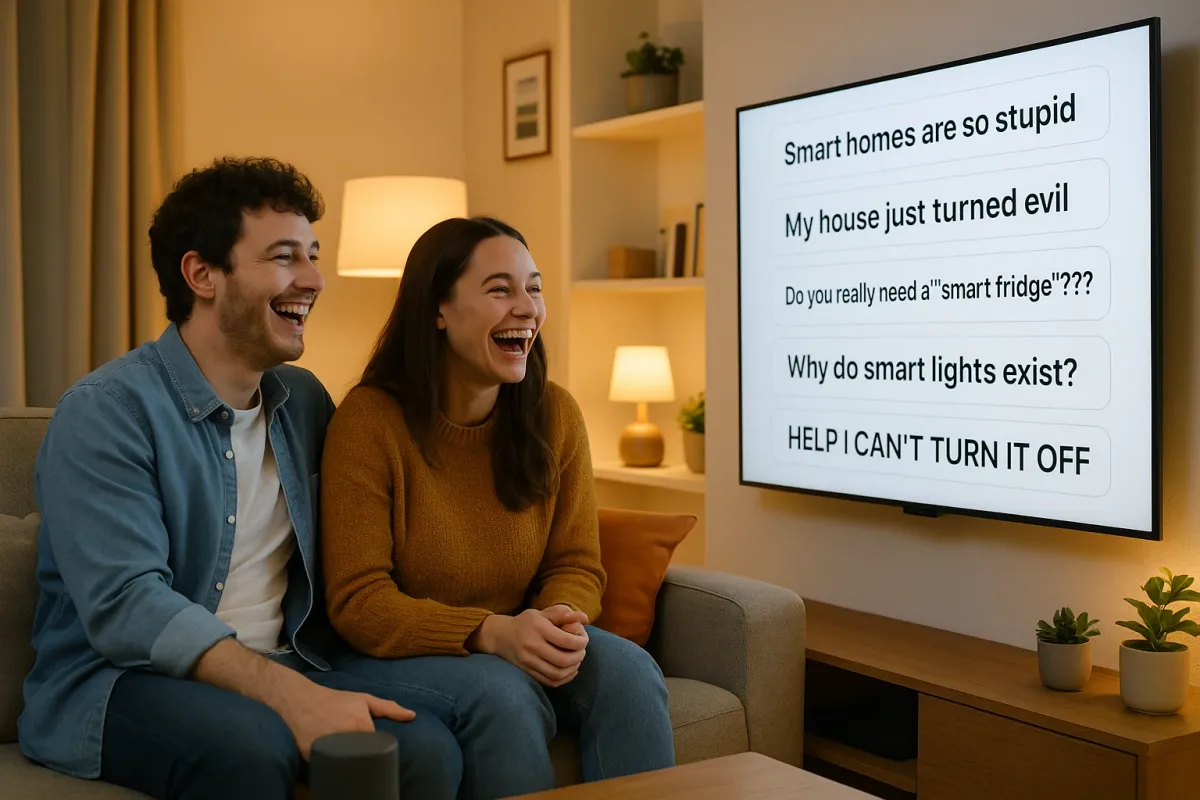
Your feed is probably full of wild screenshots right now—those “cursed comments” posts where one unhinged line derails an entire thread. They’re hilarious, but they also reveal something deeper about how we talk about tech: the internet is really good at hot takes, not so great at nuance.
Smart homes get the same treatment. One extreme says, “Your fridge is spying on you.” The other says, “If your toothbrush isn’t on Wi‑Fi, you’re basically living in the stone age.” Meanwhile, real life sits somewhere in the middle—where thoughtful, intentional tech actually makes your home calmer, safer, and more you.
Inspired by that viral wave of “cursed comments” content (shoutout to the r/CursedComments subreddit and all the posts calling out the weirdest things people type online), we’re unpacking five smart-home ideas that cut through the chaos. No fearmongering, no tech worship—just realistic, design-forward upgrades modern homeowners are actually loving right now.
1. Calm-First Automation: Smart Homes That Don’t Shout For Your Attention
The loudest comments online about smart homes usually fall into two camps: “It’s all surveillance” vs. “I want everything automated.” The trend in real homes, though, is “calm tech”—devices that do their job without constantly demanding your attention.
Think motion-based, not voice-based. A hallway light that gently turns on at 20% brightness after 10 p.m. so you’re not blinded during a midnight water run. A bathroom fan that auto-activates and then shuts off when humidity drops. A smart thermostat that quietly learns your habits and pre-warms the bedroom before your alarm goes off, no push notifications needed. Platforms like Apple Home, Google Home, and Matter-compatible gear are steering toward this low-friction, low-drama automation. The goal isn’t a house that talks back to you—it’s a house that anticipates you and then stays out of the way.
2. Hybrid Security: Visible Enough To Deter, Subtle Enough To Feel Like Home
Security is another magnet for extreme takes online—between ring-camera horror stories and people casually livestreaming their front doors, the discourse is noisy. But the real-life trend in 2025 is hybrid security: visible enough to make you feel safe and deter trouble, discreet enough not to turn your living room into a control room.
Modern homeowners are leaning into layered security: a smart doorbell cam at the entry, low-profile outdoor cameras covering blind spots, and smart locks that let you create one-time codes for guests, dog walkers, or cleaners. Brands like Ring, Arlo, Eufy, and Nest have stepped up with higher-res cameras and tighter integration with home platforms, but the smartest move is how you deploy them. Keep camera coverage to exteriors and entrances, lock indoor cams behind physical lens covers, and combine tech with analog moves like better outdoor lighting and visible house numbers. You get peace of mind, not paranoia.
3. Design-Forward Devices: Tech That Looks Like It Belongs In A Magazine Spread
Scroll any design subreddit or Instagram page and you’ll see it: people dragging gadgets that look like they were designed in 2009. The “cursed comments” energy on ugly routers and black plastic boxes is real—and manufacturers have noticed.
The new wave of smart-home devices is intentionally aesthetic. Think sculptural air purifiers that could pass as minimalist art, mesh Wi‑Fi routers in soft neutral tones, and smart speakers wrapped in fabric or stone finishes that blend with your decor instead of shouting “I AM TECH.” Even smart switches and thermostats are slimming down, ditching glossy plastic for matte finishes and subtle LED indicators. When you plan your smart home now, you’re not just asking “What can this do?” but “What does this look like on my console table or next to my linen sofa?” The future of home tech isn’t just connected—it’s curated.
4. Energy Intelligence: Cutting Bills Without Living Like You’re Camping
While comment sections love to argue about climate change in all caps, most homeowners are focused on something extremely practical: “How do I stop my energy bill from looking like a luxury car payment?”
Smart energy tools are quietly becoming the unsung heroes of modern living. Smart thermostats from companies like Ecobee, Nest, and Tado are tapping into local weather data and your daily patterns to minimize waste. Smart plugs and connected power strips let you kill standby power on TVs, consoles, and office setups with one tap or a scheduled routine. Pair that with app-based energy dashboards (offered by more and more utilities right now) and you can literally see which rooms or habits are costing you the most. Add in smart blinds that auto-close during peak heat hours or open to capture morning sun in winter, and your home starts to think about efficiency for you—no eco guilt, no extreme austerity.
5. Ambient Wellness: Subtle Tech That Makes Your Home Feel Better, Not Busier
The internet loves extremes: full-on biohacking or total rejection of “self-care culture.” Inside actual homes, though, wellness is becoming ambient—baked into your space via subtle, smart upgrades rather than elaborate routines.
Modern homeowners are experimenting with circadian-friendly smart lighting that warms toward amber at night and shifts cooler in the morning to support natural sleep cycles. Air-quality monitors quietly track VOCs, humidity, and particulate levels, nudging you to crack a window or run the purifier before your allergies go nuclear. White-noise or soundscaping speakers can sync with bedtime routines, while smart aromatherapy diffusers trigger a calming scent when you start a “wind-down” scene. None of this is screaming “optimize your life!”—it’s more like background software for your mood, gently shaping a home that feels softer, calmer, and tailored to how you actually live.
Conclusion
The comment sections will keep doing what they do best—overreacting, exaggerating, and turning every smart-home story into a mini culture war. But inside real homes, the vibe is shifting toward something quieter, smarter, and far more livable.
Today’s most interesting smart homes aren’t about owning every gadget; they’re about choosing a few intentional systems that upgrade your daily rituals without hijacking your attention. Calm automation, hybrid security, design-led devices, energy intelligence, and ambient wellness are where the real action is right now.
If the internet is full of “cursed” takes on tech, think of your home as the antidote: a space where the tech is there, it’s thoughtful, and it actually makes your life feel a little lighter.
Key Takeaway
The most important thing to remember from this article is that this information can change how you think about Smart Homes.