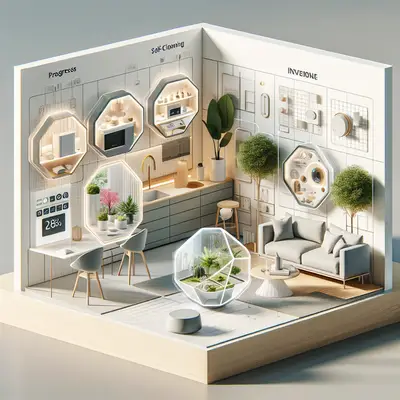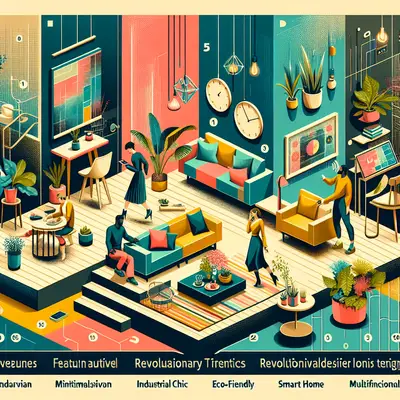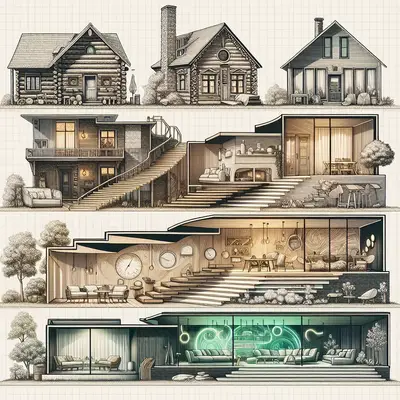
The most interesting homes right now aren’t the flashiest; they’re the ones that quietly feel one step ahead of how you actually live. It’s less about chasing trends and more about building a space that flexes with your routines, your tech, your downtime, and your future plans. Think: interiors that feel visually calm but secretly clever—ready for movie nights, Zoom calls, solo recharge days, and last‑minute dinner parties without a full reset.
Below are five innovative home living ideas that modern homeowners are leaning into—design moves that look good now and age well later.
1. Zoned Living: One Room, Multiple Personalities
Open-plan layouts aren’t going anywhere, but the way we use them has shifted. Instead of one big undefined space, zoned living breaks your rooms into “micro-environments” that support different modes: focus, social, sleep, unwind.
Start with the main living area. You might carve out:
- A conversation zone with a low, generous sofa and swivel chairs
- A focus corner with a compact desk, task lamp, and acoustic panel or rug
- A media zone where the TV is integrated into a wall of shelving instead of dominating the room
Use visual cues instead of walls to define each zone: change up the rug, lighting style, or wall color. A soft arch of paint, a shift from wood to textured tile, or a ceiling-mounted curtain track can all separate areas without closing them off.
The key is circulation. Walk the space in your head: can someone be on a video call while someone else reads, and another cooks, without everyone feeling tangled together? That’s zoned living done right—one room, multiple experiences, zero chaos.
2. Seamless Storage That Doubles as Display
Clutter-heavy homes feel instantly dated; streamlined ones feel current almost by default. But “minimalism” doesn’t have to mean hiding everything away. The new move is storage that looks intentional, turning the things you actually own into part of the design.
Think in layers:
- Closed storage below waist height for the not-pretty basics: cords, remotes, kid gear, paperwork.
- Open display above for pieces with texture and story: ceramics, art books, plants, framed photos, vintage audio, sculptural glass.
Built-ins are having a moment again, especially in small spaces. Floor-to-ceiling units around a doorway or window create a frame and add serious function. In bedrooms, headboard walls with integrated shelving or nightstand niches replace bulky furniture and free up floor space. In entryways, slim wall-mounted cabinets keep shoes and bags off the floor but leave the space visually calm.
Focus on repetition—same door style, same wood tone, or the same hardware in different rooms—so your storage feels like part of a larger narrative instead of a patchwork of solutions.
3. Elevated Everyday Rituals: Designing for How You Actually Live
The most luxurious interiors right now aren’t about marble everywhere; they’re about making daily rituals feel a little more considered. Instead of designing purely for how a room looks in daylight, design for what you do there at 6am, 3pm, and 11pm.
A few ways to build rituals into the layout:
- Morning corner: a small bistro table by a window for coffee and a quick scroll, with a plug nearby for charging.
- Reset station: a console near the entry with a tray for keys, a drawer for mail, a bowl for headphones, and a diffuser or candle that signals “I’m home.”
- Wind-down lighting: dimmable sconces or lamps near the sofa and bed so nights don’t feel like you’re under office lights.
In the bathroom, a simple wall shelf or ledge in the shower for products, a warm-white backlit mirror, and a small stool instantly shift the experience from “functional” to “hotel-adjacent.” In the kitchen, a dedicated “prep strip” with under-cabinet lighting, chopping board storage, and knives within reach makes cooking less of a chore and more of a habit.
When you design around these micro-moments, your home stops being just a backdrop and starts behaving more like a supportive co-pilot.
4. Sensorial Design: Sound, Texture, and Light as Your Palette
Modern interiors are moving past the “Instagram shot” and into how a space actually feels in 3D. That means treating sound, texture, and light with the same intention you’d give to tile or paint.
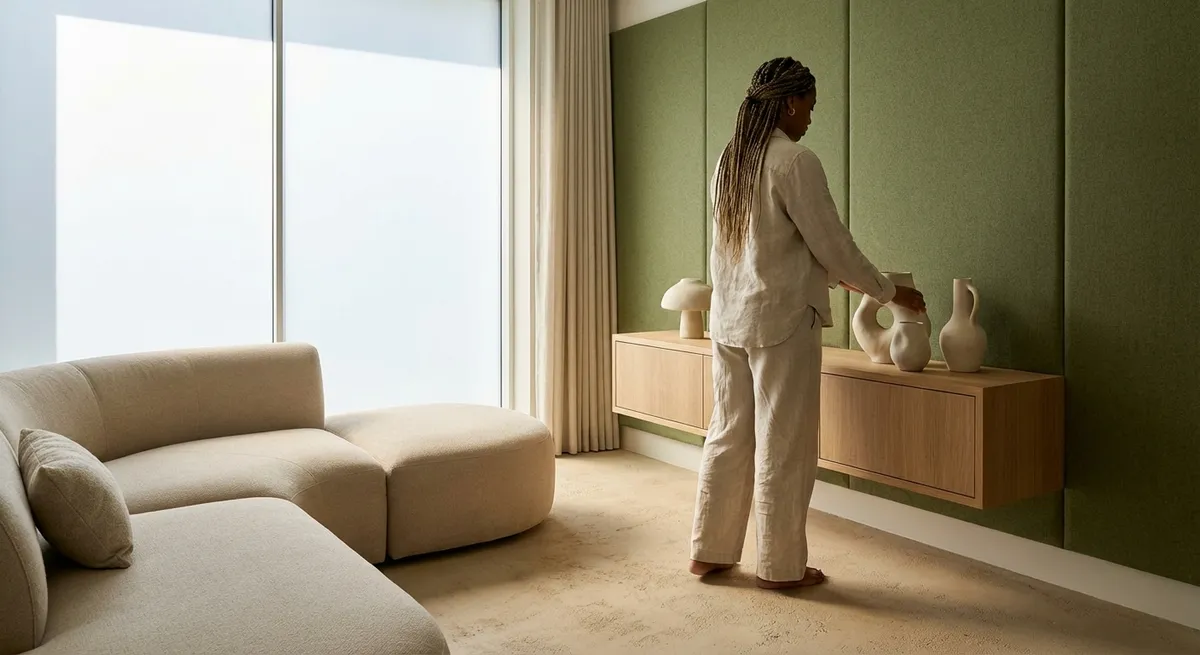
Sound: Hard surfaces bounce noise; soft surfaces absorb it. Layer rugs, curtains, upholstered pieces, and even fabric wall panels where echo is an issue (think high ceilings or open kitchens). If you love music, consider built-in speakers that disappear visually but keep sound consistent across rooms, so the home feels like one connected environment.
Texture: Mix smooth and rough, matte and gloss. A flat-painted wall next to limewash or microcement, slubby linen next to polished wood, boucle next to metal. This keeps neutral spaces from feeling flat and makes color less critical to creating interest.
Light: Instead of one bright overhead, build a “light ladder”:
- Ambient lighting (ceiling)
- Task lighting (desk lamps, reading sconces, under-cabinet strips)
- Accent lighting (picture lights, LED strips in shelves, floor washers)
Warm-white bulbs (around 2700K–3000K) usually read best in living areas, while a slightly cooler tone can work in kitchens and offices. The goal: daylight that feels clear, and evenings that feel soft and cocooned, not washed out.
5. Flexible Furniture That Keeps Up With You
Life changes faster than most floor plans. The furniture that makes sense for hosting weekly dinners might feel overkill a year later if your schedule or family setup shifts. Investing in flexible pieces keeps your home feeling responsive rather than locked into one version of your life.
Look for:
- Modular seating: sectionals that can break into smaller sofas or chaise pieces, ottomans that double as extra seating or coffee tables.
- Extendable surfaces: dining tables that expand, nesting side tables, a console that can convert into a desk or bar.
- Lightweight anchor pieces: side chairs and small tables that are easy to move when you’re hosting or reconfiguring.
In small spaces, consider a bed with drawers underneath, stools that tuck entirely under a counter, or a bench in the dining area that can slide under the table. In larger spaces, create “floated” furniture arrangements away from walls so you can rotate and remix layouts without having to start from scratch.
The test: If you changed jobs, added a roommate, or started working from home more, could your current setup adapt with just a few moves? Flexible furniture means the answer is usually yes.
Conclusion
A modern home isn’t defined by a specific aesthetic—Scandi, Japandi, industrial—but by how intelligently it supports your life. Zoned spaces that adapt through the day, storage that works as decor, interiors built around your rituals, sensorial layering, and flexible furniture all point in the same direction: a home that feels calm on the surface and quietly future-ready underneath.
Design with your next few years in mind, not just your next post, and your space will stay relevant—and livable—far longer than any micro-trend.
Sources
- Harvard Joint Center for Housing Studies – Remodeling Trends - Provides data and insights on how homeowners are rethinking spaces and functionality
- American Society of Interior Designers (ASID) – 2024 Trends Outlook - Industry report on emerging interior design trends, including flexible spaces and wellness-focused design
- International WELL Building Institute - Outlines standards and research on how light, sound, and materials impact well-being at home
- U.S. Department of Energy – Lighting Choices to Save You Money - Explains different lighting types, color temperatures, and their best uses in residential spaces
- MIT School of Architecture and Planning – Research on Spatial Design - Shares academic perspectives on how spatial organization affects behavior and daily life
Key Takeaway
The most important thing to remember from this article is that this information can change how you think about Interior Design.