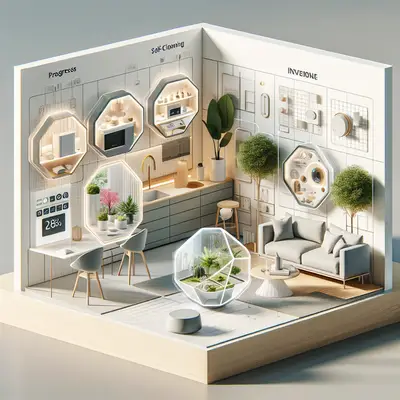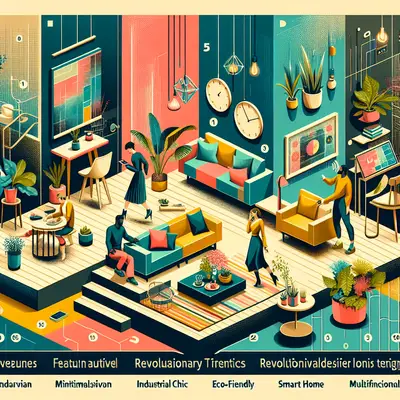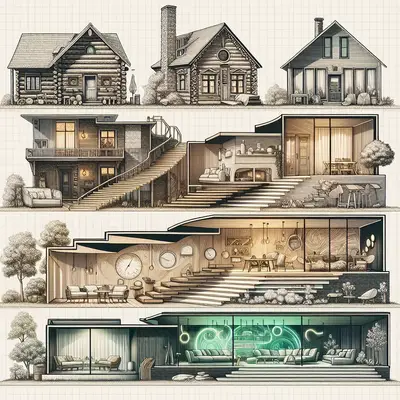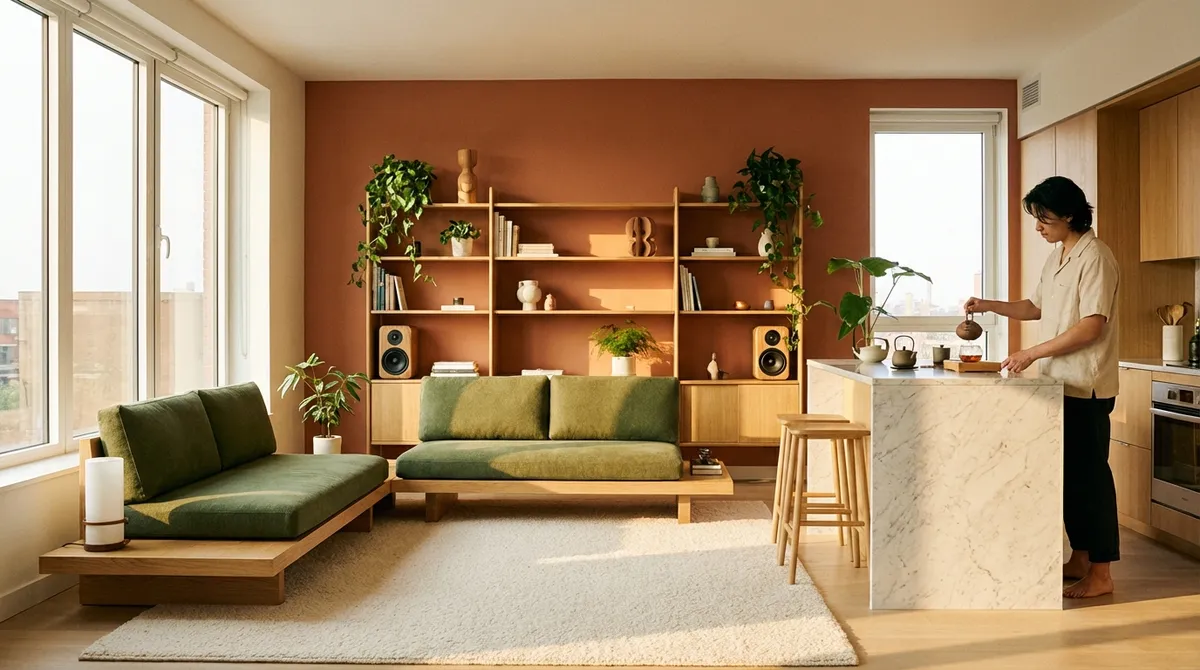
Everyday life has shifted—our homes are now offices, gyms, social hubs, and recovery zones. Interior design isn’t just about looking good anymore; it’s about supporting how we actually live. Think: spaces that flex with your schedule, tech that feels invisible, and details that make staying in feel like a choice, not a compromise.
Below are five innovative home living ideas that modern homeowners are leaning into right now—each one designed to make your space feel more intentional, more flexible, and way more you.
1. Multi-Mood Rooms Instead of Single-Purpose Spaces
The days of “this is just the living room” are fading. Modern interiors are shifting toward multi-mood rooms—spaces that transform throughout the day without feeling chaotic.
Start with a core layout that can handle different energies: a modular sofa that reconfigures easily, nesting tables that tuck away, and low-profile storage that keeps visual noise to a minimum. Add layers that flex with your needs: a floor lamp with adjustable color temperature for work or wind-down, blackout curtains paired with sheer panels, and a soft rug that makes floor-sitting feel intentional, not improvised.
Designing for multiple moods also means getting serious about zoning. A slim console can visually separate a “focus corner” from the lounge area. A change in wall tone—from warm white on one side to a deeper, cocooning shade on another—signals a shift without building a single wall. The goal isn’t a bigger home; it’s a smarter one that reshapes itself around your day.
2. Hybrid Work Nooks That Don’t Look Like Offices
Home offices used to be spare rooms; now they’re sneaking into living rooms, bedrooms, and even hallways. The new wave: micro work nooks that blend in with the decor instead of fighting it.
Skip the standard bulky desk and look for wall-mounted consoles, fold-down desks, or built-ins that double as display shelves. Pair them with a task chair that looks like a dining chair—upholstered, slim-lined, and easy to pull into other rooms when guests arrive. Cable management is key here: use cord covers in wall color, desk grommets, and under-desk trays so your “office” disappears when you clock out.
Finish the nook with decor that reads more home than headquarters: a small framed print, a sculptural lamp, a ceramic cup for pens. Add a dedicated light source so you’re not relying on overhead lighting alone—this keeps video calls flattering and late-night scrolling gentle on your eyes. The result is a workspace that supports focus from 9 to 5 and visually softens right after.
3. Material-First Design: Let Texture Do the Talking
Instead of overloading rooms with decor, modern interiors are turning up the volume on materials. Texture becomes the main event, and the space feels richer—without feeling cluttered.
Think about contrast: a bouclé accent chair next to a sleek metal side table, a matte limewash wall behind a glossy framed print, or warm wood floors layered with a nubby wool rug. Stone with visible veining, handmade tiles with slight irregularities, and linen upholstery with subtle slubs all bring character and depth. You’re not just picking colors; you’re curating how a space feels under your hand.
Material-first design also ages better. High-quality finishes patina gracefully—unfinished brass, solid oak, real marble or quartz composite—and add story over time. Even small swaps make a difference: replacing plastic planters with terracotta, upgrading hardware to solid metal, or trading synthetic throws for cotton or wool. The space starts to feel less like a showroom and more like a lived-in, tactile experience.
4. Micro-Sanctuaries: Tiny Zones for Big Reset Energy
Wellness has moved from spa days to everyday rituals, and interiors are following. Instead of dedicating an entire room to relaxation, homeowners are carving out micro-sanctuaries—small, intentional pockets designed for pause.
This could be a reading chair by a window with a swivel base to catch the best light, a bench at the foot of the bed with a tray for tea and books, or a corner on the balcony with an outdoor rug and a single, ridiculously comfortable chair. Add a dedicated light source (think warm-toned lamp or battery-powered lantern), a soft textile, and one tactile object—a ceramic cup, a stone tray, or a smooth wooden bowl.
The secret is to make the sanctuary visually defined but low-maintenance. A small side table that always stays clear, a basket to toss blankets into, and a nearby outlet for a speaker or diffuser keep the routine frictionless. Over time, your brain starts to associate that exact spot with unwinding, making it easier to unplug—even if you only have 10 minutes.
5. Display With Intention: Curated Story Walls Over Random Decor
Gallery walls and open shelving are everywhere, but the new wave of styling is less “everything we own on one wall” and more curated storytelling. The focus is shifting from volume to narrative.
Start by editing. Pull out pieces that actually mean something—travel finds, inherited objects, art from local creators, even framed handwritten recipes or old concert tickets. Group them by story or energy instead of just size or color. One wall might quietly celebrate places you’ve been; a shelf might hold only objects tied to your creative life.
Visually, mix scales and depths: a large statement piece as an anchor, layered with smaller frames in front; a stack of books topped with a sculptural object; a tall vase next to a short bowl. Leave negative space—empty wall or shelf space is what keeps the arrangement from feeling like visual static. Lighting matters here too: a picture light, directional spotlight, or even a simple clip-on lamp can turn a simple display into a focal moment, day or night.
Conclusion
Modern interior design is less about chasing trends and more about designing for how you actually live. Multi-mood rooms, hybrid work nooks, tactile materials, micro-sanctuaries, and intentional displays all share one thing: they’re built around your daily rhythms.
When you start treating your home as a living system instead of a fixed layout, everything shifts. Rooms become more flexible, objects become more meaningful, and “staying in” starts to feel like a lifestyle—not a fallback plan.
Sources
- American Society of Interior Designers – 2024 Trends Outlook - Industry report highlighting evolving lifestyle-driven design trends
- Harvard Joint Center for Housing Studies – Remodeling & Housing Reports - Research on how homeowners are adapting spaces for work, wellness, and flexibility
- International WELL Building Institute – WELL Concepts - Framework showing how interior environments can support health and well-being
- MIT Senseable City Lab – Research Projects - Studies on how technology and behavior are reshaping the way we inhabit spaces
- The New York Times – Interior Design Coverage - Articles and features on contemporary home design and emerging living patterns
Key Takeaway
The most important thing to remember from this article is that this information can change how you think about Interior Design.