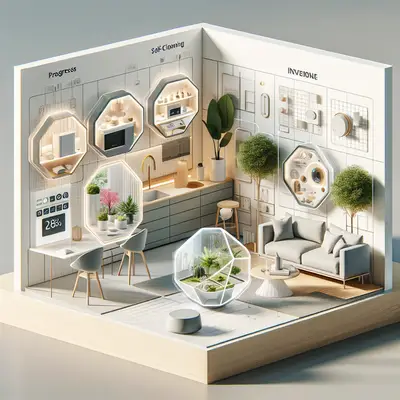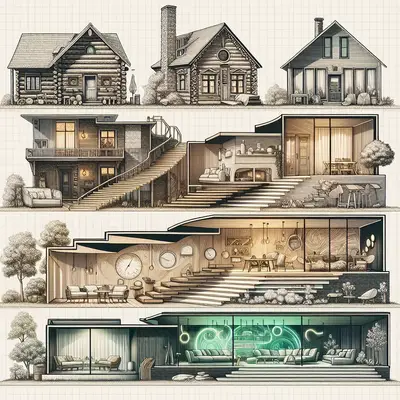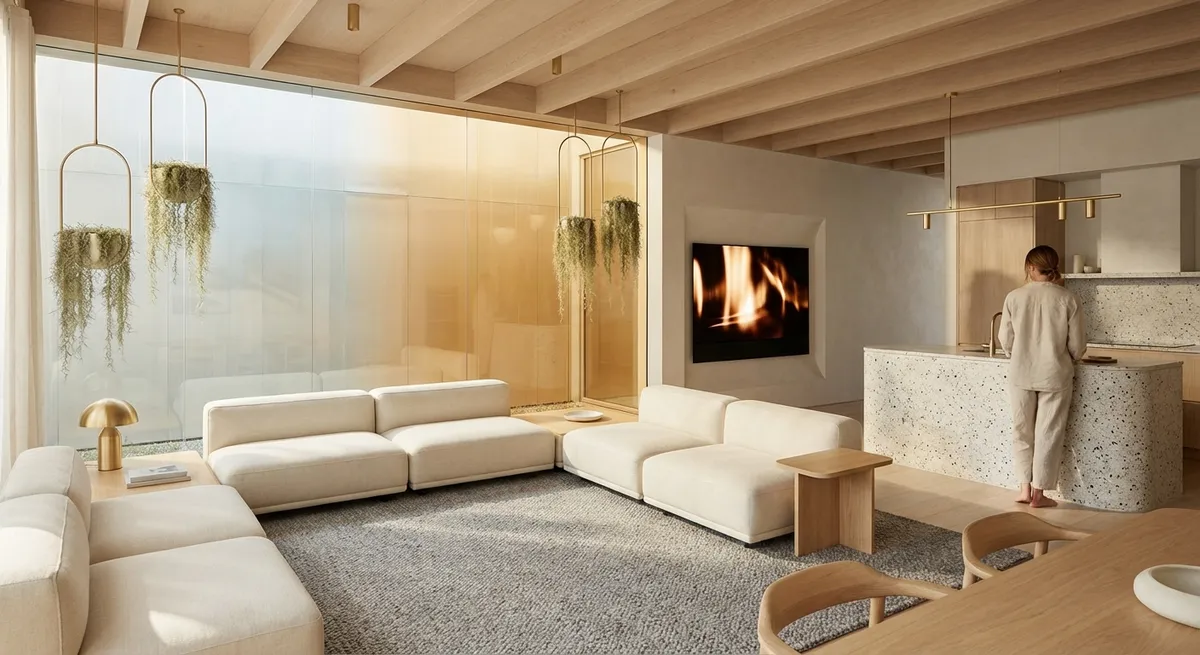
Home design isn’t just about “looking nice” anymore—it’s about how your space actually works for your life. The new wave of interiors is less show-home, more smart habitat: responsive, flexible, and quietly intentional. Think spaces that shift with your mood, support how you work and unwind, and still photograph beautifully for your feed.
Below, five innovative home living ideas that feel modern without trying too hard—and actually make your daily routine smoother.
1. Adaptive Rooms: One Space, Multiple Personalities
Instead of dedicating a whole room to a single use (guest room, formal dining, etc.), modern homes are leaning into adaptive spaces that can flip function in seconds.
Low-profile daybeds that read like sofas by day and sleep like beds at night, nesting tables that slide apart when you’re hosting, and slim folding desks that disappear into the wall let a single room do triple duty without the visual chaos. Wall-mounted sconces with swivel arms or track lighting on dimmers mean the same corner can handle a 9-to-5 video call and an 11 p.m. reading session.
To keep it from feeling like a multipurpose storage unit, anchor the room with one clear “visual identity”—a consistent palette, one large artwork, or a statement rug. The function can change; the vibe stays cohesive. The end goal: a room that behaves like a studio apartment even if you have a full house.
2. Sensorial Design: Styling for How Spaces Feel, Not Just Look
The next interior flex is less about matching furniture sets and more about editing how a room feels at every touchpoint.
Start with materials. Mix one grounding texture (like wood or stone) with one softening element (bouclé, linen, or wool) and one cool finish (metal, glass, or ceramic). That mix keeps a room from feeling flat on camera and in real life. Then layer in sensory details: a subtle signature scent, a dimmable warm-light lamp at eye level instead of harsh overhead lighting, and textiles with a bit of weight—heavy curtains, substantial throws, plush area rugs—to give the room a cocoon effect.
Sound is part of this, too. Fabric-heavy surfaces and wall-hung textiles soften echoes in open-plan spaces. Even a row of books or a fabric-covered pinboard can help dampen noise. You’re curating a full-body experience, not just a Pinterest board.
3. Micro-Zones: Designing for Your Real Daily Rituals
Instead of thinking in “rooms,” think in “rituals.” Where do you reach for coffee? Where do you scroll? Where do you actually drop your keys?
Design micro-zones around those exact moments. A slim console with a bowl for keys, a wall hook for your bag, and a tray for mail creates a landing strip that keeps clutter from migrating. A corner with a lounge chair, floor lamp, and side table becomes a scroll-free reading pocket—even if it’s literally one meter of the living room.
In the kitchen, a tea or coffee station with everything in one reach zone (mugs, spoons, sweetener) turns weekday mornings into less of a scramble. In bedrooms, a “night prep” zone with a catchall for jewelry, a small tray for skincare, and a charging dock keeps nightstands from feeling chaotic. Micro-zones are how a home quietly supports your habits instead of fighting them.
4. Light-First Layouts: Let Windows Decide the Furniture Plan
Modern interiors are leaning into light as the main design driver, not an afterthought. Instead of pushing furniture against every wall, start your layout with: “Where is the best natural light—and what do I want happening there?”
Place workspaces and reading spots in the brightest areas; shift screen-heavy zones (TV, gaming) to softer, indirect light. If you’re renovating or updating, consider layered lighting: ceiling lights for function, wall lights or sconces for ambience, and task lights at eye level where you read, cook, or work. Opt for bulbs that are labeled “warm white” or around 2700K–3000K to avoid that cold office glow.
Sheer curtains or light-filtering shades let you soften direct sun without losing brightness, while reflective surfaces—mirrors, glass-topped tables, metal accents—bounce light deeper into the room. The result: interiors that feel more awake during the day and naturally wind-down-ready at night.
5. Display with Intention: Curated Corners, Not Overstuffed Shelves
The new display philosophy is less “show everything” and more “hero a few things.”
Instead of filling every shelf, edit each surface like a mini gallery. Group objects in odd numbers (three or five), vary heights, and mix one personal piece (a photo, travel find, or heirloom) with more neutral anchors (books, ceramics, candles). Leave pockets of empty space so the eye has room to rest—negative space is a design choice, not a lack of decor.
Rotate objects seasonally or when your interests shift: stack different books, swap out a framed print, restyle a tray with fresh flowers or a sculptural branch. This keeps the home feeling alive and evolving without a full redesign. The bonus? Each corner feels “post-ready” without looking like it was staged for a shoot.
Conclusion
Modern interiors are less about chasing trends and more about designing homes that move with you—spaces that flex, support your routines, and still look good from every angle.
If you treat your home like a living system instead of a fixed layout, these ideas—adaptive rooms, sensorial design, ritual-based micro-zones, light-first layouts, and intentional display—become tools you can remix in any space, at any budget. Start small, edit often, and let your daily life be the design brief.
Sources
- American Society of Interior Designers (ASID) – 2023 Trends Report - Overview of current interior design shifts, including wellness, flexibility, and sensory-focused spaces
- Harvard T.H. Chan School of Public Health – The Importance of Natural Light - Explores how natural light impacts mood, productivity, and health at home
- U.S. Department of Energy – Lighting Choices to Save You Money - Practical guidance on layering light, bulb types, and energy-efficient lighting decisions
- Cornell University – Workspace Design and Productivity - Research on how environment and layout affect comfort and performance, relevant to home work zones
- The Metropolitan Museum of Art – Principles of Display and Curation - Insight into curatorial thinking that can be adapted to styling shelves and decor at home
Key Takeaway
The most important thing to remember from this article is that this information can change how you think about Interior Design.