Sustainable living isn’t just for off-grid cabins and hyper-minimalist lofts anymore. It’s about smart choices that actually make your day-to-day life smoother, more stylish, and more future-proof. Think low-effort upgrades that cut bills, dial up comfort, and make your home feel like it’s in on what’s next—without screaming “eco warrior” from every corner.
Below are five fresh, design-forward ideas that modern homeowners are leaning into right now—no perfection, just smarter living that fits real life.
1. Climate-Responsive Homes: Let Your Space Think in Degrees, Not Just Décor
Your home can do a lot more than sit at a fixed 72°F. Today’s most interesting spaces quietly learn your habits and sync with real-time weather so you’re not overheating in July or freezing in October.
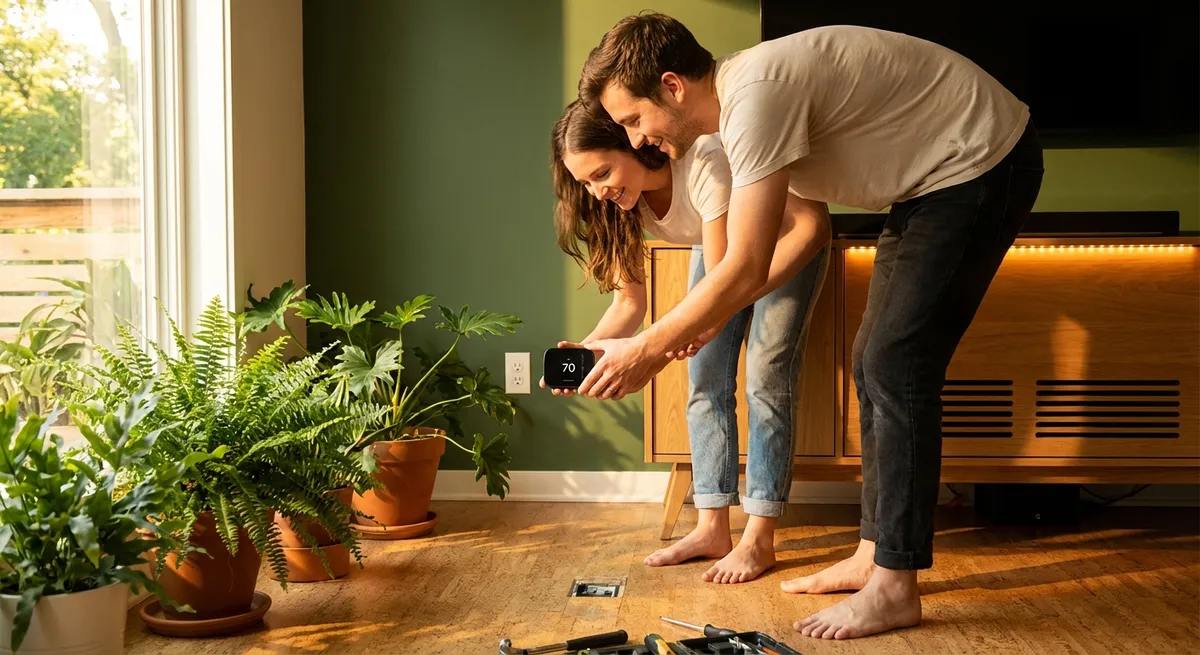
Start with a learning thermostat that tracks when you’re home, which rooms you use, and how the outdoor temperature shifts. Pair it with zoned heating and cooling—smart vents or split units—so you’re not blasting the whole house when you’re only in the living room. Add motorized shades or thermal curtains that close themselves during peak sun to block heat and open when it cools down.
The vibe: a home that feels intuitively comfortable before you even reach for the thermostat. The benefit: energy use that drops without you obsessing over every degree. It’s climate control that feels less like a chore and more like a built-in lifestyle upgrade.
2. High-Style Materials With Low Impact: Design That Ages Well
The most sustainable pieces are the ones you actually keep. Instead of chasing every trend, focus on materials that look good now and better over time—without a heavy environmental footprint.
Think reclaimed wood flooring with a matte finish, recycled glass tiles that catch the light, or stone counters sealed for longevity instead of replaced every few years. Swap fast-furniture for solid, repairable pieces made from FSC-certified wood, recycled metals, or low-VOC finishes. When you’re choosing textiles, opt for organic cotton, linen, hemp, or recycled fibers—especially in high-touch areas like bedding and sofa covers.
This isn’t about stripping your home down to bare basics. It’s about choosing pieces that feel substantial, carry a story, and won’t look tired in two years. You get a space that feels layered and intentional, while quietly cutting down on waste and replacement costs.
3. The “Circular Home” Mindset: Buy, Use, Repair, Rehome
Sustainability gets a lot easier when your home runs on a simple loop: bring in what you love, maintain it, repair it, then pass it on intentionally when you’re done.
Build a small “fix station”: a drawer or cabinet with basic tools, a fabric repair kit, wood touch-up markers, and simple hardware. Learn a few low-effort repair skills—patching a wall, tightening cabinet doors, sewing a button, re-oiling wood. When something breaks, the default becomes “Can I fix or refresh this?” before “What’s the replacement link?”
For things you’re ready to part with, create your own micro-circulation system: donate to local reuse centers, resell on curated platforms, or set up a “swap night” with friends for decor, books, and kitchen gear. Your home becomes less of a final stop for stuff and more of a checkpoint in a longer lifespan journey.
The result: fewer boxes headed to the curb, more character in your space, and a lot less guilt when you do decide to upgrade.
4. Water-Savvy Living: Invisible Tweaks, Big Impact
Energy gets the spotlight, but water is the quiet resource that’s getting more precious—especially in cities and climate-stressed regions. The good news: you can make powerful changes without turning your bathroom into a science project.
Start with low-flow fixtures that don’t feel low-quality—modern aerated showerheads and faucets maintain pressure while using less water. Install dual-flush or high-efficiency toilets to cut water use where it really adds up. In the kitchen, add an efficient dishwasher and run it full; it usually uses less water than washing by hand.
If you have outdoor space, layer in smart irrigation: drip systems, rain sensors, and native or climate-appropriate plants that don’t need daily soaking. Even in an apartment, a simple rain barrel on a balcony (where allowed) can feed plants without tapping the tap every time.
You’ll barely notice the change in routine—but you will notice a smaller water bill and the quiet confidence of knowing your home is built for a drier, more unpredictable future.
5. Micro-Energy Ecosystems: Small Power Moves With Major Payoff
You don’t need a full rooftop solar array to start generating or managing your own energy. Think of your home as a micro-ecosystem where multiple small moves add up to real independence and resilience.
Portable power stations and compact solar panels are the new “basics” for blackouts, road trips, or backyard work sessions. Smart plugs and energy-monitoring strips let you see which devices are secretly draining power and shut them off when you’re not around. Induction cooktops—whether a full range or a single plug-in burner—cook faster, keep your kitchen cooler, and use electricity more efficiently than gas or traditional electric.
You can also explore community solar if you rent or don’t have a suitable roof: you subscribe to a shared solar project and get credits on your energy bill without panels on your own home. It’s a low-commitment way to tap into clean energy while keeping your setup flexible.
The payoff: lower bills, fewer surprises when the grid has a moment, and a home that feels a bit more self-reliant without looking like a survival bunker.
Conclusion
Sustainable living doesn’t have to be loud, extreme, or all-or-nothing. The most interesting modern homes feel calm, beautiful, and quietly efficient in the background. When your space responds to the weather, your materials age gracefully, your stuff lives longer, your water use shrinks, and your energy setup gets smarter, “green” stops being a project and starts being just…how your home works.
Pick one idea that fits your life right now—maybe it’s a learning thermostat, maybe it’s finally upgrading that showerhead—and build from there. Future-proof living isn’t about instant transformation; it’s about steady moves that make your home feel better today and ready for tomorrow.
Sources
- U.S. Department of Energy – Energy Saver: Programmable Thermostats - Explains how smart and programmable thermostats reduce energy use and improve comfort
- U.S. Environmental Protection Agency – WaterSense - Details on WaterSense-labeled fixtures and how they help save water at home
- U.S. Green Building Council – LEED v4.1 for Residential - Outlines criteria for sustainable building materials and efficient home systems
- Energy Star – Most Efficient Products - Curated list of high-efficiency appliances and home products that can lower energy consumption
- NREL – Community Solar Basics - Overview of how community solar programs work for renters and homeowners without rooftop panels
Key Takeaway
The most important thing to remember from this article is that this information can change how you think about Sustainable Living.