Home isn’t just a backdrop anymore—it’s your office, wellness studio, social hub, and reset zone in one. The most interesting interiors right now aren’t about perfection; they’re about flexibility, calm, and spaces that can shift with your day without feeling like a tech showroom or a furniture catalog.
These five ideas are about designing a home that feels current, lives hard, and still looks seriously good when the group chat shows up in real life.
Fluid Spaces: Rooms That Change With Your Day
The old “one room, one purpose” rule doesn’t really work when your living room is also your Monday meeting room and your Thursday night movie spot. Modern homes are leaning into fluid spaces that transform with simple moves instead of big renovations.
Think dining tables that slide or extend into workstations, low bookshelves that double as room dividers, and slim consoles that can flip from vanity to desk in seconds. A single space can host yoga, laptop time, and dinner—if the furniture is light enough to move and the layout isn’t overstuffed.
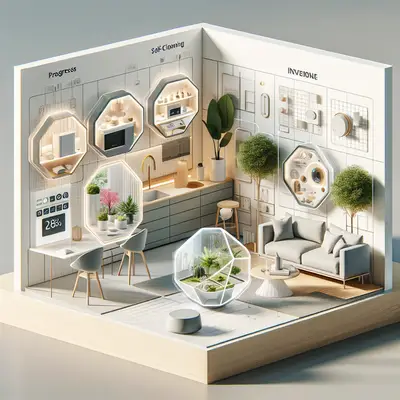
Visually, use color and texture to suggest zones: a deeper rug and floor lamp cluster can anchor a “conversation area,” while a sleek, minimal corner with a pinboard, sconce, and compact chair reads as “workspace” even if it’s two steps from the sofa. Wall-mounted lighting and foldable or nesting furniture keep the room feeling open when it’s off-duty.
The goal: a home that flexes around your schedule, not the other way around.
Layered Light: Designing for Mood, Not Just Visibility
Overhead lighting alone is the design equivalent of using your phone at full brightness all the time—strictly functional, zero nuance. The most livable spaces now are designed like a good hotel lobby: layered, dimmable, and responsive to what you’re doing and how you want to feel.
Start by thinking in “light scenes” rather than single fixtures. You might have:
- A soft, warm glow for evenings (table lamps, wall sconces, a dimmed overhead fixture)
- Clear, brighter light for tasks (focused pendant over the table, directional floor lamp near a chair)
- Low, ambient light for late nights (LED strips under shelves, behind the TV, or under kitchen cabinets)
Mix temperatures intentionally: warm light (around 2700K–3000K) in living and bedroom zones to wind down, and slightly cooler, clearer light (around 3500K–4000K) for work nooks or kitchens where visibility matters. If you can, opt for dimmable bulbs and simple, app-free remotes or wall dimmers—just enough control without overcomplication.
Lighting becomes part of the decor too: sculptural floor lamps, minimal sconces, and pendants with strong lines can feel like art pieces, even when switched off.
Display With Intention: Curating, Not Cluttering
Shelves stuffed with “stuff” are out; curated display is in. Instead of filling every surface, modern homes are using objects almost like punctuation—small, intentional moments that tell your story without shouting.
Think of each surface as having a “visual rhythm”: one taller item, one medium, one low. That might be a ceramic vase, a stack of books, and a bowl; or a framed print, a sculptural candle, and a tiny plant. Negative space is crucial—it gives the eye somewhere to rest and keeps a room feeling calm instead of crowded.
Try grouping pieces by tone or texture: all neutral ceramics on one shelf, glass and metal objects on another, or a dedicated spot for travel finds. Rotate items seasonally rather than buying more; when you “shop your own home,” you keep things feeling fresh with zero extra clutter.
Bonus: intentional display makes cleaning easier and gives your home that styled-but-lived-in feel that photographs beautifully.
Textured Calm: Making Minimal Feel Warm, Not Empty
Minimal doesn’t have to mean cold or overly stark. The most interesting interiors right now use restraint in color and form, but layer in texture and tactile materials so the space feels quiet, not clinical.
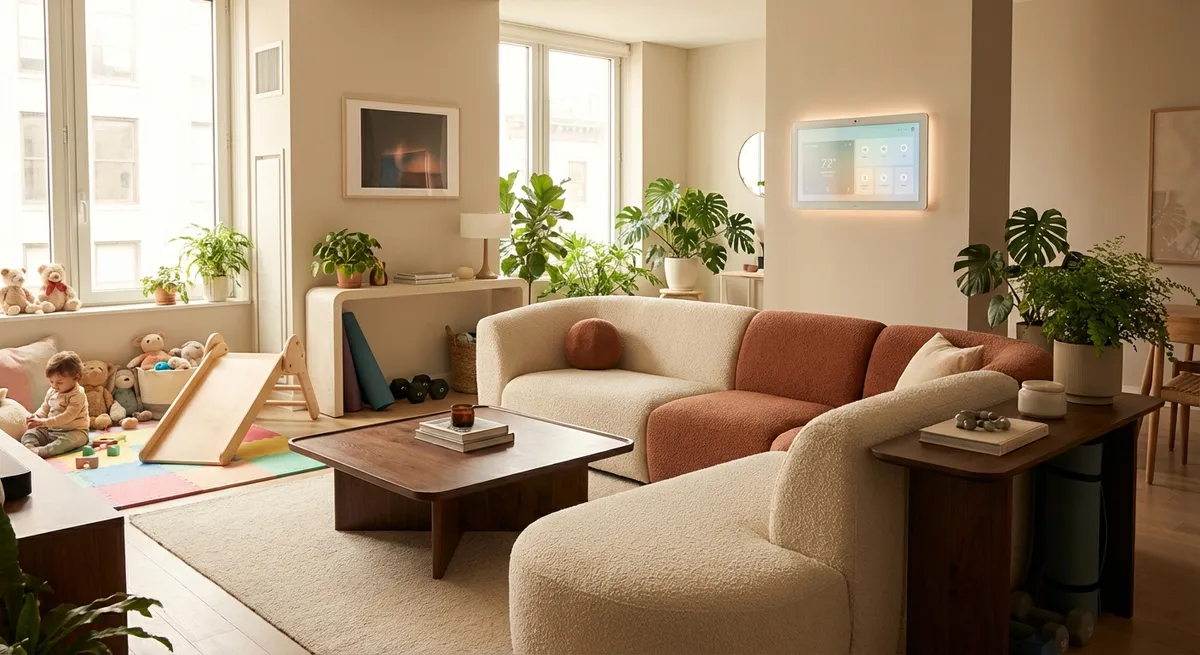
Start with a limited palette—say, warm whites, soft taupes, and deep charcoal—and then play with how things feel: boucle, linen, matte wood, stone, brushed metal, and chunky knit throws. You’re aiming for contrast in touch rather than loud contrast in color.
Walls and floors matter here too. A textured rug can soften a simple sofa. A limewash or subtly plastered wall adds depth behind clean-lined furniture. Even smaller shifts—like swapping shiny chrome hardware for brushed brass or blackened metal—instantly warm up a room without adding visual chaos.
Plants and natural elements pull it together: a single oversized leafy plant in a neutral pot, a wooden bowl on a glass table, or a stone tray on a sleek vanity bridges the gap between minimal and inviting.
Micro-Comfort Zones: Tiny Ritual Spaces That Reset You
Instead of overhauling entire rooms, modern homeowners are carving out tiny “micro-zones” dedicated to specific rituals—reading, skincare, stretching, journaling, music. These aren’t big spaces; they’re styled pockets that quietly tell you: this is where you slow down.
A micro-zone can be as simple as:
- A chair by the window with a side table, lamp, and blanket = reading corner
- A bathroom tray with a candle, your favorite skincare, and a small plant = evening wind-down station
- A yoga mat, low basket for props, and headphones on a hook = micro-studio in a bedroom corner
- A small speaker, vinyl stack, and low bench = music-only corner in the living room
Design-wise, give each zone its own small anchor: a rug, a dedicated light, or a piece of art. This visually separates it from the rest of the room, even in a studio apartment.
These spaces don’t have to be big to be effective—they just need to be consistent. When your environment reinforces the habits you want, it becomes easier to unplug, reset, and actually enjoy being at home.
Conclusion
Modern interior design isn’t about chasing trends or making your home look like everyone else’s; it’s about building a space that matches the pace and texture of your real life.
Fluid layouts let rooms do more without feeling crowded. Layered light shapes your mood. Curated displays tell your story without clutter. Textured minimalism keeps things calm but not bland. And micro-zones turn small corners into powerful daily rituals.
When your home is styled for how you actually live—not how a showroom thinks you should—it stops being just “where you sleep” and starts feeling like your favorite place to be.
Sources
- American Society of Interior Designers (ASID) – 2023 Trends Report Highlights - Overview of how evolving lifestyles are shaping flexible, wellness-focused interiors
- Harvard Graduate School of Design – “The Future of the Home” - Discusses changing residential needs and multi-functional spaces
- U.S. Department of Energy – LED Lighting Facts & Guidance - Details on color temperature, efficiency, and layered lighting choices
- Mayo Clinic – Light Exposure and Sleep - Explains how different types of light impact mood and circadian rhythm
- University of Minnesota – The Healing Power of Nature - Explores how natural elements and biophilic design support wellbeing in interior spaces
Key Takeaway
The most important thing to remember from this article is that this information can change how you think about Interior Design.