Sustainable living isn’t just about swapping plastic straws or buying a fancy water bottle. It’s about designing a lifestyle that feels better, looks elevated, and quietly lowers your impact in the background. Think: a home that supports your routines, cuts waste without killing your vibe, and still feels very “now.”
Below are five fresh home-living ideas that modern homeowners are actually using—not just pinning—to make sustainability feel like a daily ritual, not a chore.
1. The “Closed-Loop” Kitchen: Where Nothing Really Leaves
The most sustainable kitchens today are less “showroom perfect” and more “mini ecosystem.”
Instead of treating food as a straight line (buy → use → toss), closed-loop kitchens are set up like a circle. Scraps become fuel, containers stay in rotation, and appliances work smarter, not harder.
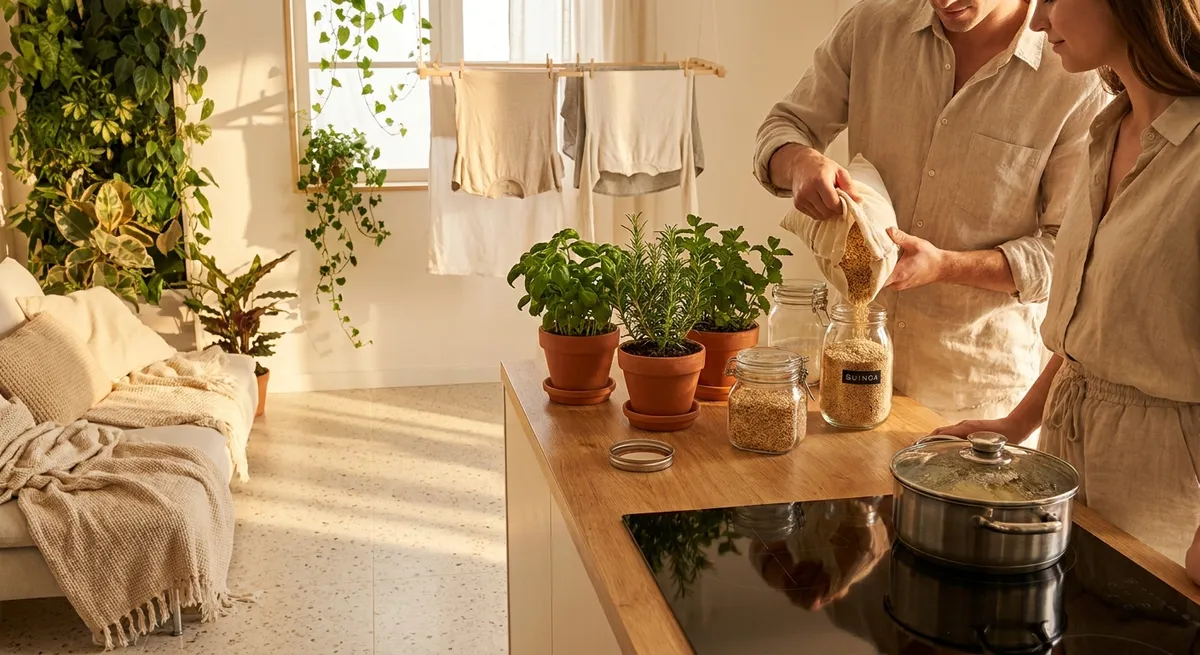
Start with a visible, stylish compost setup: a ceramic countertop bin or a stainless-steel can with a charcoal filter. When it looks good, you’ll actually use it. Pair that with a small indoor composting system, a balcony worm farm, or a local compost drop-off or municipal program so your scraps don’t just end up in the trash.
Next, rethink packaging. Invest in a few glass canisters and refill them with pantry staples from bulk stores or refill markets. It’s not about having 40 perfectly labeled jars—just enough to cut down on single-use plastics and keep food from disappearing in the back of the cabinet.
Finally, use your appliances strategically instead of constantly. Batch-cook in an energy-efficient oven, rely on smaller appliances like toaster ovens or induction hot plates when cooking for one or two, and use your freezer as a food-waste safety net (frozen bread, fruit for smoothies, chopped veggies for quick dinners).
The result: less trash, lower bills, and a kitchen that feels intentional instead of chaotic.
2. Low-Energy Comfort: Designing a Cozy Home Without Overheating the Planet
Most homes waste energy trying to fix problems that better design could solve. If your space is freezing in winter and sweltering in summer, your thermostat ends up doing all the work.
Low-energy comfort starts with passive moves, not gadgets. Layer your windows with both sheer and blackout or thermal curtains so you can control light and heat throughout the day. In hot months, close blinds or curtains during peak sun; in colder months, open them wide when the sun is out to naturally warm your space.
Zone your home by temperature: keep bedrooms slightly cooler for sleep, and focus warmth (or cooling) where you actually spend time. A high-quality area rug, draft stoppers, and a door snake can make older homes feel surprisingly cozy without cranking the heat.
Ceiling fans and portable fans are underrated heroes—they can make a room feel several degrees cooler while using far less energy than air conditioning. In winter, reversing the fan direction can gently pull warm air down from the ceiling.
You’re not aiming for a perfectly controlled climate—you’re designing a range of comfort that your body (and your energy bill) can live with.
3. Slow Fashion, Smart Storage: Turning Your Closet Into a Circular Wardrobe
Sustainable living at home isn’t just about the kitchen and cleaning products—it’s woven into your closet too.
Instead of chasing hyper-fast trends, build what feels like a “circular wardrobe”: clothes you rotate, re-style, repair, and occasionally re-home, rather than constantly replace.
Start by making your clothes visible. Open shelving, rail racks, or clear bins help you see what you own so you’re less likely to double-buy. Group pieces by how you actually wear them: “WFH uniforms,” “night out,” “weekend errands,” instead of just colors or seasons.
Create a tiny “repair + refresh” station—a jar with spare buttons, a handheld steamer, a fabric shaver, and a simple sewing kit. A 60-second steam or a quick lint removal can make an older piece feel new again.
Then, build a regular exit strategy. Keep a designated “outgoing” bin for clothes to resell, donate, or swap with friends. When it’s full, you act. Resale apps, local consignment shops, and community clothing swaps are all ways to keep pieces in circulation instead of in landfills.
Your closet becomes less about constant buying and more about curating a wardrobe that evolves with your life.
4. Water-Aware Living: Small Shifts With Big Impact
Water is one of those resources we rarely think about—until there’s a drought, a restriction, or a shocking utility bill.
You don’t need a full greywater system to live more water-aware. Start where the impact is highest: bathrooms, laundry, and outdoor spaces.
In the bathroom, low-flow showerheads and faucet aerators are low-cost upgrades that can significantly cut usage while still feeling luxe if you choose well-designed fixtures. Shortening your shower by a few minutes and turning off water while brushing your teeth or shaving sounds basic, but it adds up across a household.
In the laundry room, wash full loads, choose cold water where possible, and skip the extra rinse unless necessary. An energy- and water-efficient washer makes a big difference over time; if you’re renting, you can still tweak settings and use shorter cycles for lightly worn items.
Outdoors, swap water-hungry lawns or planters for native or drought-tolerant plants that are meant to thrive in your climate. Smart or programmable irrigation systems only water when needed, and simple moves like mulching around plants help the soil hold moisture longer.
Think of water-saving not as deprivation, but as removing waste from a system you interact with every day.
5. The Conscious Consumption Corner: A Home Setup That Helps You Buy Less, Better
Impulse buys thrive on chaos: a messy entryway, a cluttered pantry, an overstuffed “junk drawer” that makes it impossible to know what you already own.
A simple but powerful move is to create a “conscious consumption corner”—a tiny home system that makes you pause before bringing more stuff in.
This can be as minimal as a notepad or whiteboard in the kitchen or entry where you track what you’ve run out of, what you overbought, and what you never actually use. Over a month or two, patterns appear: the snack nobody eats, the cleaning product that just sits, the decor impulse that didn’t land.
Near your front door or in your main closet, keep a labeled basket for returns and another for donations. The visual reminder helps you close the loop—return what doesn’t work, re-home what doesn’t fit your life, and avoid letting things pile up “for later.”
You can also set simple house rules: one-in-one-out for certain categories (like shoes, mugs, or tech accessories), or a 24-hour “cooling-off period” before any non-essential purchase. When your home is designed to make these pauses easy, you don’t rely on sheer willpower.
In the long run, you’ll own less, love what you have more, and send far fewer impulse buys to the landfill.
Conclusion
Sustainable living doesn’t have to look like a zero-waste documentary or a perfectly curated eco-home. It can just be a series of smart, modern choices woven into your everyday rituals: a kitchen that loops instead of trashes, a wardrobe that circulates instead of explodes, and a home that stays comfortable without burning through resources.
The real shift happens when sustainability stops feeling like a performance and starts feeling like your personal standard. You’re not just “being eco-friendly”—you’re designing a lifestyle that respects your future self, your bills, and the planet, all at once.
Sources
- U.S. Environmental Protection Agency – Reducing Wasted Food at Home - Guidance on minimizing food waste and using leftovers and scraps more efficiently
- U.S. Department of Energy – Energy Saver: Heating & Cooling - Practical tips and data on improving home comfort while reducing energy use
- U.S. Environmental Protection Agency – WaterSense - Information on water-efficient fixtures and strategies to cut household water consumption
- Environmental Protection Agency – Sustainable Materials Management - Overview of circular approaches to materials, consumption, and waste reduction
- Harvard T.H. Chan School of Public Health – Sustainable Fashion - Discussion of the environmental impacts of clothing and more sustainable wardrobe choices
Key Takeaway
The most important thing to remember from this article is that this information can change how you think about Sustainable Living.