Home tech isn’t just about voice commands and flashy gadgets anymore. The most interesting homes right now feel quietly intelligent: they anticipate your routines, protect your time, and make everyday life smoother without screaming “smart home.” If you’re planning a refresh or just tech-curious, these ideas will help you build a home that feels future-ready, not futuristic-for-show.
Below are five innovative home living ideas designed for modern homeowners who care about function, aesthetics, and quality of life in equal measure.
Seamless Soundscapes: Audio That Disappears Into Your Space
The new status symbol isn’t a giant speaker in the corner—it’s sound that seems to come from everywhere and nowhere at once.
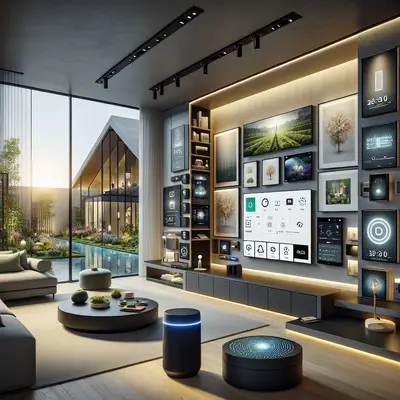
Built-in, multi-room audio systems let you move through your home with your playlists, podcasts, and news following you like a subtle soundtrack. In-wall or in-ceiling speakers, soundbars that blend into the TV frame, and even furniture with integrated speakers all keep the tech visually quiet but sonically rich.
The real magic is in how you use it. Wake-up playlists that fade in at low volume, evening “unwind” mixes triggered when you turn down the lights, or a Sunday slow-living station that switches on in the kitchen at brunch time. When paired with streaming services and voice control, you can jump from morning briefing in the bedroom to cooking playlist in the kitchen without touching a single button.
For design-led homes, look for:
- Paintable in-ceiling speakers that match your walls
- TV frames that double as art when music isn’t playing
- Discreet wall panels for volume and source, instead of a cluster of remotes
Great sound stops feeling like a “tech feature” and starts feeling like part of the architecture of your day.
Adaptive Comfort: Smart Climate That Learns Your Lifestyle
Thermostats used to be about temperature. Now they’re about comfort, energy, and mood.
Smart climate systems can learn your habits—when you leave, when you sleep, when you like it cooler—and automatically adjust heating, cooling, and even humidity. Zoned systems go a step further: your bedroom can be cool and sleep-friendly while the living room stays guest-ready.
The best setups don’t just think about “hot or cold”; they think about how it feels to live in your space:
- Bedroom cooling that dips slightly at night for better sleep quality
- Pre-warming the bathroom on winter mornings before your alarm goes off
- Automatically closing shades during hot afternoons to keep rooms comfortable and energy bills lower
Pairing smart thermostats with motorized shades and ceiling fans, you get a layered climate system that quietly optimizes itself. Add in air quality sensors, and your home can nudge you to open windows or kick on filtration when pollen or pollution levels rise.
The result is a home that feels tuned to you, not just tuned to the weather report.
The Elevated Kitchen: Quiet Tech That Actually Helps You Cook
The most interesting kitchen tech right now doesn’t scream “gadget”—it just makes prep easier, cooking more accurate, and cleanup less of a chore.
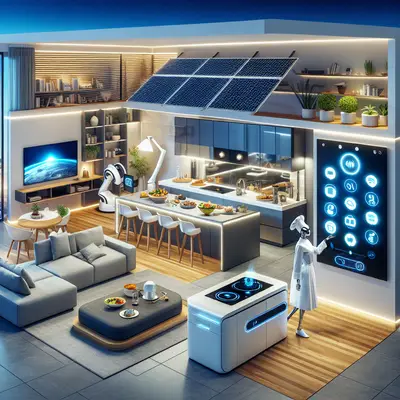
Think induction cooktops that boil water fast but stay cool to the touch—safer for kids, sleeker for small spaces, and more energy efficient than gas. Pair that with a smart oven that can recognize certain foods, suggest cooking modes, and send you a ping when your sheet-pan dinner is done.
Other quiet upgrades that modern homeowners are gravitating toward:
- Smart taps that dispense exact measurements or hands-free water when your hands are messy
- Connected fridges with internal cameras, so you can check what you’re out of while you’re at the store
- Precision appliances like smart scales and thermometers that help even casual cooks hit restaurant-level results
The goal isn’t to turn your kitchen into a sci-fi set—it’s to reduce the friction points: forgotten timers, overcooked dinners, wasted groceries. The right mix of tech means your kitchen works harder in the background, so you can stay present with the people around the island.
Calm Security: Protection That Feels Reassuring, Not Paranoid
Home security used to mean bulky cameras and harsh floodlights. Today’s security tech is more discreet, more intelligent, and designed to make you feel safe without making your home look like a fortress.
Video doorbells, slim smart locks, and low-profile cameras give you real-time visibility without shouting “surveillance.” Many newer systems use features like person detection and package alerts, so you’re not getting pinged every time a leaf blows across the frame.
For a modern, lifestyle-focused setup, consider:
- Smart locks you can open with your phone, code, or watch—ideal for cleaners, dog walkers, or guests
- Indoor cameras limited to specific spaces (entry, garage) to preserve privacy in living and bedroom zones
- Lighting scenes that mimic occupancy when you’re away—lights and shades that move in a believable pattern
The key is control. You decide what’s monitored, what’s recorded, and how often you’re notified. Done well, security tech lets you travel, run late, or host deliveries without anxiety—and then fades into the background when you’re home.
The Connected Bathroom: Spa Energy With Smart Details
Bathrooms are quietly becoming one of the most tech-forward rooms in the home—and not in a gimmicky way. It’s about turning everyday routines into mini-reset moments.
Smart showers can remember your preferred temperature and pressure, starting at exactly the right warmth before you step in. Voice or app controls mean you can start the water from bed and walk into a ready-to-go shower.
Other upgrades that feel small but have big impact:
- Heated, app-controlled towel warmers for hotel-level comfort
- Smart mirrors with built-in lighting presets and defogging, so you’re not wiping steam during your morning routine
- Sensor-based faucets that save water and keep high-touch areas cleaner
Layer in subtle audio (think low-volume playlists or guided meditations) and tunable white lighting that shifts from energizing bright in the morning to softer, warmer light at night. The goal is a bathroom that acts like a reset button—functional on busy weekdays, restorative on slow Sundays.
Conclusion
Home tech in 2026 isn’t about impressing people with how “smart” your space is—it’s about designing a home that quietly has your back. Seamless sound, adaptive comfort, an elevated kitchen, calm security, and spa-level bathrooms all have one thing in common: they respect your time, your energy, and your aesthetic.
You don’t need to upgrade everything at once. Start with the zone you use most—kitchen, bedroom, or entry—and build from there. The most modern homes evolve in layers, with each new piece of tech chosen as carefully as the furniture it sits next to.
Sources
- U.S. Department of Energy – Energy Saver: Thermostats - Explains how programmable and smart thermostats improve comfort and reduce energy use
- ENERGY STAR – Induction Cooking Tops - Details on efficiency, performance, and benefits of induction cooktops
- Consumer Reports – Best Smart Home Devices - Independent evaluations of smart home products across categories
- Harvard T.H. Chan School of Public Health – Indoor Air Quality - Research on how ventilation and indoor environments impact health and comfort
- Federal Trade Commission – Home Security Systems: Tips for Consumers - Guidance on choosing and using modern home security solutions responsibly
Key Takeaway
The most important thing to remember from this article is that this information can change how you think about Home Tech.