Home design isn’t just about what looks good anymore—it’s about what works hard for you behind the scenes. The most interesting interiors right now are less “perfect show home” and more “plugged into real life”: flexible, multi-use, a little bit techy, and designed to keep you calm, not cluttered.
Below are five innovative home living ideas that feel modern, livable, and totally share-worthy—no full renovation required.
1. Adaptive Zones: One Room, Multiple Personalities
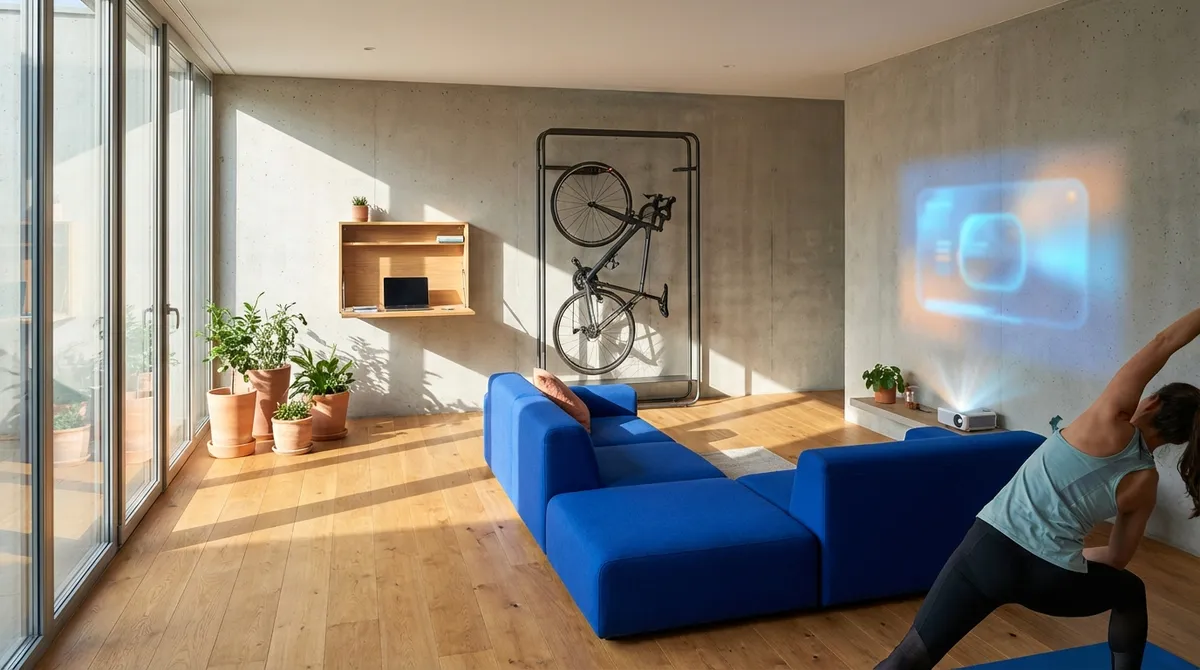
The new luxury isn’t more square footage; it’s smarter square footage. Adaptive zones turn a single room into a shape-shifter that flexes with your day—coffee nook at 8am, Zoom room at 10am, yoga corner at 6pm.
Start with movable “anchors”: a slim console that can flip into a desk, nesting side tables that become workstations, or a fold-down wall table that disappears when you’re done. Layer in soft dividers—think floor-to-ceiling curtains, freestanding shelves, or sliding panels—to visually separate “focus” from “relax” without building walls.
Lighting is where it really levels up. Use different light temperatures and layers: a warm floor lamp for unwinding, directional task lighting for deep work, and dimmable overheads for anything in between. Even in a studio, you can define a mental shift from “work mode” to “off-duty” simply by how the room is lit and furnished at different times of day.
The result: spaces that work harder for you without feeling over-designed or crowded—especially ideal for city apartments and compact homes where every square meter has a job to do.
2. Material Calm: Designing For Tactile Comfort, Not Just Aesthetic
Minimalism had its moment, but the next move is “material calm”—spaces that feel soothing because everything you touch has intention. It’s less about owning less and more about choosing better: textures that ground you, finishes that age well, and surfaces that invite you to actually live in your home.
Start with high-contact zones: your sofa, bed, dining chairs, and floors. Swap sharp, shiny, or overly synthetic finishes for natural or nature-inspired textures—bouclé, washed linen, wool blends, tactile weaves, soft edges on furniture, and matte finishes on cabinetry or walls. These materials don’t just look cozy; they also minimize glare, reduce visual noise, and create a softer acoustic feel.
Color plays into this too. Opt for “quiet” tones with depth—muted greens, warm taupes, soft clay, smoky blues—rather than flat, cold gray. These hues pair well with wood, stone, and textured textiles, and can make even a small room feel like a retreat.
The key is layering: one nubby throw won’t change the mood, but combining textured rugs, diffused lighting, and touchable fabrics will. A visually calm, tactilely rich space subtly signals your brain that home is a place to exhale, not perform.
3. Wall Power: Vertical Space As Lifestyle Storage
Horizontal space (floors, surfaces) gets cluttered fast; vertical space is the underused secret weapon. Modern interiors treat walls as functional real estate: storage, display, and tech integration all happen vertically, so your floors and tabletops stay relatively clear.
Think beyond standard shelving. Consider full-height built-ins that integrate closed storage at the bottom (for the real-life mess) and open display up top (for plants, books, and objects you love). Pegboard-style wall systems in the kitchen, entry, or office can flex with your needs—hooks, small shelves, and containers can be rearranged as your lifestyle shifts.
In living spaces, mount lighting, speakers, and even slender desks on the wall to keep the footprint minimal. Wall-mounted drop desks or fold-out consoles are particularly game-changing for smaller homes: they create instant work or dining zones, then fold away visually.
The trick is balance: use some vertical space to express your personality—art, photos, sculptural lighting—while dedicating the rest to sleek, hidden storage. When your walls are working hard, the overall space feels more intentional and less chaotic, even if you’re not a minimalist.
4. Plug-Ready Design: Building Tech In Without Making It The Star
Today’s homes quietly depend on devices, but nobody wants to live inside a tangle of cords and blinking lights. Plug-ready design is all about planning interiors so your tech disappears into the layout instead of sitting awkwardly on top of it.
Start with power and placement. Identify where you naturally charge, work, and relax, then design around that: side tables with integrated outlets, charging drawers in entry consoles, or cable cutouts built into media units. In the bedroom, consider headboards with built-in shelves and hidden cable channels so lamps, chargers, and speakers stay neat.
Visually, house routers, hubs, and smart speakers inside cabinets with mesh or slatted fronts (so signals still pass through). Mount TVs slightly lower and surround them with art, shelving, or textured panels so the screen feels integrated, not like a black hole when it’s off.
Choose tech that supports your aesthetic: slim profile speakers, neutral-colored devices, and lighting controls that blend into the wall. The goal isn’t a “smart home” look—it’s a home that feels calm and cohesive, with subtle tech that simply works in the background.
5. Micro-Sanctuaries: Small Corners, Big Reset Energy
Not everyone can dedicate a whole room to a home gym, yoga studio, or reading lounge—but almost any home has space for a micro-sanctuary. These are intentionally designed small zones that give you a mental reset: a chair by a window, a bench at the foot of the bed, a nook under the stairs.
Pick a spot that already feels slightly tucked away—a corner with natural light, an underused hallway, or a balcony edge. Anchor it with a single comfortable piece: a compact lounge chair, floor cushion, or bench. Add one or two layers that shift it from “extra seat” to “ritual spot”: a small side table, a soft throw, a candle, a plant, or a portable speaker.
Lighting is everything here. A warm, low-level lamp or wall sconce will instantly set this corner apart from the rest of the room’s function-first lighting. If you can, position it where you can look out a window or at something calm (plants, art, a textured wall) instead of a screen.
The goal isn’t perfection; it’s association. Over time, your brain begins to link that specific corner with reading, stretching, journaling, or just sitting quietly. Even in the busiest homes, a single designed micro-sanctuary can change how the entire space feels.
Conclusion
Modern interior design isn’t about chasing trends—it’s about building rooms that understand how you actually live. Adaptive zones, material calm, vertical storage, plug-ready layouts, and micro-sanctuaries all share one thing: they make your home work better without shouting for attention.
If you’re updating your space, start small: one corner, one wall, one material shift. Layer from there. The most interesting homes right now aren’t curated for a feed—they’re crafted for real, lived-in, daily comfort. The bonus? Those are the spaces people end up sharing anyway.
Sources
- Harvard Joint Center for Housing Studies – Improving America’s Housing - Research on how people are rethinking home spaces and renovation priorities
- American Society of Interior Designers (ASID) 2023 Trends Outlook - Industry insights on wellness, materials, and functional design shifts
- Mayo Clinic – Light and Your Health - Explains how different types of light affect mood and daily rhythm
- U.S. Department of Energy – LED Lighting - Guidance on modern lighting options and efficiency for home design
- IKEA Life at Home Report - Global research on how people actually use and feel about their homes
Key Takeaway
The most important thing to remember from this article is that this information can change how you think about Interior Design.