Holiday travel is a mess, shipping delays are real, and your to‑do list is a full‑time job. That’s why the internet is obsessed right now with “survival gadgets” — just look at pieces like Bored Panda’s trending guide to travel tech for chaotic holiday trips. But here’s the thing: if we’re investing in clever gear to survive airports, why aren’t we doing the same for the place we actually spend most of our time — home?
From smart locks to AI-powered vacuums, the home version of those “holiday hero gadgets” is finally catching up. The same way you wouldn’t fly without noise-canceling headphones or a portable charger anymore, you don’t need to live in a home that constantly demands your attention. Today’s home tech is all about calm, convenience, and creating a space that actually supports your life, not just looks good in photos.
Here are five future-facing ideas inspired by that travel-gadget mindset — but designed to transform your everyday home life.
1. The “Pre-Flight Check” Smart Entryway
Travel gadgets are all about avoiding that “Did I forget my passport?” panic. Your front door can do the same for daily life.
Modern smart locks from brands like August, Yale, and Level are pairing with video doorbells (think Ring, Google Nest) to turn your entryway into a control center instead of a stress point. Imagine your door auto-locking the minute you leave, your porch camera sending you a live clip when a package hits the mat, and temporary digital keys for dog walkers or cleaners so you’re never texting “The spare key is under the…” again.
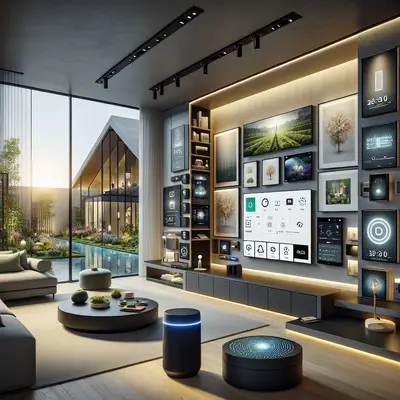
Layer in a smart console or simple wall shelf setup: a wireless charging tray where your phone, earbuds, and smartwatch live as soon as you walk in; a small, always-on display that shows the weather, your calendar, and who just rang the bell; motion-triggered lighting that gently turns on when you come home with arms full of groceries. It’s the same logic as a good travel kit: everything has a place, and the tech disappears into your routine.
For style, skip the “techy” look. Matte black hardware, warm white bulbs, and a minimal console or bench keep the vibe design-forward, not gadget-overload.
2. The Jet-Lag-Free Bedroom: Lighting That Listens To Your Body
Holiday travel guides love to push sleep masks and neck pillows. At home, your real sleep upgrade is smart light — and yes, it’s finally good enough to matter.
Philips Hue, Nanoleaf, and Govee are leaning hard into circadian-friendly lighting, and newer platforms like Aqara and HomeKit-compatible bulbs make this easier to automate. Your bedroom can shift from cool, bright “morning sun” to warm, low “candlelight” on a schedule that matches your sleep cycle. Pair that with a sunrise alarm clock (Hatch, Loftie, or even smart displays from Google and Amazon) that slowly brightens before your alarm, and you basically build your own jet-lag-fighting hotel suite at home.
The trick is to design for mood, not just brightness. Think: a main overhead source for getting dressed, soft wall or strip lighting under the bed for midnight bathroom runs, and reading lamps you can dim from your phone — or cut completely when you say “goodnight” to your smart speaker. If you have blackout curtains, add retrofit smart curtain motors so you can wake up to natural light instead of your phone’s blue glow.
Set it up once, then stop thinking about it. The tech takes care of the rhythm; you just enjoy bedrooms that feel like a boutique hotel instead of a backlit office.
3. The “Travel Charger” Kitchen: Power Everywhere, Cords Nowhere
That viral list of travel gadgets is basically a love letter to portable chargers and clever cable management. At home, the same energy goes into hiding the chaos without losing the convenience.
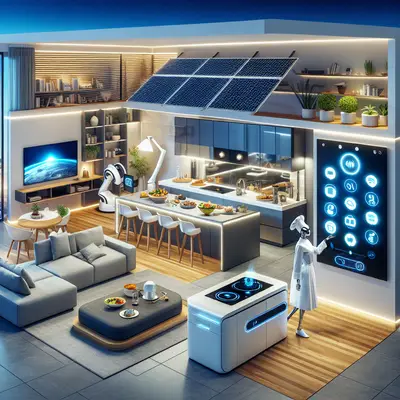
Newer kitchen builds and renovations are quietly sneaking in tech like wireless charging countertops (yes, actual quartz and solid surfaces with built-in Qi chargers), pop-up outlets that vanish into the island when not in use, and under-cabinet power strips that keep cords off the backsplash. Companies like Docking Drawer and Legrand are turning hidden outlets and charging drawers into design elements instead of afterthoughts.
Add a compact smart display (Google Nest Hub, Echo Show, or a tablet on a magnetic under-cabinet mount) and you’ve got a command center for recipes, timers, grocery lists, and video calls while you stir. Smart plugs can turn your “dumb” coffee machine into a scheduled ritual; an energy-monitoring plug can literally tell you which appliance is silently eating power.
The result is a kitchen that feels more like a well-designed airport lounge: power where you need it, zero visual clutter. Your counters stay clean, your devices stay charged, and your life runs smoother in the room you probably use the most.
4. The Living Room “Boarding Lounge” With Background Automation
Airports are masters at making things happen in the background — doors open, displays update, flights board — and you barely notice. That’s the new goal for your living room.
Today’s smart speakers and hubs (Apple HomePod, Amazon Echo, Google Nest) are evolving from “voice assistants” into invisible house managers. They can dim lights, close shades, and start your favorite playlist when you say “movie night,” or fire up the fireplace, switch to a cozy lamp scene, and cue up a podcast when you say “wind down.” Logitech’s Harmony is gone, but TV systems from Samsung, LG, and Sony now play nice with platforms like Matter and HomeKit, turning your TV into part of the room’s scene instead of the only focus.
Add presence sensors (Philips Hue, Aqara, or built into smart thermostats) and your lights and temperature can adjust simply based on who’s home. A compact robot vacuum or mop docked in a corner becomes your cleaning crew, quietly doing laps while you’re out or during the night, the way robots clean terminals after hours.
Keep the aesthetic grounded: one visible hub or speaker, a few well-chosen lamps with smart bulbs, and everything else hidden behind your decor. You’re aiming for a space that feels like a luxe airline lounge: soft lighting, good sound, no hustle.
5. The “Everyday Carry” Closet: Smart Storage That Thinks Ahead
Holiday packing lists are big right now — but the future of home is not needing one just to get dressed. Smart closets are slowly moving from luxury fantasy to realistic upgrade.
Start small: LED strip lighting with motion sensors so your closet lights up the second you slide the door. Add a smart plug to your steamer or garment care system so you can say “prep outfit” while you’re still making coffee. If you’re into wearables, tie your fitness tracker or smartwatch into routines: when you end your workout, your bedroom fan and cooling lighting scene come on while the closet brightens.
There’s also a quiet boom in “digital wardrobe” apps that use AI to help you mix, match, and plan outfits (think Whering, Save Your Wardrobe, Stylebook). Some smart mirrors and displays are starting to integrate this idea too, offering weather-aware outfit suggestions or “packing mode” when you have a trip on your calendar.
Design-wise, treat this like your personal first-class cabin: streamlined hangers, consistent storage bins, maybe one small charging shelf for your daily tech — phone, smartwatch, earbuds, even a compact UV sanitizer tray for keys and wallets. The tech doesn’t scream for attention; it just removes friction from your morning.
Conclusion
The same way travel tech is trending as a survival strategy for chaotic airports, home tech is quietly becoming a survival strategy for everyday life. The difference is that your home upgrades pay you back every single day, not just when you catch a flight.
Think of these ideas less as “gadgets” and more as lifestyle infrastructure: a smart entryway that keeps you sane, lighting that supports your sleep, a kitchen wired like your favorite coworking space, a living room that runs itself, and a closet that acts like a low-key stylist. Start with one room, layer in automation slowly, and keep the design calm and intentional.
Your home doesn’t have to feel like another thing to manage. Done right, the tech fades into the background — and the lifestyle stays front and center.
Key Takeaway
The most important thing to remember from this article is that this information can change how you think about Home Tech.