Home tech doesn’t have to scream “gadget person.” The best setups feel like a quiet upgrade to your lifestyle—less chaos, more flow. Think lights that follow your mood, sound that follows you room to room, air that just feels better. No clunky dashboards, no sci‑fi spaceship vibes. Just a home that feels a little more dialed-in than it did last year.
Here’s how modern homeowners are weaving tech into their spaces in a way that feels considered, design‑forward, and surprisingly effortless.
Ambient Lighting That Moves With Your Day
Harsh overhead lighting is basically the flip phone of interiors. Smart, layered lighting is where everything starts to feel intentional.
Modern smart lighting systems let you set “scenes” that automatically shift by time of day—cooler light in the morning to wake up, warm dimmed light at night to wind down, and something brighter but soft for work-from-home hours. Paired with motion sensors or schedules, you stop thinking about switches at all.
The difference is less about “wow, cool tech” and more about mood. A soft, low-lit kitchen at 10 p.m. makes late-night tea feel like a ritual instead of a quick task. Tunable white bulbs can even support better sleep by aligning more closely with your body’s natural rhythms.
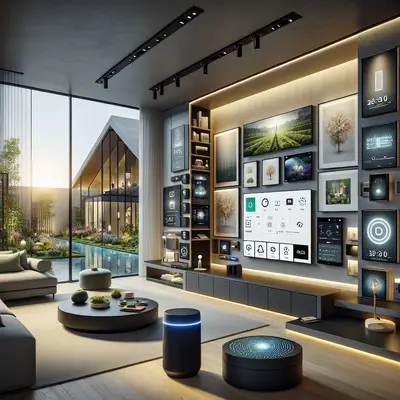
The design play: hide the tech, show the vibe. Use smart bulbs in your existing fixtures, LED strips behind bookcases or under cabinets, and wall-mounted keypads or discreet voice control instead of a clutter of remotes. You end up with a home that subtly responds to you—without looking like a showroom.
Invisible Sound: Audio That Blends Into the Room
Speakers used to be big black boxes you had to decorate around. Now, whole-home audio can practically disappear into your space while still sounding studio-level good.
Wi‑Fi-based speaker systems let you group rooms together, keep them separate, or have your podcast follow you as you move. The tech is impressive, but the lifestyle shift is bigger: cooking with a playlist that fades into your bathroom audio during your shower, or starting a movie in the living room and having the audio auto-switch to a bedroom speaker if you pause and move.
There are speakers that double as lamps, wall art, or side tables—pieces that look like decor first, devices second. In-ceiling options can be planned into renovations for a near-invisible experience, while soundbars with voice assistants eliminate the need for extra hubs.
The modern move is to treat sound like lighting: part of your background architecture. You’re not “turning on the speakers”; you’re creating an atmosphere—morning news, afternoon focus, evening chill—without thinking too hard about it.
Micro-Zones: Climate That Knows Where You Actually Are
Most homes still run like it’s 1995: one thermostat, one temperature, zero nuance. Today’s smarter setups create “micro-zones” so you’re not cooling empty rooms while your office feels stuffy.
Smart thermostats learn your schedule and habits, and many can connect to room sensors so they focus on where you really are—bedroom at night, living area during the day, office in work hours. Over time, they can shift heating and cooling to off-peak times to save money while still keeping your comfort on point.
The impact is quietly noticeable. Fewer temperature arguments. Less waking up in the middle of the night because the room is too warm. A living room that feels good at 4 p.m. and 11 p.m. without manual adjustments.
Even simpler: smart radiator valves or vent controllers can balance out hot and cold spots in older homes without a full HVAC overhaul. Add in a few connected ceiling fans and window shades that adjust with the sun, and suddenly your home feels like it understands your climate preferences better than you do.
Frictionless Entry: Smarter Doors, Smarter Routines
The front door is where most of your daily chaos happens: keys, packages, people arriving, food delivery, dog walkers, guests. Smart entry tech takes that messy moment and makes it cleaner and calmer.
Video doorbells now act more like mini security hubs—letting you see, talk, and even unlock doors from your phone. Smart locks can auto-lock when you leave, auto-unlock when you arrive, and generate temporary codes for guests, cleaners, or short-term renters so you’re not playing key roulette.
The real win is how this tech dissolves little micro-frustrations: no more panic over lost keys, no more racing home to let someone in, fewer “did I lock the door?” moments. And for homeowners who host or rent out spaces, it adds a flexible, professional layer to the experience.
Design-wise, you can keep things minimal: a clean, well-designed smart lock that matches your hardware, a discreet doorbell camera, and a small shelf or tray inside the entry for packages or everyday carry items. The whole area starts to feel less like a choke point and more like a curated threshold.
Quiet Health Tech: Air, Sleep, and Subtle Wellness
Wellness tech has finally moved out of the wearable-only world and into the architecture of your home—and the best of it disappears into the background.
Smart air purifiers can auto-adjust based on real-time air quality data, kicking up a level during cooking, after cleaning, or during pollen-heavy seasons. Some HVAC systems now integrate built-in filtration and monitoring, so you can check indoor air quality from the same app you use for your thermostat.
In the bedroom, sensor-based sleep tech—like smart mattresses, pads, or under-bed monitors—tracks sleep quality without asking you to wear anything. Some can tweak mattress firmness or temperature automatically through the night. Smart blinds or curtains can handle that early-morning light shift for you, opening gradually as a natural alarm.
These upgrades don’t shout for attention; they just make you feel better day-to-day. Clearer air, more consistent sleep, better recovery from busy weeks. It’s wellness woven into the walls, not another gadget that ends up in a drawer.
Conclusion
The most interesting home tech right now isn’t about maximum features—it’s about minimum friction. It’s letting your lighting, sound, climate, entry, and wellness run a little more on autopilot, so your space quietly supports how you live without demanding constant input.
For modern homeowners, that’s the real flex: a home that feels intuitive, calm, and a little bit smarter than it looks.
Sources
- U.S. Department of Energy – Smart Home and Smart Thermostat Basics - Overview of how smart thermostats and home automation can improve comfort and efficiency
- Harvard T.H. Chan School of Public Health – Air Quality and Health - Research on how indoor air quality impacts health and the role of buildings
- Mayo Clinic – Light and Sleep - Explains how light exposure and timing affect sleep quality and circadian rhythm
- Consumer Reports – Guide to Smart Locks - Independent testing and buying advice for smart entry systems
- Bluetooth SIG – Multi-room Audio and Wireless Sound - Technical background on modern wireless audio systems and use in multi-room setups
Key Takeaway
The most important thing to remember from this article is that this information can change how you think about Home Tech.