Home tech isn’t just about flexing a smart speaker anymore. It’s about creating a space that feels calmer, flows better, and quietly has your back from the moment you wake up to the second you crash at night. Think less “sci-fi showroom,” more “this just makes my life easier.”
Below are five innovative home living ideas that feel modern, liveable, and totally shareable—without turning your place into a blinking gadget museum.
1. The “Soft Start” Morning: Tech That Wakes Up With You
Forget harsh alarms and blinding overhead lights. A soft-start morning routine uses tech to help your body wake up naturally, without the chaos.
Imagine this: 20 minutes before your alarm, your smart blinds start to lift, letting in natural light. Your sunrise lamp slowly warms from dim amber to bright daylight. The thermostat bumps up a couple degrees so getting out of bed doesn’t feel brutal. By the time your actual alarm sounds—maybe on your smartwatch or phone—it’s more of a gentle nudge than a panic-trigger.
You can build this with connected blinds or shades, a smart wake-up light, and a thermostat that runs on schedules or routines. Add a smart plug for your coffee machine or kettle, and your “good morning” can literally taste better.
The best part: once it’s set up, you don’t have to think about it again. It’s just your home quietly supporting how you actually want to feel in the morning—less groggy, more grounded.
2. Zoned Sound: Audio That Follows Your Lifestyle, Not Your Walls
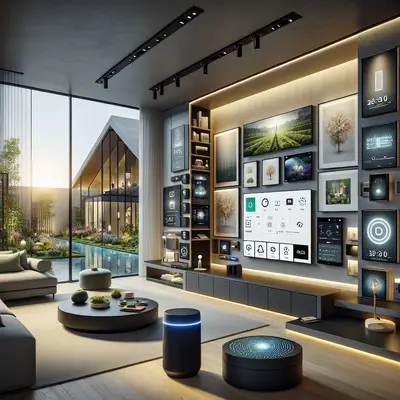
Instead of one big speaker in the living room and sad, tinny audio everywhere else, zoned sound lets you treat audio like lighting—layered, flexible, and mood-based.
With a multi-room speaker system, you can listen to a podcast in the kitchen, keep lo-fi beats flowing in the home office, and play something totally different in the bedroom—all from your phone. Or you can sync everything for a whole-home soundtrack when you’re hosting.
The magic is in how you use it:
- Create a “Focus” audio zone in your work area with instrumental playlists and noise-masking soundscapes.
- Set a “Wind Down” zone in the bedroom with softer audio, audiobooks, or guided meditations on a timer.
- Use voice assistants or automations so sound changes with the time of day or activity (cooking, cleaning, entertaining).
Speakers no longer need to be huge or obvious—they can be wall-mounted, tucked on shelves, or even built into light fixtures. The goal is not just better sound; it’s using audio as another layer of design and mood in your home.
3. The Hybrid Kitchen: Analog Charm, Digital Brain
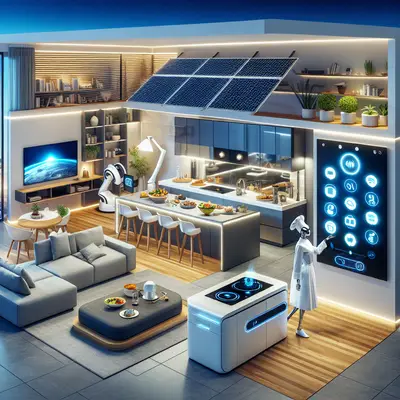
The next-gen kitchen doesn’t look like a spaceship. It looks like your style—wood, stone, ceramics—just paired with a quiet layer of tech that keeps life moving.
Start with a smart display or tablet docked out of the splash zone. It becomes your hub for recipes, timers, grocery lists, and video calls while you cook. Add a few key upgrades: an induction cooktop for speed and control, a smart oven that can preheat from your phone, or a fridge that helps track what’s inside so you waste less.
Modern homeowners are also using tech to make cooking feel more intentional, not rushed. That might mean:
- Smart scales and thermometers to nail recipes without guesswork
- App-connected coffee machines or kettles so your ritual is always consistent
- Lighting scenes—bright for prep, warm for dinner, dim for late-night snacks
None of this has to look “techy.” You can hide outlets in drawers, mount under-cabinet lighting, and use sleek, minimal devices that blend seamlessly with your finishes. The result: a kitchen that feels like a social space, a creative studio, and a control center—all without losing its soul.
4. Micro Wellness Corners: Tiny Spaces, Smart Upgrades
You don’t need a full home spa to prioritize wellness. A single corner, dialed in with the right tech, can completely change how you recharge at home.
Think about what you actually crave: stretching, reading, meditating, journaling, breathing room. Then build a “micro wellness corner” around that with a few thoughtful upgrades:
- A smart lamp that shifts from cool white (daytime energy) to warm glow (evening wind-down)
- A compact air purifier and humidifier combo to keep the air feeling clean and breathable
- Noise-cancelling headphones or a small speaker for meditation apps and calming soundscapes
- A smart plug on a diffuser or salt lamp so everything turns off with one voice command or routine
You can layer in a fitness tracker or connected yoga mat if that’s your thing, but the real win is turning one unused corner—an awkward nook, a slice of bedroom, an empty landing—into a space you actually look forward to using.
Wellness tech doesn’t have to scream “optimization.” It can be quiet, soft, and supportive, helping your home feel like a reset button instead of just a backdrop.
5. The Invisible Office: Work-From-Home That Packs Away
Permanent home offices are great—but not everyone has the square footage (or wants to stare at a desk 24/7). The “invisible office” trend is about work setups that disappear when you’re off the clock.
Start with a compact, ergonomically sound core: a good chair, a laptop stand or monitor arm, and a keyboard you actually like. Then layer in tech that makes it easy to switch between “work mode” and “home mode”:
- A single USB-C or Thunderbolt dock to connect your laptop to everything—monitor, power, storage, audio—with one cable
- A portable second screen that can fold away in a drawer or shelf
- Smart lighting scenes that shift from bright, cool “work” lighting to warm, relaxed evening lighting automatically
- A rolling cart or cabinet where your tech can be stored when you’re done
For video calls, a compact ring light or small panel light mounted behind your monitor can make you look instantly more polished—then turn it off and your space is just a normal room again.
The goal: boundaries. When work tech isn’t visually dominating your space, it’s easier to mentally log off. You still get all the productivity benefits, but your home feels like… a home.
Conclusion
Modern home tech isn’t about owning every gadget—it’s about choosing a few smart upgrades that genuinely shift how your space feels and functions.
From gentle wake-ups and layered audio to wellness corners, hybrid kitchens, and invisible offices, the focus is on tech that disappears into your routines and your design choices. The best setups don’t shout; they quietly support the way you live now—and the way you want to live next.
Sources
- U.S. Department of Energy – Thermostats and Control Systems - Explains how smart thermostats and scheduling can improve comfort and energy efficiency at home
- Harvard T.H. Chan School of Public Health – Indoor Air Quality - Covers the health and wellness impact of air quality in homes and workspaces
- Mayo Clinic – Sleep Tips and Light Exposure - Discusses how light and wake-up routines affect sleep quality and energy
- Consumer Reports – Smart Speaker & Multi-Room Audio Guide - Provides an overview of smart speakers and multi-room audio considerations
- Occupational Safety and Health Administration (OSHA) – Computer Workstation Ergonomics - Outlines ergonomic principles for healthier, more comfortable home office setups
Key Takeaway
The most important thing to remember from this article is that this information can change how you think about Home Tech.