There’s a new kind of “dream home” emerging—less about square footage, more about how it works for your actual life. Think subtle tech that fades into the background, routines that run themselves, and spaces that flex between office, gym, and sanctuary without feeling like a gadget showroom. This isn’t sci-fi; it’s what modern homeowners are quietly building right now.
Below are five innovative home-living ideas that feel current, livable, and very shareable—no clunky robots, no tech overwhelm.
Sensor-Rich Spaces That Learn Your Rhythm
The smartest homes now move beyond simple motion sensors. They’re tuned into patterns—when you wake up, how you move through rooms, what “evening mode” really looks like for you.
With a mix of presence sensors, smart lighting, and climate control, your home can gently adapt in real time. Lights brighten before your alarm, hallway sconces dimly guide late-night walks, and your bedroom cools as you start winding down. Some systems can even detect if a room is actually occupied instead of just triggered by a pet walking by, so your lights and HVAC aren’t constantly turning on and off.
For modern homeowners, the appeal is less “wow, gadgets!” and more: less decision fatigue. Instead of constantly toggling lamps, blinds, and thermostats, you set a few scenes (Morning, Work, Wind-Down, Away) and let sensors refine them over time. It’s comfort that feels almost intuitive—like living in a space that actually notices you.
Kitchen Tech That Thinks Beyond Smart Fridges
The kitchen has gone way past recipe apps and talking fridges. The new wave of kitchen tech is focused on reducing decision overload, food waste, and cleanup stress—without making you feel like you need an engineering degree to cook dinner.
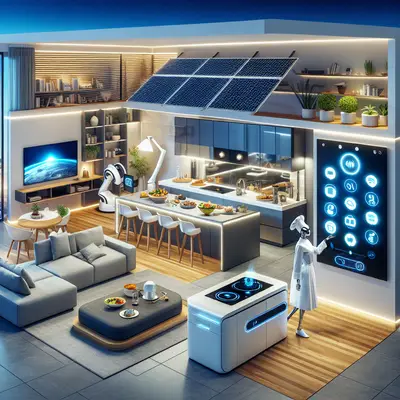
Smart induction cooktops can recognize cookware size and adjust heat more precisely, which means faster boiling, safer surfaces, and far less burning. Connected ovens now offer in-oven cameras and food-recognition modes, so you can check doneness from your phone and let the device suggest temps and timings for basics like salmon, veggies, and sheet-pan dinners.
There’s also a quiet shift toward “micro-zoning” the kitchen: a smart tap that dispenses precise measurements or set temperatures, a compact under-counter dishwasher running quick, efficient cycles, and a composting unit that handles food scraps automatically. Instead of one massive showpiece appliance, you get a calm, streamlined workflow that actually supports your daily habits.
For anyone who cooks between Zoom calls or late at night, this kind of kitchen feels less like a production and more like a helpful co-chef.
Wellness-First Bedrooms With Invisible Tech
The bedroom is officially the new wellness hub—and the most interesting tech here is almost invisible. It’s not about giant screens; it’s about sleep quality, air, light, and sound.
Smart blinds can gradually let in morning light based on your wake-up time, helping reset your circadian rhythm more gently than a blaring alarm. Sleep-tracking systems tucked under the mattress or built into smart beds can monitor breathing, restlessness, and sleep phases, then quietly adjust firmness or temperature to keep you in deep sleep longer.
Air purifiers and humidifiers with connected sensors can respond to real-time air quality and dryness, automatically balancing comfort levels without you fiddling with settings. Paired with low-blue-light smart bulbs and a minimalist smart speaker for ambient sound or guided wind-down routines, you end up with a room that feels like a boutique hotel—but tailored entirely to your body and schedule.
The real luxury here isn’t the devices; it’s waking up and actually feeling rested, consistently.
Hybrid Work Zones That Shape-Shift All Day
The “home office” has matured from a temporary desk into a fully integrated zone that needs to function like a studio, control room, and sanctuary in one. The most modern setups lean on tech that transforms the same square footage throughout the day.
Think motorized sit-stand desks that remember your preferred heights, paired with lighting scenes that shift from bright “focus mode” to warmer “off-duty” glows. Noise-canceling panels and smart speakers can create an acoustic bubble for calls, while smart cameras and lighting bars auto-adjust framing and exposure so you look clear and professional on-screen—without rearranging your room.
Some homeowners are layering in ultra-slim displays that double as art when not in use, or retractable projector screens that disappear between meetings and movie nights. Even small touches, like a smart power strip that kills standby power to your “work tech” at a set time each evening, can help your brain clock out.
The result is a space that feels less like you brought the office home—and more like your home quietly learned how to support serious work.
Micro-Climate Comfort in Every Corner
Central heating and cooling used to be all-or-nothing: one temperature, every room. Now, home tech is moving toward micro-climates—custom comfort per zone, sometimes per person.
Smart vents and room-by-room temperature sensors let your system redirect airflow where it’s actually needed. If your south-facing office heats up every afternoon, the system can cool that zone more aggressively without freezing out the rest of the house. In smaller spaces, compact smart heaters, fans, and cooling units can coordinate via a central hub to maintain comfort without overworking any single device.
Add in connected ceiling fans that switch direction and speed automatically based on season and temperature, and you start to feel like your home has its own internal weather system tuned entirely to you. It’s not just about comfort, either—zoned control often means using less energy overall, which is good for both your bills and your conscience.
For modern homeowners, this approach turns fussy thermostat wars into something smoother and more personalized: everyone gets their preferred comfort zone without compromising the vibe of the whole space.
Conclusion
The most interesting home tech right now isn’t loud or showy. It’s the kind that folds quietly into your life—smoothing out your mornings, dialing down daily frictions, and making your space feel more attuned to how you actually live.
From kitchens that think ahead to bedrooms that protect your sleep and work zones that flex all day, the future of home is less about “smart gadgets” and more about responsive living. The goal isn’t to turn your house into a machine; it’s to give your home just enough intelligence to feel almost effortlessly in sync with you.
Sources
- U.S. Department of Energy – Smart Home and Building Systems - Overview of how connected systems improve comfort and energy efficiency
- Harvard T.H. Chan School of Public Health – Healthy Buildings - Research on how air quality, light, and thermal comfort impact wellness at home
- Sleep Foundation – Technology and Sleep - Insights on sleep environments and how tech can help or hinder rest
- Consumer Reports – Guide to Smart Kitchen Appliances - Independent overview of current smart kitchen capabilities
- EPA – Energy Efficiency in Heating and Cooling - Information on zoned comfort and energy-saving temperature control strategies
Key Takeaway
The most important thing to remember from this article is that this information can change how you think about Home Tech.