There’s a new kind of “smart” home: less sci‑fi gadget wall, more soft life energy. It’s not about owning every device—it’s about curating tech that makes your space calmer, more intuitive, and more you. Think: your home quietly handling the background tasks while you focus on living in it.
Below are five innovative home living ideas that feel modern, elevated, and actually worth bringing into your space.
1. The “Invisible Command Center” For Your Day
The real flex isn’t a wall full of screens—it’s tech that disappears into your decor while keeping your day moving.
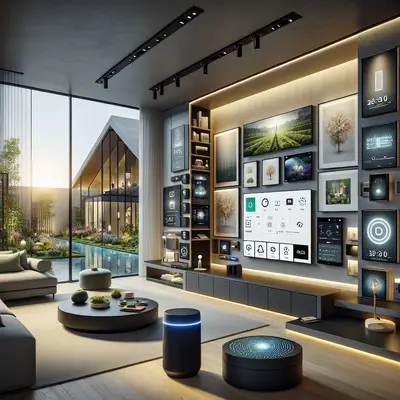
Instead of scattering devices everywhere, think in terms of a single, low‑key “command center.” A smart display in the kitchen, hallway, or entryway can quietly act as your household’s brain: calendar, to‑do lists, timers, reminders, intercom, and music in one place. Pair it with a few smart speakers or light switches, and you’ve created a whole-home experience without visual clutter.
Mount the display like a small frame, keep the interface minimal, and use ambient features—rotating art, family photos, weather—to make it feel like decor, not hardware. Automations can do the heavy lifting: have lights and soft music turn on at a set time, display your commute or school schedule in the morning, and show a “wind-down” scene at night with tomorrow’s top tasks. The key is to let tech organize the chaos without becoming visual chaos itself.
2. Zoned Comfort: Micro‑Climates Inside One Home
Whole-home temperature control is old news. Today’s comfort is about micro‑climates—designing different “feels” in different spaces without wasting energy.
Smart thermostats can now learn your routines, but pairing them with smart vents, connected radiators, or zoned mini-split systems gives you finer control. Imagine: a cooler bedroom for sleep, a warmer bathroom in the morning, and a perfectly balanced living room when guests arrive—all dialed in automatically based on time, occupancy, or even weather forecasts.
Layer in smart blinds or shades that track the sun to control heat and glare, and suddenly your home is working with nature instead of fighting it. The result is a space that feels tailored to how you actually live: no more wrestling with one thermostat to serve everyone’s preferences. It’s energy-efficient comfort that adjusts to you, room by room.
3. A Home That Curates Your Media (So You Don’t Have To)
We’ve hit peak option fatigue—movies, shows, podcasts, playlists everywhere. The next step in home tech is using it to filter, not just to stream.
Rather than bouncing between apps, think about setting up your home to serve content based on mood, time, and activity. Smart TVs and speakers can pull recommendations from across platforms; pair that with routines like “Cooking Mode” (podcast or playlist + brighter counter lighting) or “Sunday Reset” (calmer playlist + smart vacuum + softer lighting), and suddenly your home is the DJ, director, and vibe manager.
Voice assistants can help keep decisions minimal: “Play something chill for dinner,” “Put on a background movie,” or “Start a focus playlist and set a 25-minute timer.” Over time, many systems learn your preferences and refine what they offer. You’re not just owning tech; you’re training your home to know your taste—and that’s when it starts to feel truly personalized.
4. Wellness-First Spaces With Subtle Tech Support
Wellness at home used to mean a yoga mat in the corner. Now it’s about subtle tech that supports how your body and brain operate throughout the day.
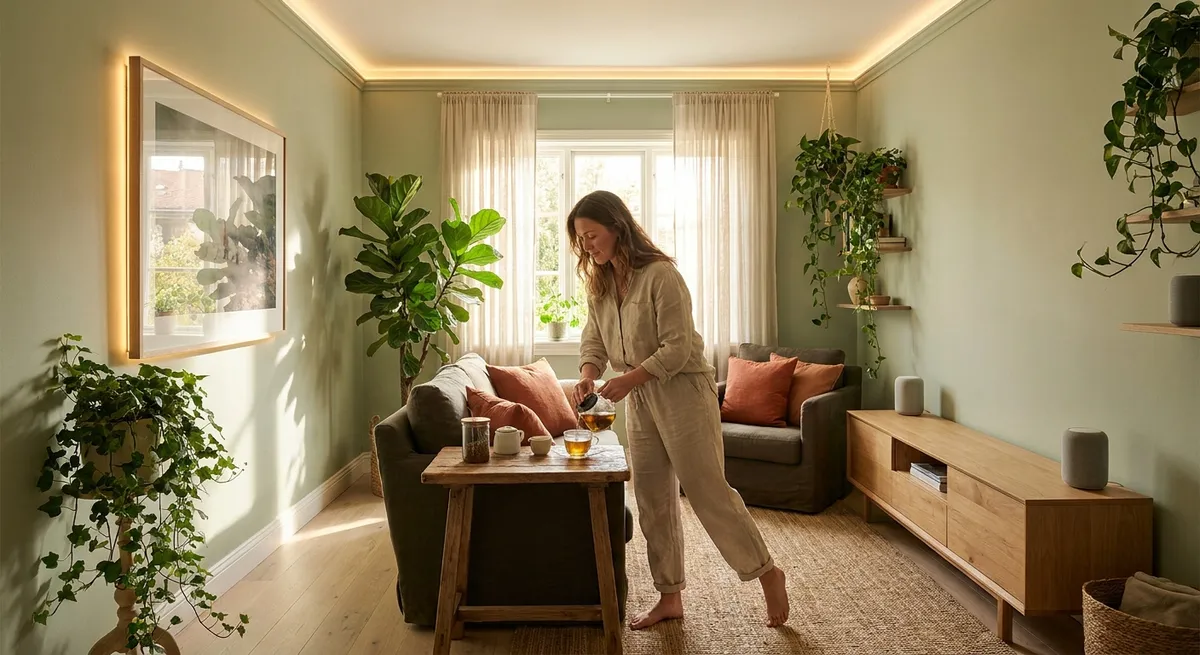
Smart lights that shift from energizing cool white in the morning to warm, dim tones at night can help sync your internal clock and gently cue your body to wake or wind down. Air quality monitors can alert you when it’s time to open a window, run a purifier, or adjust humidity—especially useful in cities or allergy seasons. Some modern purifiers and humidifiers now connect to apps and automation, running only when needed to maintain a comfortable baseline.
You can carve out a wellness zone with almost no extra furniture: a speaker for guided meditations or sound baths, soft lighting scenes, a small screen for workout classes, and maybe a smart mat or wearable for tracking the basics. The goal isn’t performance—it’s awareness. When tech quietly helps you breathe better, sleep deeper, and decompress faster, your home becomes more than pretty; it becomes supportive.
5. The “Never-Think-About-It” Security Layer
Security tech used to feel aggressive—cameras everywhere, flashing lights, constant alerts. The next wave is softer: calm, discreet, and thoughtful instead of paranoid.
Smart locks let you ditch the spare key under the mat and instead use codes, phones, or wearables to get in. You can give temporary access codes to dog walkers, cleaners, or guests and revoke them instantly—no awkward key handoffs. Doorbell cameras with privacy zones and smart notifications can tell you the difference between a package delivery and someone actually lingering at the door, cutting down on alert fatigue.
Indoor security can be just as low-key: window sensors that only ping you when they detect something out of the ordinary, or smart lighting that mimics your presence when you’re away. The point is not to turn your home into a fortress, but to build a safety net that blends in. When your space feels both open and protected, your brain gets to relax—and that’s a big part of modern luxury.
Conclusion
Home tech isn’t about collecting gadgets; it’s about curating experiences. A calm command center instead of cluttered devices. Micro‑climates instead of one‑size‑fits‑all temperature. Media that adapts to you, wellness that’s quietly supported, and security that protects without shouting.
The smartest homes aren’t the most complicated—they’re the ones that feel intuitive, gentle, and uniquely tuned to the people living in them. Start with one area that feels the most chaotic in your day, and let your next piece of tech be the thing that makes that moment feel easier, lighter, and more you.
Sources
- U.S. Department of Energy – Smart Thermostats - Overview of how smart thermostats improve comfort and energy efficiency
- Mayo Clinic – Light and Your Sleep - Explains how light affects circadian rhythm and sleep quality
- EPA – Indoor Air Quality - Details why monitoring and improving indoor air quality matters for health
- Consumer Reports – Smart Locks Buying Guide - Independent guidance on features and benefits of smart locks
- BBC – Smart Homes: Convenience vs Privacy - Discusses the privacy and security implications of connected home devices
Key Takeaway
The most important thing to remember from this article is that this information can change how you think about Home Tech.