The smartest homes aren’t the ones packed with the most gadgets—they’re the ones that quietly make your life feel lighter, calmer, and more intentional. Think: lights that adjust to your mood, rooms that reshape themselves for work or play, and tech that disappears into beautiful design. This is smart living that feels intuitive, not overwhelming.
Below are five innovative home living ideas designed for modern homeowners who want their space to look good, work hard, and still feel like home—not a showroom.
1. The Atmosphere-First Home: Lighting, Sound, and Scent on Autopilot
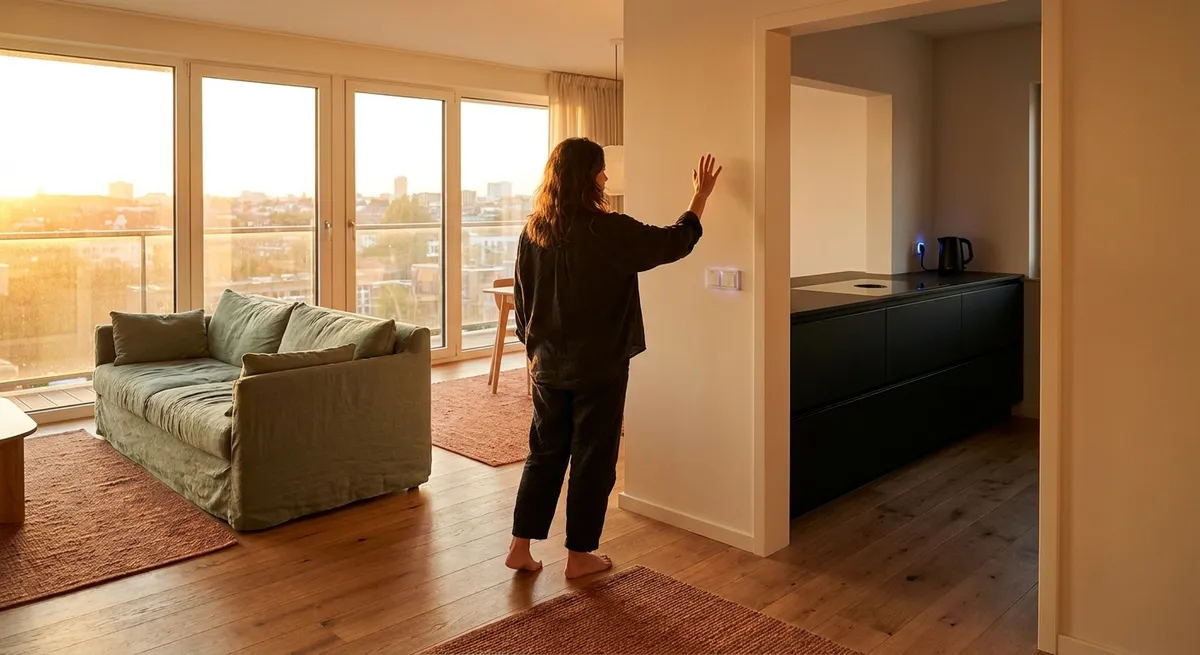
Instead of thinking in terms of individual devices, think in “modes”: focus, unwind, entertain, sleep. Your home can shift between these automatically.
Imagine a weekday evening: as sunset hits, your smart blinds lower, warm-toned lights come up to 40%, and a playlist fades in at just-barely-there volume. Later, your “Sleep” scene dims everything, lowers the bedroom temperature a couple of degrees, and turns on a subtle white noise track.
What makes this work is layering:
- Smart lighting that adjusts brightness and color temperature by time of day, supporting your natural circadian rhythm.
- Multi-room speakers that tie into routines instead of just being for parties.
- Smart thermostats and fans that subtly keep you in the comfort zone.
- Connected diffusers or plug-in scent systems that trigger on schedule or with a scene (calm lavender for evenings, fresh citrus in the morning).
Set it up once, then let it run. The result: your home consistently “meets you” where you’re at—no constant tweaking, no app-hopping.
2. The Invisible Workspace: A Home Office That Disappears After Hours
Working from home doesn’t have to mean living at work. The next wave of smart homes blurs the boundary between “office” and “home” so you can log off both digitally and visually.
Think of an office that resets itself every evening:
- A height-adjustable desk lowers into a console or sideboard-style setup.
- Wireless chargers are built into the desk surface, so you’re not staring at cable chaos.
- A single dock powers your monitor, keyboard, and webcam—unplug your laptop and your “office” is basically gone.
- Smart plugs cut power to work devices at a specific time, reducing energy use and temptation to “just check one more thing.”
- Lighting switches from cool, focus-friendly tones during the day to soft, indirect lighting at night, signaling your brain that work is done.
You can even link your calendar so that during deep-focus blocks, your smart doorbell mutes indoor chimes and your phone goes to Do Not Disturb. Your home supports your work—but doesn’t let it take over your entire lifestyle.
3. The Wellness-Forward Home: Tech That Quietly Protects Your Health
Wellness isn’t just about workouts and water bottles; it’s also air quality, sleep, and daily micro-habits. Smart homes can now act like a low-key wellness coach that lives in your walls.
Start with air and light:
- Air quality monitors track pollutants, humidity, and even CO₂ levels. When something’s off, your air purifier or ventilation system can kick on automatically.
- If you or someone in your home has allergies, smart systems can schedule filtering during peak pollen hours.
- Circadian-friendly lighting gradually brightens in the morning, helping you wake up more naturally, and then warms and dims at night to support better sleep.
Layer in subtle wellness cues:
- Smart water systems can remind you to drink by lighting up your kitchen faucet or water filter when you haven’t had water in a while.
- Connected fitness gear (from smart mirrors to compact treadmills) can integrate with your calendar so your “Move” reminders line up with actual free time, not your busiest hour.
- Smart mattresses or sleep trackers can quietly adjust firmness or temperature, helping you sleep deeper without you ever touching a button.
The best part of a wellness-forward home is that it doesn’t nag—it nudges. Tiny, automated shifts that add up to you feeling more rested and grounded.
4. The Seamless Hosting Home: Effortless Entertaining Built In
Modern hosting is less “perfect dinner party” and more “people dropping by and staying all evening.” Smart homes can make that feel easy and relaxed instead of like a logistics event.
Set up your home to flip into “hosting mode” instantly:
- One command (“Hey, let’s host”) can:
- Turn on ambient lighting in the living, dining, and outdoor areas
- Start a curated playlist at a set volume
- Adjust temperature to handle extra body heat
- Turn on path lights or porch lighting for arrivals
- Smart locks allow you to send temporary access codes to guests or dog walkers—no more hiding keys.
- Video doorbells let you see who’s arrived without abandoning the kitchen or conversation.
You can even create:
- A guest Wi-Fi network that automatically turns on and off during hosting hours.
- A smart drinks setup, like a connected wine fridge that alerts you when it’s at serving temperature, or a smart coffee maker that can be started from your phone as dinner winds down.
Hosting becomes less about juggling a million small tasks and more about actually being present with your people.
5. The Adaptive Storage Home: Space That Knows What You Actually Use
For many modern homeowners, the real luxury isn’t more stuff—it’s less clutter. Smart storage systems can help your home “learn” what you use most and make it accessible, while everything else quietly recedes into the background.
Picture storage that thinks ahead:
- Smart closets with lighting that turns on as you open, but also track what you haven’t worn in months, nudging you to rotate pieces or donate.
- App-connected pantries that scan items as you add them (via barcode or manual input), reminding you before things expire and syncing with your grocery list.
- Modular shelving with integrated LED strips and sensors that can adjust brightness and layout as your needs shift—from open display to closed storage.
For city living or smaller homes, this kind of adaptive storage is game-changing. It keeps surfaces clear, makes your home feel visually calm, and saves you from over-buying things you already own but can’t find.
Over time, your storage starts to mirror your actual lifestyle instead of some rigid idea of how you “should” use your space.
Conclusion
Smart living in 2026 isn’t about turning your home into a dashboard—it’s about creating a space that quietly collaborates with you. An atmosphere that shifts with your day. A workspace that disappears. Wellness support built into your walls. Hosting that feels easy. Storage that understands how you really live.
When your home is intuitive, you stop “managing” it and start actually living in it. That’s the real upgrade.
Sources
- U.S. Department of Energy – Connected Lighting - Overview of how smart lighting and controls can improve comfort and efficiency
- Harvard Health – Blue Light Has a Dark Side - Explains how light impacts circadian rhythms and sleep, relevant to smart lighting choices
- EPA – Indoor Air Quality - Details why monitoring and improving indoor air quality matters for health
- Mayo Clinic – Sleep Environment Recommendations - Outlines environmental factors (light, temperature, noise) that influence sleep quality
- Pew Research Center – Smart Home Tech Adoption - Provides data on how many Americans are using smart home devices and in what ways
Key Takeaway
The most important thing to remember from this article is that this information can change how you think about Smart Homes.