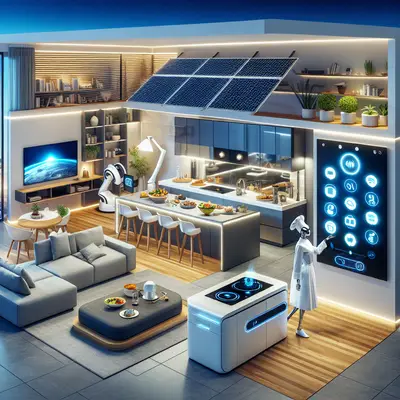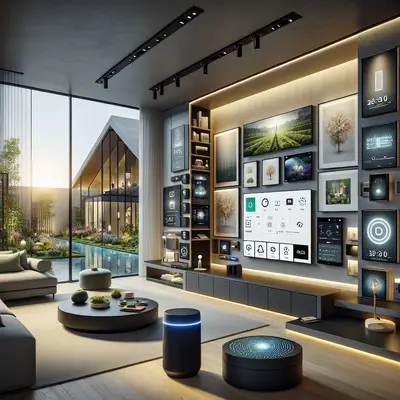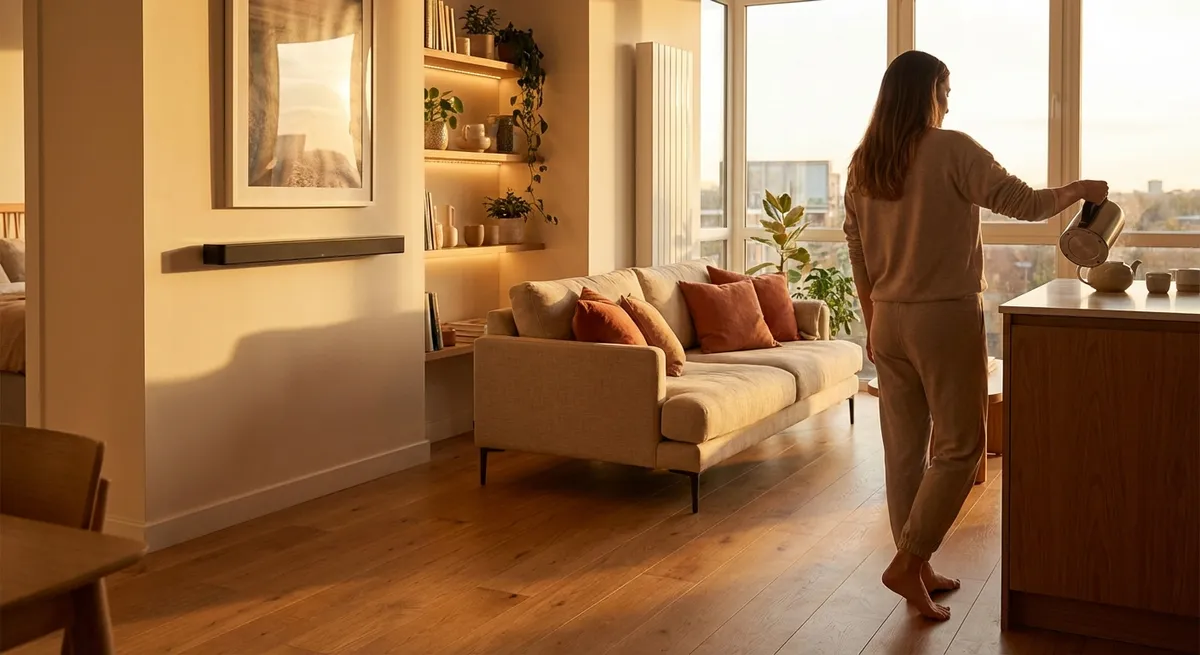
There’s a new wave of home tech that isn’t about turning your living room into a spaceship. It’s about small, smart layers that quietly upgrade your everyday life—better sleep, smoother mornings, calmer spaces, and less mental load. These aren’t flex gadgets you show off once; they’re the kind you actually forget are “tech” because they just…work.
Below are five innovative, real-life-friendly ideas for modern homeowners who want a home that thinks ahead without taking over.
1. Lighting That Follows Your Day (So You Don’t Stare at the Ceiling at 2 AM)
Your lighting has more influence on your energy, mood, and sleep than most people realize. Instead of just dim vs. bright, think: “morning office light,” “Sunday slow brunch,” and “11 PM winding down.”
Smart, tunable lighting systems can:
- Shift color temperature over the day—cooler light for focus, warmer light for rest
- Gradually brighten in the morning to wake you up more gently than an alarm
- Auto-dim in the evening to cue your brain it’s time to slow down
- Pair with motion sensors so hallways and bathrooms glow softly at night (no full wakeup)
You don’t need to rewire your entire home. Start with:
- A few smart bulbs in your bedroom and living room
- One smart switch for a main ceiling light
- A simple schedule: bright/cool in the morning, neutral mid-day, warm/low in the evening
Once it’s set, you barely touch a switch again—and your home quietly nudges you toward a better sleep rhythm.
2. The Kitchen That Preps With You (Not Just For You)
The “smart kitchen” doesn’t have to mean a fridge that talks. The most useful upgrades are the ones that support how you actually cook and live—fewer forgotten groceries, easier meal prep, and less decision fatigue.
Think about layering in:
- Smart plugs for small appliances
Schedule your coffee maker or kettle so mornings are on autopilot, or cut power to high-energy appliances when you’re away.
- App-connected ovens and ranges
Preheat from your phone on your commute home, get alerts when dishes are done, or use preset cooking modes for common recipes.
- Fridge cameras and inventory apps
Paired with a simple system (like always storing certain items in specific zones), apps can help you see what you have when you’re at the store and suggest recipes to use things before they go to waste.
- Voice-assistant “kitchen brain”
Hands covered in dough? Use voice to set timers, add items to your grocery list, or pull up recipe steps without touching your phone.
Instead of a single “look what my fridge can do” moment, your kitchen becomes a quiet partner in cutting down waste, chaos, and random takeout.
3. Climate Control That Learns Your Actual Life (Not the User Manual)
Traditional thermostats treat every day like a copy-paste of the one before. Modern systems can read the room—literally—and adjust to how you actually live.
A smarter home climate setup can:
- Learn when you’re usually home or away and adjust heating/cooling automatically
- Use sensors in different rooms to fix hot-cold spots instead of relying on one thermostat on the hallway wall
- Pre-heat or pre-cool before you wake up or return home, then coast at an efficient level
- Integrate with blinds and shades to use sunlight as “free” heating and natural shade as cooling
The lifestyle win is balance: your space feels more comfortable, your bills are more predictable, and you don’t have to obsess over every degree setting.
To start small:
- Upgrade to a learning smart thermostat compatible with your system
- Add a couple of wireless temperature sensors in problem rooms
- Set a basic comfort schedule, then let the system auto-tune itself from there
Bonus if your setup gives you an energy breakdown in the app—suddenly you can see exactly what’s driving your bill and make changes that actually matter.
4. Invisible Security: Protection That Doesn’t Feel Like a Fortress
The most livable security doesn’t scream “security system.” It sits quietly in the background and only steps forward when needed. No blaring alarms for every squirrel, no over-the-top hardware that makes your home feel like a warehouse.
Consider a security layer that includes:
- Discreet, app-connected cameras with customizable zones, so you only get alerts when someone’s really on your property or at your door
- Smart locks that let you create temporary codes for guests, cleaners, or deliveries—no more key juggling or hidden spare under the mat
- Door and window sensors that notify you if something’s opened unexpectedly (or if you left something open when you went out)
- Soft automations like lights turning on automatically when you arrive or when a door opens at night
Look for systems that allow:
- Face or license plate recognition controls (with strong privacy options)
- Local storage or end-to-end encryption for footage
- Flexible notifications so you don’t get alert fatigue and start ignoring everything
The goal is emotional security as much as physical: feeling like your home is watching out for you, not watching you.
5. The “Background Butler”: Routines That Run While You Live
The real magic of home tech isn’t one-off devices—it’s what happens when you connect them. A few well-designed automations can turn your home into a place that quietly anticipates what’s next.
Think of it like scene setting:
- Morning scene
Bedroom lights slowly brighten, blinds rise halfway, thermostat warms or cools the space, your favorite news or playlist starts at a low volume, coffee maker turns on.
- Work-focus scene
Overhead lights shift cooler and brighter, distractions (like TV power or certain apps via smart plugs) turn off, and noise-cancelling sound or white noise starts in your office.
- Wind-down scene
Lights go warm and dim, screens auto-lower brightness or shut off in certain rooms, the thermostat nudges a degree cooler, calm music or ambient sound fades in.
- Away mode
Doors auto-lock, lights simulate occupancy at night, security arms itself, and the thermostat moves to an efficient setting.
You can build these on a single platform (like a smart home hub or app) and slowly add devices as you go. Start with one or two scenes that would change your every day, not everything at once. The win is fewer micro-decisions and a home that feels curated without constant effort.
Conclusion
Home tech doesn’t need to be loud to be life-changing. The most modern homes right now are the ones where tech disappears into routines—lighting that supports your sleep, kitchens that quietly reduce your stress, climate control that knows your patterns, security that feels calm, and scenes that let your space shift with your day.
When the setup is thoughtful, your home stops being one more thing to manage and starts acting like a lifestyle ally—present, helpful, and mostly in the background.
Sources
- Harvard Health – Blue light has a dark side – Explains how light exposure affects sleep, mood, and circadian rhythms
- U.S. Department of Energy – Thermostats – Guidance on temperature settings and how smart thermostats improve comfort and efficiency
- Consumer Reports – Guide to Smart Appliances – Overview of the most useful smart kitchen and home appliances
- Federal Trade Commission – Using IP Cameras Safely – Best practices for privacy and security when using connected cameras
- MIT Technology Review – The Future of Smart Homes – Insight into how AI and automation are shaping next-generation home living
Key Takeaway
The most important thing to remember from this article is that this information can change how you think about Home Tech.