Home doesn’t need to look like a showroom to feel elevated. The new modern is less “don’t touch that” and more “curl up here with coffee and a podcast.” It’s about spaces that adapt, support your routines, and still look incredibly put-together. Below are five innovative home living ideas that feel stylish, smart, and deeply livable—no perfect life required.
1. The Multi-Mood Living Room
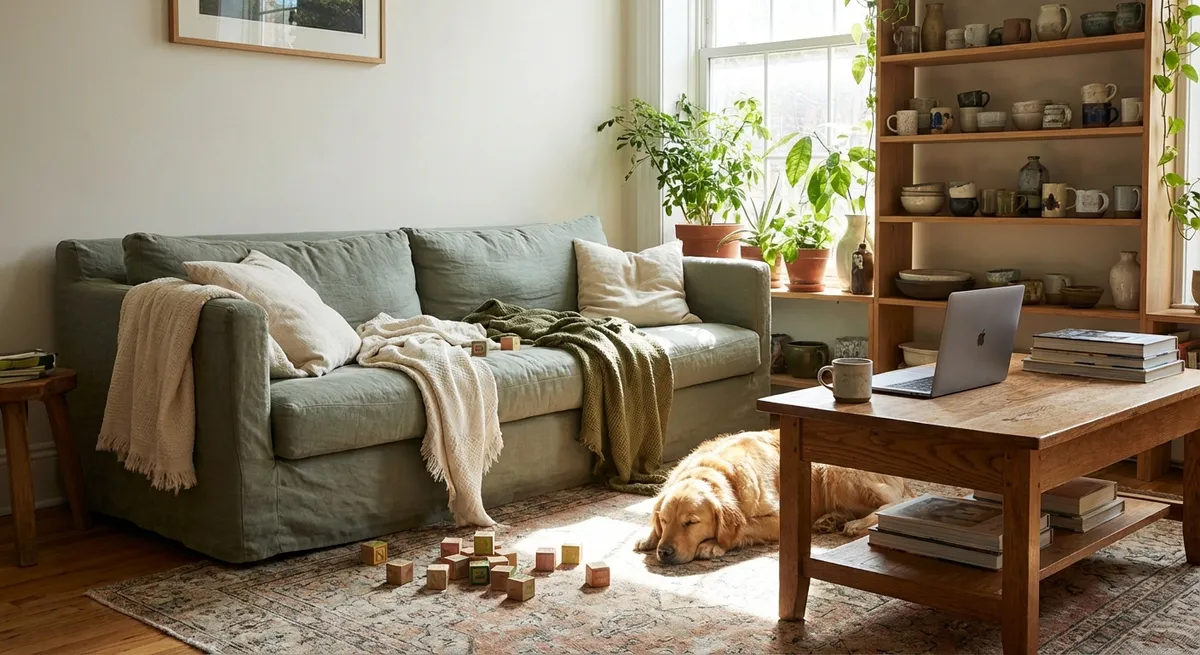
Forget “formal” vs. “family” room—the modern living space has range. It should shift from solo laptop time to game night to movie marathon without dragging furniture around like a workout.
Start with a flexible layout instead of locking into a single sofa-against-the-wall setup. Pair a main sofa with two light, movable accent chairs or stools that can pivot toward the TV, face each other for conversation, or slide to the dining table when extra seating is needed. Nesting tables or a mix of side tables and a smaller coffee table keep surfaces within reach without turning the room into a furniture grid.
Layer lighting so the vibe changes on demand: a floor lamp for reading, table lamps for warm background glow, and dimmable ceiling lighting for when you need brightness. Use textiles—throws, cushions, and a substantial rug—to visually zone the room without putting up walls. A single large rug that all seating touches instantly makes the space feel intentional and anchored.
Performance fabrics and washable covers are your secret weapon; they look elevated but handle pets, kids, and red wine like pros. The goal is not to keep the room pristine, but to design it so living in it lightly erases itself.
2. Elevated Everyday Storage That Actually Looks Good
Modern homeowners want storage that doesn’t scream storage. The trick is folding function into the design language of your space so the solutions feel like decor, not clutter management.
Built-in or wall-mounted shelving instantly upgrades a room and uses vertical space that would otherwise be blank. Instead of stuffing everything behind doors, mix open and closed storage: closed for the not-pretty items (cables, paperwork, random chargers), open for books, plants, art, and a few objects with personality. Think in “micro-collections” rather than maximalist over-styling—three to five pieces grouped by color, material, or theme.
Entry zones benefit massively from upgraded storage. A slim console with drawers, a wall-mounted shelf with hooks, or a storage bench keeps keys, bags, and daily essentials contained. Matching baskets or bins in natural textures like cane, jute, or felt add warmth while hiding chaos.
In the kitchen, decanting absolutely everything isn’t necessary, but choose a few high-visibility items to streamline: matching clear containers for the open shelf pantry, one style of jar for coffee/tea, or a simple rail with hooks for favorite utensils. This keeps surfaces visually calm without turning your home into a stage set.
3. Hybrid Work Corners That Don’t Hijack the Room
The era of the full-time, clunky office desk in the middle of the living room is over. Hybrid work calls for something more agile: a workspace you can take seriously during the day and forget about at night.
Instead of a massive desk, try a slim console or wall-mounted desk that doubles as a display or vanity. During work hours, it’s your laptop zone; in the evening, slide your tech into a drawer or a dedicated “office” box and style the surface with a lamp, a small plant, and a candle. The visual reset signals your brain that the workday is done.
Chairs are where design and wellness intersect. Look for compact, ergonomic options that still feel like part of your interior story—think upholstered swivel chairs or clean-lined task chairs in muted colors, not corporate black mesh in the dining room.
Acoustic comfort matters, especially on video calls. Soft surfaces—rugs, curtains, upholstered furniture, wall hangings—help absorb echo. If you’re tight on space, a folding screen or curtain can carve out a temporary office nook and double as a styled backdrop for calls, then tuck away when you log off.
The key is integration: your work corner should borrow colors, materials, and shapes from the rest of the room so it looks intentional, not like a last-minute add-on.
4. Quiet Wellness Touchpoints Built Into Your Layout
Wellness at home isn’t about turning your living room into a gym or a spa; it’s about subtle design decisions that support how you want to feel day-to-day.
Start with sightlines. What’s the first thing you see when you wake up, walk into the kitchen, or step into the living area? If it’s your laptop, laundry pile, or overstuffed coat rack, rearrange so the first view is something calming or energizing: a plant, a large print, a styled shelf, or even just a cleared surface with a single object you love.
Create one micro “reset” zone—small but intentional. This might be a chair by a window with a side table for your morning coffee, a corner with a floor cushion, lamp, and speaker for evening playlists, or a tray in the bathroom with your skincare essentials and a candle. Design this spot with the same attention you’d give a full room: lighting, comfort, and a cohesive color palette.
Natural elements can quietly shift how a space feels. A few well-placed plants (real, if your light permits; realistic faux if it doesn’t), stone or wood accents, and access to natural light all improve the mood of a room. Layer window treatments so you can modulate light throughout the day—sheers for softness and privacy, heavier curtains for night and temperature control.
Finally, edit noise—visual and actual. Keep counters partially cleared, use cable management for tech-heavy zones, and choose speakers or sound systems that blend with your decor instead of dominating it. The result: a home that feels mentally lighter the moment you walk in.
5. Color and Texture That Age Well, Not Fast
Trend-driven interiors burn out quickly; the most modern homes feel current now and flexible later. The secret is how you use color and texture.
Treat your big, hard-to-change items—sofa, large rug, major cabinetry—as your “quiet base.” Opt for neutrals or softly tinted hues (stone, sand, deep gray, muted green) that can handle evolving tastes. From there, layer bolder pieces in medium-size doses: an accent chair, art, cushions, throws, lamps, or side tables in richer colors or interesting shapes.
Texture is where a lot of contemporary interiors come alive. Mix smooth (glass, metal, lacquer) with tactile (bouclé, linen, wool, timber) so the room feels dynamic instead of flat. A boucle chair next to a sleek metal floor lamp, a chunky knit throw on a smooth leather sofa, or a jute rug under a minimalist dining table all strike that balance.
If you love color but fear commitment, think in “color stories” rather than single accent walls. Pull one or two shades from a piece of art, a rug, or a patterned pillow and repeat them in smaller touches throughout the room—vases, books, frames, or even kitchen textiles. This creates coherence without locking you into a rigid scheme.
Lighting temperature matters here too: warm white bulbs (around 2700K–3000K) make colors feel inviting and skin tones flattering, whereas very cool lighting can make even great design feel harsh. Match your bulb temperatures across each room so everything reads intentional.
Conclusion
The most interesting homes right now aren’t the most perfect—they’re the most honest and well-considered. Modern interior design is shifting from stiff, styled spaces to environments that flex around real routines, evolving work life, and a growing focus on how we actually feel at home.
When you build in flexibility (multi-mood rooms), visually calm storage, hybrid-ready work corners, subtle wellness cues, and a long-view approach to color and texture, you get spaces that both photograph beautifully and live even better. That balance—between aesthetic and ease—is what makes a home feel genuinely current.
Sources
- Harvard T.H. Chan School of Public Health – The Importance of Place: Built Environment and Health - Explores how our physical spaces influence well-being
- U.S. Environmental Protection Agency – Indoor Air Quality - Covers how home design choices can affect indoor air and comfort
- American Society of Interior Designers – 2024 Trends Outlook - Industry perspective on current directions in residential interiors
- New York Times – How to Design a Better Living Room - Practical layout and styling advice from design experts
- Architectural Digest – The Ultimate Guide to Interior Design - Broad overview of design principles and contemporary approaches
Key Takeaway
The most important thing to remember from this article is that this information can change how you think about Interior Design.