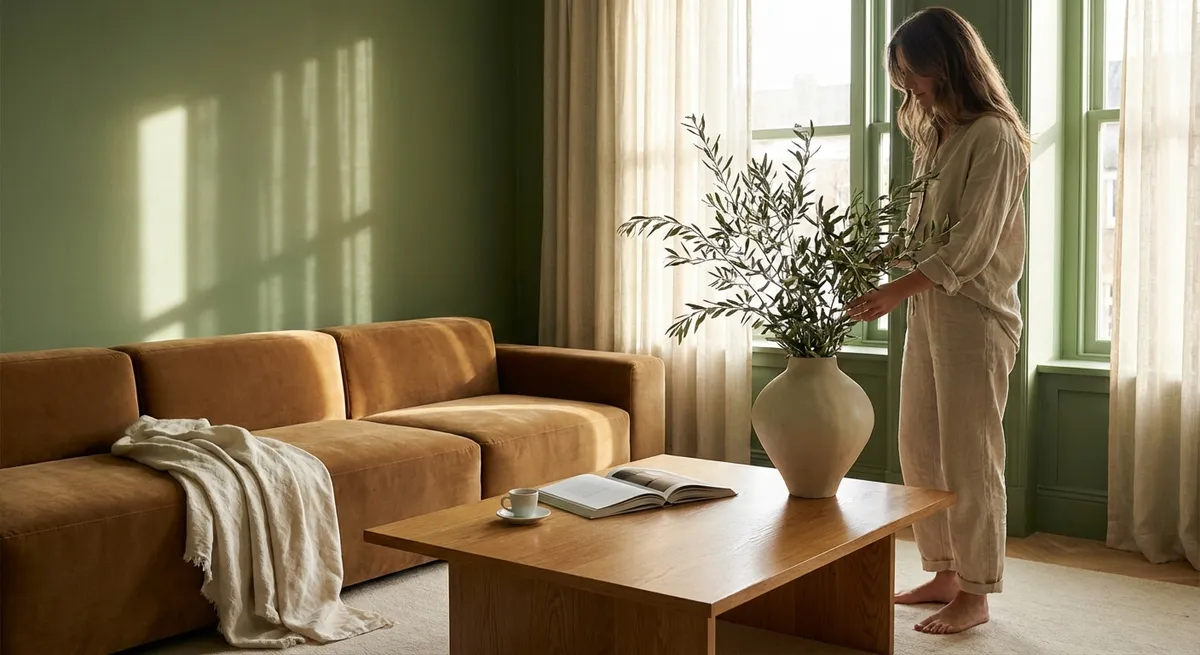
A “luxe” home used to mean glass coffee tables nobody could touch and sofas wrapped in silent judgment. Today’s modern homeowners want spaces that photograph beautifully and survive takeout on the couch, laptop marathons, and weekend hosting. Lived‑in luxe is that sweet spot: design that feels elevated, tactile, and personal—without turning your home into a museum. These ideas lean into texture, light, and clever layout so your space looks intentional but never intimidating.
1. Layered Neutrals With One Bold Disruptor
The new neutral isn’t beige-everything—it’s a layered palette that calms the eye but still feels dimensional. Think warm white walls, stone-toned sofas, oatmeal linen curtains, and pale wood floors as your base. Then, instead of sprinkling random accent colors, choose one bold disruptor that shows up with purpose.
That disruptor could be a deep oxblood armchair, a cobalt velvet ottoman, or a moss-green media unit. The key is repetition: let that color appear in 3–5 places—artwork, a vase, a throw pillow, or a rug detail—so your space feels curated, not chaotic. This approach makes even a small apartment feel cohesive and high-end.
To keep it lived-in, prioritize performance fabrics and finishes that don’t panic at spills: stain-resistant upholstery, washable slipcovers, and indoor-outdoor rugs that secretly feel soft underfoot. You’ll get that editorial calm without having to hover over your furniture with coasters and rules.
2. Sculpted Comfort: Furniture With Soft Curves and Real Support
Hard edges are slowly moving out; sculpted comfort is very much in. Curved sofas, pill-shaped coffee tables, rounded poufs, and wave-edge consoles instantly make a room feel more inviting and modern. But the trend only works if the pieces feel as good as they look.
Start with one hero piece—maybe a rounded sectional or a curved accent chair—and let it dictate the flow. Curves are especially powerful in smaller spaces because they soften corners and guide movement naturally. Pair them with a few grounding elements like a rectangular jute rug or a clean-lined media console so the room doesn’t turn overly whimsical.
Look for furniture that pairs those soft silhouettes with supportive cushions and durable frames. Deep seats are great, but they should still let you sit upright for reading, working, or hosting. This mix of sculptural shape and genuine ergonomics is what separates “design moment” from “daily favorite.”
3. Mixed Materials That Tell a Story (Not a Theme)
Instead of building a room around a theme—“industrial,” “farmhouse,” “coastal”—try curating it like a story told through materials. The goal: a space where every surface adds a different kind of interest, from how it looks to how it feels when you touch it.
Combine matte and glossy (ceramic vases with lacquer trays), soft and structured (bouclé chairs with a steel floor lamp), and organic and refined (a live-edge wood table under a sculptural glass pendant). When materials are thoughtfully mixed, even a minimal space feels layered and luxe.
This also makes it easier to integrate heirlooms or travel finds. A vintage brass bowl can sit next to a modern resin box and a stone catchall—tied together by tone and texture rather than a strict style rule. Over time, your home starts to feel like a personal archive instead of a furniture catalog.
4. Light as a Design Tool, Not Just a Necessity
Lighting is often an afterthought, but in high-end spaces it’s treated like architecture. Instead of relying on a single ceiling fixture, think in layers: ambient (overall light), task (focused light), and accent (mood-setting light).
Swap harsh overheads for dimmable options so you can shift from “work mode” to “wind-down glow” with a single tweak. Bring in floor lamps that arc over reading spots, slim table lamps on sideboards, and small plug-in sconces that frame your bed or sofa without needing hardwired installs.
Warm, soft-white bulbs are essential if you want your home to feel inviting both in person and on camera. Add reflective surfaces—like subtle metallic lamp bases, framed mirrors, or glossy side tables—to bounce light around and visually open up the space. When light is intentional, your home feels more expensive before you even change a single piece of furniture.
5. Quiet Displays: Edited Collections Instead of Clutter
Modern homeowners are collecting more experiences and fewer “things,” but the pieces that do make it home deserve a thoughtful moment. Instead of filling every surface, aim for quiet, edited displays that change with the seasons or your mood.
Choose one or two zones—a bookshelf, a console, a credenza—to function as your mini-gallery. Group objects by color, material, or height rather than by category. A stack of books, a sculptural candle, a framed photo, and a ceramic bowl can live together if they share a visual thread.
Give each object a bit of breathing room; negative space is what makes your home feel intentional instead of overcrowded. Rotate pieces a few times a year—swap beach finds for winter ceramics, or bold artwork for softer prints. This simple refresh keeps your space feeling current without constant buying, and it lets your home evolve as your life does.
Conclusion
Lived‑in luxe isn’t about chasing trends or recreating a showroom. It’s about building a home that can handle real life while still feeling elevated, tactile, and visually calm. By leaning into layered neutrals, sculpted comfort, mixed materials, intentional lighting, and quiet displays, you get a space that looks pulled-together on your most chaotic days—and feels like a reset button every time you walk through the door.
Sources
- American Society of Interior Designers (ASID) – 2024 Interior Design Trends - Industry report highlighting current directions in comfort-focused, wellness-oriented interiors
- The New York Times – “Curves Are In” Design Feature - Explores the rise of curved, sculptural furniture in contemporary homes
- Architectural Digest – Guide to Layered Lighting - Explains how to use ambient, task, and accent lighting to shape mood and function
- House Beautiful – Mixing Materials in Interior Design - Discusses how to combine different metals and finishes for a cohesive look
- Better Homes & Gardens – Styling Shelves and Surfaces - Practical tips for curated, uncluttered displays at home
Key Takeaway
The most important thing to remember from this article is that this information can change how you think about Interior Design.