Your home doesn’t just hold your stuff—it holds your routines, your stress, your scroll breaks, your late-night ideas. Interior design isn’t only about what looks good in photos anymore; it’s about how your space behaves around you. Mood-first design is less “matchy-matchy” and more “this feels right for my life today.”
Instead of chasing one perfect aesthetic, today’s homeowners are building homes that flex: softer in the mornings, sharper when it’s time to focus, calmer at night. The five ideas below lean into that—design moves that feel smart, modern, and deeply livable.
Designing for Energy, Not Just Aesthetics
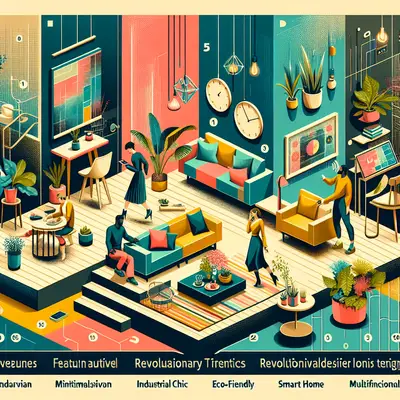
Most interiors are planned around furniture placement and color palettes. Mood-first spaces flip that: you start with energy. How do you actually want to feel in each zone: charged, cocooned, social, quiet, plugged-in, or completely offline?
Begin by naming three core moods you want your home to support—something like “calm,” “creative,” and “connected.” Then, assign each mood to a room or zone. Instead of obsessing over matching finishes throughout, choose materials, textures, and lighting that visually cue each mood. Soft, matte finishes and layered textiles dial up calm; glossy surfaces, sculptural objects, and directional lighting feel more energetic.
This approach is especially powerful in open-plan layouts, where emotional clarity can get lost in one big multipurpose room. Use low shelving, rugs, or even ceiling-mounted curtains to create subtle mood shifts from one zone to the next. The result is a home that looks cohesive but never one-note—like a playlist with deliberate changes in tempo.
The Hybrid Room: Work, Lounge, Reset (Without Feeling Cluttered)
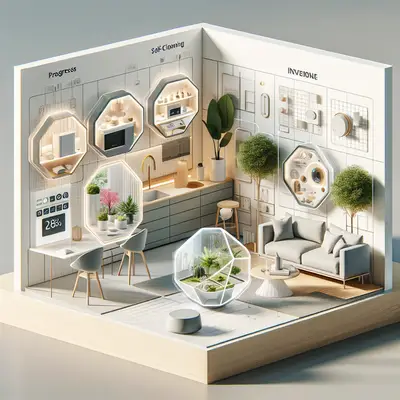
The old “home office” is evolving into a hybrid room—part workspace, part lounge, part mental reset button. The key is designing it like a studio, not a cubicle. Think: one wall for deep focus, one wall for visual breathing room, and a center area that can flex.
Start with a desk setup that can disappear visually when work is done. Slim-profile desks with integrated cable management, or folding wall-mounted desks, keep the space from screaming “9-to-5” during evenings. Pair this with a lounge piece—a compact daybed, corner chair, or floor cushions—that faces away from the screen zone. That simple rotation of the body helps your brain switch modes.
Storage is where hybrid rooms often fail. Instead of bulky filing cabinets, use closed credenzas, bench seating with hidden storage, or tall cabinets with clean, flat fronts. They keep the room visually calm and adaptable—whether you’re on a video call, hosting a friend, or just taking a phone-free half hour. Lighting should follow the same logic: bright, cool-adjustable task lights at the desk; warm, low-level glow near the lounge. One space, multiple identities, no visual chaos.
Layered Lighting as Your Daily Rhythm Manager
Lighting is no longer just overhead plus a table lamp; it’s essentially your home’s mood script. Well-layered lighting quietly regulates how alert, social, or restful you feel throughout the day, which matters when your living room might double as a workspace, gym, and movie zone.
Think in three layers: functional, atmospheric, and accent. Functional lighting handles tasks—under-cabinet kitchen strips, focused desk lamps, reading sconces. Atmospheric lighting spreads soft, diffuse illumination from pendants, floor lamps, and shaded table lamps. Accent lighting picks out texture and form—LED strips tucked along shelves, small spots over art, or a low glow behind the TV.
Modern homeowners are also playing with color temperature: cooler, brighter light (around 4000K) for productivity, and warmer tones (2700–3000K) for evenings. Smart bulbs or app-controlled dimmers let you transition the entire vibe of a room with almost no effort. Set scenes like “Focus,” “Dinner,” or “Wind Down” so you’re not constantly fiddling with switches. It’s less about tech flex and more about protecting your energy: sharper mornings, gentler nights, and fewer harsh transitions.
Texture-Forward Minimalism: Warm, Not Empty
Minimalism has grown up. It’s less about empty surfaces and more about editing your space so that what remains feels intentional, tactile, and lived-in. Texture-forward minimalism focuses on fewer objects with richer materials—pieces that invite touch rather than just sit there.
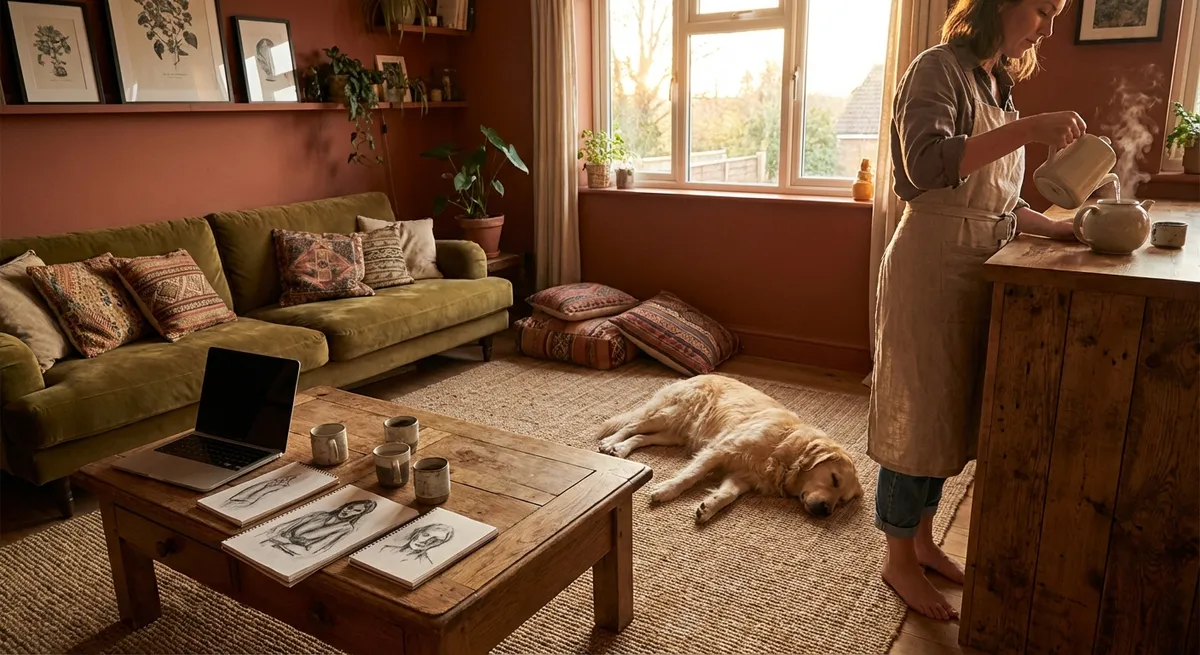
Instead of crowding a room with decor, invest in key elements that do double duty. A chunky wool rug, linen curtains, plaster or limewash walls, ribbed glass, boucle or canvas seating, and open-grain wood instantly warm up streamlined layouts. These materials catch light beautifully and make even neutral palettes feel layered and interesting.
Storage becomes crucial here. Closed storage keeps daily life (chargers, remotes, mail) out of sight, while open storage is reserved for objects that genuinely bring you joy or meaning. Curate shelves like a rotating gallery, not a permanent parking lot. This style works especially well in small homes and apartments: visually quiet, spatially efficient, and still cozy enough that you actually want to stay in on a Friday night.
Micro-Zones for Micro-Moments
Most of daily life happens in fragments—10 minutes of stretching, 15 minutes of reading, a quick tea break, a two-song dance break while dinner’s in the oven. Designing micro-zones acknowledges that reality. These are small, intentional pockets built around a specific micro-moment, often squeezed into “in-between” spaces like corners, landings, or window edges.
A reading nook might be nothing more than a chair angled toward natural light, a wall-mounted sconce, and a floating shelf for a few books. A movement corner could hold a yoga mat basket, a single hook for a resistance band, and a small mirror. A coffee zone might be a slim console near the kitchen with a tray, mugs, and your favorite brewing gear.
The magic of micro-zones is that they lower the activation energy for tiny rituals. You’re more likely to stretch, journal, water plants, or actually finish that book when the space to do it is already waiting for you. Visually, they also add personality without clutter—small vignettes that tell the story of how you really live, not how a showroom thinks you should.
Conclusion
Modern interior design is shifting from “What style am I?” to “How do I want to feel here?” Mood-first spaces, hybrid rooms, layered lighting, texture-rich minimalism, and micro-zones all work together to support actual daily life—work, rest, connection, and all the in-between scroll-and-sip moments.
You don’t need a full renovation to start. Choose one room and adjust just three things: lighting, texture, and one micro-zone. Edit what doesn’t serve how you live today, not who you were five years ago. When your home is aligned with your energy instead of just your Pinterest board, it stops being a backdrop and starts acting like a quiet collaborator in your everyday life.
Sources
- American Society of Interior Designers (ASID) – 2022/23 Trends Report – Industry insights on how wellness, hybrid work, and changing lifestyles are shaping interior design
- Harvard T.H. Chan School of Public Health – Housing and Health – Research-backed perspective on how home environments affect physical and mental well-being
- Illuminating Engineering Society – Lighting for Homes – Guidance on residential lighting layers, quality, and impact on comfort and function
- Mayo Clinic – Light and Sleep – Explains how different types of light influence circadian rhythm and mood
- Cornell University – Workspace and Productivity Study – Research from Cornell’s ergonomics lab on how workspace setup and environment affect focus and performance
Key Takeaway
The most important thing to remember from this article is that this information can change how you think about Interior Design.