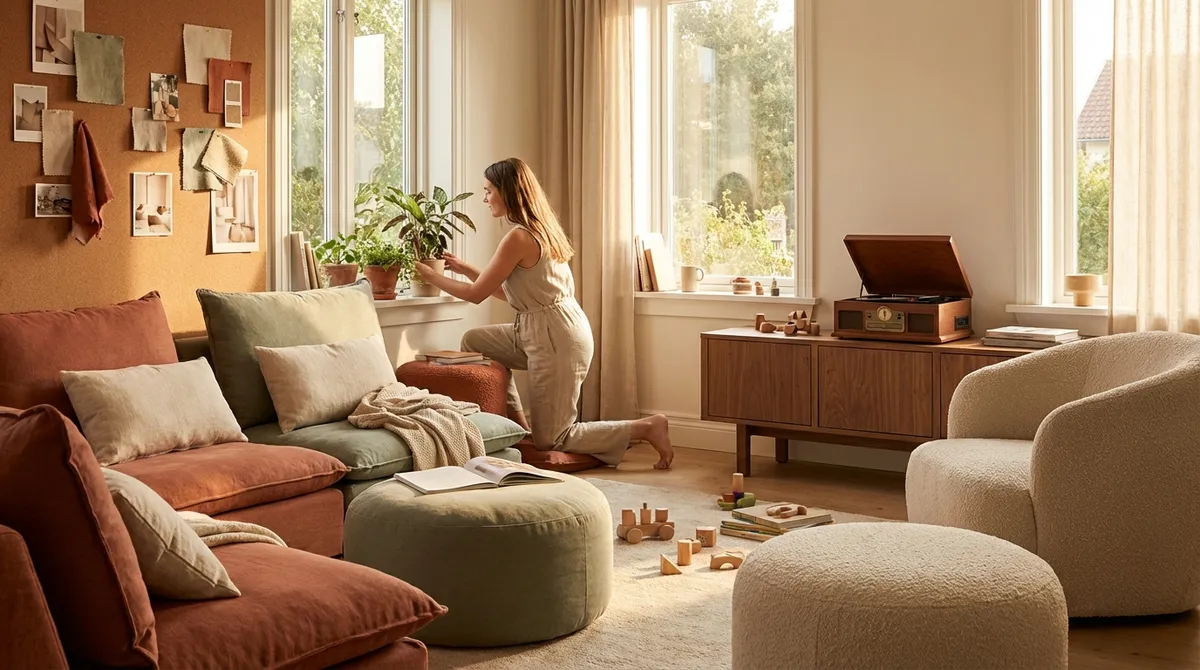
The most interesting homes right now aren’t the ones with the trendiest sofa or the most elaborate gallery wall. They’re the ones that feel like the people who live in them. Mood-first design is less “What’s in style?” and more “How do I actually want to live here?” From flexible layouts to sensory details, modern interiors are shifting from showpiece to support system—quietly upgrading daily life without turning your home into a showroom.
Below are five innovative home living ideas that put feeling first, while still looking seriously good on your feed.
1. Zone-Based Layouts Instead of “Perfect Rooms”
The old rule of one room = one function doesn’t make sense for how we live now. Remote work, at-home workouts, streaming nights, and quiet recharge time all compete for the same square footage. Zone-based design is about shaping micro-areas around activities, not walls.
Start by mapping your day: where you open your laptop, where you drop your bag, where you actually drink your morning coffee. Then design for that reality. A low shelf behind a sofa can double as a laptop bar. A slim console with baskets by the entry becomes a landing zone instead of a clutter magnet. A lounge chair angled toward a window instantly reads as a reading corner, even in a studio.
Use lighting and texture to define each zone instead of bulky furniture. A floor lamp over a lounge chair signals “reading mode.” A different rug under a dining table visually separates it from a living area. In small spaces, choose pieces that can slide between zones—nesting tables that move from work surface to snack station, or poufs that shift from seating to side table with a tray.
The goal: a layout that flexes with your day, instead of forcing your life to match your furniture plan.
2. Sensory Layers: Designing for Sound, Scent, and Touch
Modern interiors today go beyond what looks good in a photo—they’re built around how a space feels to move through. Sensory design brings in sound, scent, and touch as intentionally as color and shape.
For sound, think acoustic comfort. Soft rugs, upholstered dining chairs, curtains, and even fabric wall panels or bookshelves loaded with books can gently absorb noise. If you live in an urban setting, sound-dampening curtains, door seals, or decorative acoustic panels can make a huge difference while still blending into the decor.
For scent, build a subtle “scent map” throughout your home: a fresh, clean note in the entry, something grounding and woody in the living area, and maybe herbal or citrus in the kitchen. Use candles, diffusers, or room sprays, but keep them cohesive so rooms transition smoothly rather than clash.
Touch is where your home really feels elevated. Swap scratchy throws for weighty, soft textiles. Mix textures: a boucle armchair, a linen duvet, a smooth marble tray, a woven grass basket. Even small upgrades—like a matte, weighty ceramic mug for your morning coffee—create micro-moments of calm that make the whole home feel more considered.
When you design for senses, your space stops being just “pretty” and starts feeling like a sanctuary.
3. Hybrid Furniture for Fluid, Multi-Use Living
One of the most innovative shifts in modern interiors is furniture that isn’t locked into a single identity. Hybrid pieces support the real ways we use space: working, lounging, hosting, stretching, and scrolling—often all in the same spot.
Look for coffee tables with adjustable heights that rise to become a casual workstation or dining surface. Benches with hidden storage can live at the end of a bed, under a window, or by an entry, changing roles as your life does. Slim desks that double as consoles are perfect for people who don’t want to stare at “office energy” 24/7.
Modular sofas are especially powerful in this zone. They let you reconfigure for movie night, overnight guests, or an impromptu group hang. Add a moveable side table that slides under a sofa or armchair so you can work or snack comfortably from almost anywhere.
Instead of buying “a home office,” think in terms of “a comfortable surface, good lighting, and charging nearby.” A small, stylish rolling cart with tech essentials, notebooks, and chargers can turn any corner into a workspace without visually cluttering every room with office gear.
Hybrid furniture gives you permission to design around moments, not labels.
4. Light as a Design Tool, Not Just a Utility
Lighting used to be an afterthought: a single ceiling fixture and maybe a floor lamp. Now, it’s one of the most powerful tools for making a home feel intentional, calm, and adaptable.
Think in layers: ambient, task, and accent. Ambient lighting (ceiling fixtures, big floor lamps) sets the overall tone. Task lighting (desk lamps, reading sconces, under-cabinet strips) supports specific activities. Accent lighting (picture lights, LED strips behind a headboard, a lamp on a sideboard) adds mood and depth.
Smart bulbs or app-controlled switches let you shift color temperature throughout the day: cooler, brighter light for focused work in the morning; warmer, dimmer light in the evening for unwinding. Even if you’re not into full smart-home tech, something as simple as plug-in dimmers or warm-toned LED bulbs can dramatically shift your space.
Pay attention to how light hits surfaces. Matte finishes soften glare and feel calmer; glossy surfaces bounce light around and can make small spaces feel more dynamic. Mirrors opposite windows amplify natural light and visually open up tight corners.
When you curate light with intention, you don’t just see your home differently—you experience it differently at 7 a.m., 2 p.m., and midnight.
5. “Display With Intention” Instead of Cluttered Decor
Modern homeowners are moving away from shelves packed with random objects toward more intentional storytelling. The most memorable interiors now aren’t the most accessorized—they’re the most edited.
Start by thinking of your surfaces as mini-exhibitions: each shelf, console, or nightstand should tell one clear story. Maybe it’s “travel memories” with a few pieces from places you love, grouped together. Or “nighttime ritual” on your bedside table: a lamp, a book, a carafe, a single framed photo—nothing else.
Mix heights and shapes: stack a couple of books horizontally, add a sculptural object on top, then a taller vase or candle next to it. Leave negative space on purpose; it gives the eye room to rest and makes each piece feel more special.
Rotate decor seasonally or even monthly instead of adding more. Keep a small “home shop” box in a closet with extra decor pieces, frames, vases, and textiles. When you’re bored, swap things in and out rather than buying more or layering on visual noise.
Intentional display keeps your home personal, not generic, while also feeling calm and visually elevated.
Conclusion
Designing a modern home isn’t about chasing the latest trend; it’s about building a space that actively supports your life. Zone-based layouts, sensory layers, hybrid furniture, thoughtful lighting, and intentional displays all work together to create a home that flexes with you—whether you’re working, resting, hosting, or just existing.
When your space is built around how you actually live, everyday moments start to feel a little more cinematic and a lot more grounded. That’s the real version of “dream home” now: not perfect, just deeply, recognizably yours.
Sources
- American Society of Interior Designers (ASID) – 2022 Trends Report - Industry insight on how homeowners are shifting toward wellness, flexibility, and human-centered interiors
- Harvard Graduate School of Design – Light and Health Research - Explores how lighting design impacts mood, focus, and wellbeing at home
- U.S. General Services Administration – Sound Matters: How to Achieve Acoustic Comfort - Breaks down how materials and layout influence sound and comfort in interior spaces
- Mayo Clinic – Aromatherapy: Is it worthwhile? - Outlines how scent can affect stress, mood, and perceived relaxation at home
- New York Times – How to Declutter Your Home, Room by Room - Practical strategies for editing possessions and avoiding visual clutter in modern interiors
Key Takeaway
The most important thing to remember from this article is that this information can change how you think about Interior Design.