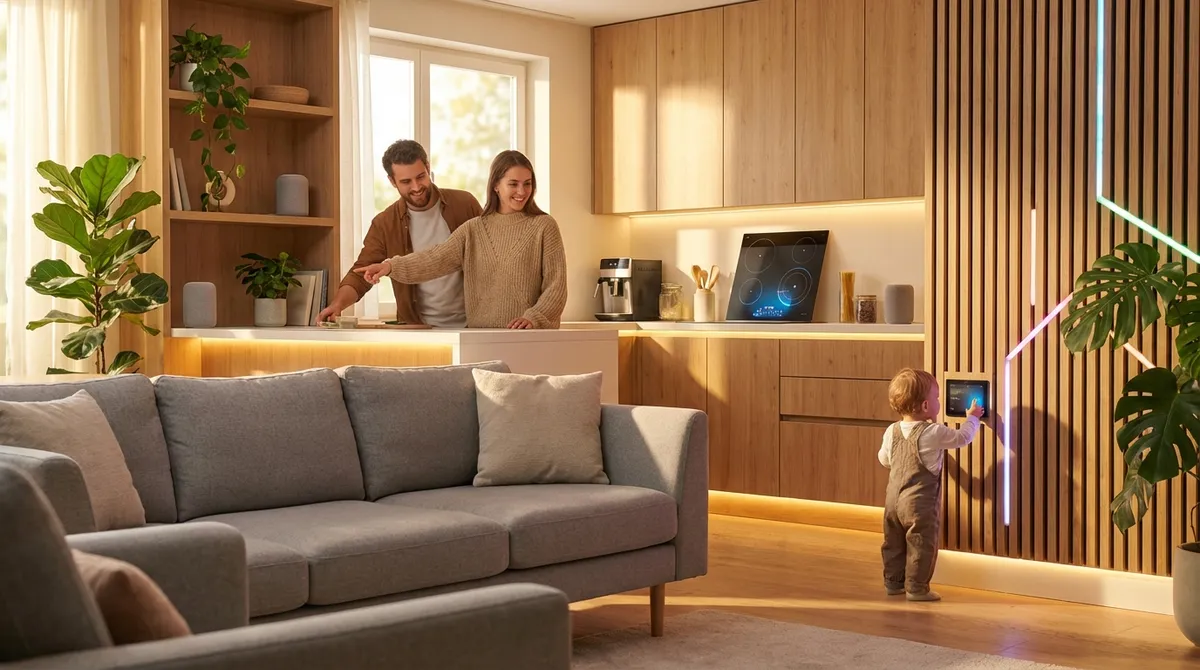
Smart homes aren’t just for tech obsessives anymore—they’re becoming the quiet backdrop to how we cook, rest, host, and work. The best setups don’t scream “futuristic gadget”; they disappear into the flow of your day and make everything feel a little smoother, calmer, and more personal.
Below are five innovative home-living ideas that feel modern, livable, and actually worth plugging into your real life—not just your Pinterest board.
1. Mood-First Lighting That Syncs With Your Day
Instead of treating lights like simple on/off switches, think of them as mood setters that track your energy, focus, and routines.
Modern smart lighting can:
- Warm up in the evening to help your body wind down
- Stay cool and bright over your desk to keep you focused
- Dim in layers for movie nights without leaving you in total darkness
- Shift settings automatically based on time, sunrise/sunset, or scenes you trigger with a phrase
The lifestyle win is subtle but real: your home starts to guide your day instead of fighting it. No more harsh white lights at midnight or squinting awake under full brightness. With smart switches and bulbs, you can retrofit most spaces without rewiring your entire life—and still keep your favorite statement fixtures.
For social moments (dinners, game nights, or at-home date nights), one tap or voice command can flip the entire feel of your space. It’s part ambience, part personal assistant, and it quickly becomes the quiet hero of your home.
2. Kitchen Intelligence That Cuts Friction, Not Joy
Smart kitchen tech works best when it removes friction from cooking, not the fun.
Think beyond “smart fridge with a giant screen” and focus on small, clever upgrades:
- Smart plugs for your kettle or slow cooker so warm drinks and dinners are ready when you are
- Voice-controlled timers and recipe step repeats so your hands stay messy, not your phone
- Smart scales and thermometers that pair with apps for more reliable baking and roasting
- Fridge cameras or inventory apps that remind you what you actually have before you reorder
For busy weekdays, this means fewer “what’s for dinner?” spirals and more follow-through on the groceries you already bought. For weekends, it lets you play: experimental recipes, slow cooking, and hosting become less stressful because timing, temperatures, and organization are quietly handled in the background.
The goal isn’t a fully automated kitchen—it’s a kitchen that’s tuned to your habits, whether you’re a meal-prep loyalist or a last-minute “what can I make with eggs and frozen peas” type.
3. Distraction-Smart Home Offices That Actually Protect Your Focus
The home office isn’t just about a desk and a chair anymore; it’s about designing a space that actively supports deep focus and intentional breaks.
A smart, distraction-aware workspace might include:
- Lighting presets: “Deep Work,” “Zoom Call,” and “Off Duty” modes
- Noise levels tracked via a smart speaker or sensor that can nudge you to put on headphones when the house gets chaotic
- Presence-triggered settings that start your work routine—lights on, devices woken, background playlist queued—as soon as you enter
- Smart sit-stand desk reminders based on real usage, not just generic notifications
Instead of willpower alone keeping you productive, your environment becomes a gentle system: lowering interruptions, smoothing transitions, and helping you switch off at night. That last part is key—smart homes can protect your boundaries by dimming office lights, shutting down monitors, or closing smart blinds at a set “workday over” time.
For anyone blending remote work, side projects, and real life in one space, this kind of setup helps your brain understand: “Now I’m on. Now I’m off.”
4. Wellness-Forward Bedrooms That Work With Your Sleep, Not Against It
A smart bedroom isn’t about more devices—it’s about better rest.
Consider layering in tech that respects calm instead of cluttering it:
- Circadian lighting that gradually dims at night and slowly brightens in the morning
- Smart thermostats or fans that hold your ideal sleep temperature without constant manual tweaks
- Smart blinds that block early light when you need it—or open gently to wake you naturally
- Sleep trackers (in wearables or under-mattress sensors) that inform real changes, like bedtime shifts or light adjustments
The shift is from “bedroom as storage plus bed” to “bedroom as a reset space.” You’re tuning your environment around what your body actually needs: consistent light cues, steady temperature, and fewer jolting alarms.
This kind of setup quietly supports better sleep hygiene. Over time, your room itself becomes a cue: when the lights warm and dim and the room cools slightly, your brain knows it’s time to shut down from the day.
5. Micro-Zones That Flex Between Solo Time and Social Life
Modern homes—especially apartments and smaller spaces—have to do everything: host, recharge, work, and entertain. Smart tech can help you create “micro-zones” that transform day to night without major renovations.
Think:
- A living area with scene presets: “Chill Solo,” “Friends Over,” “Screen-Free Night”
- Portable smart speakers that follow you—from kitchen podcast to balcony playlist
- Smart plugs and lamps to carve out a reading corner that can turn on with one command
- Smart TVs that can switch between entertainment mode and calm art or ambient visuals when you’re hosting
Instead of building separate rooms for every activity, you let lighting, sound, and screens redraw the space for you. Your home becomes flexible: one moment it’s your personal retreat with soft lighting and low-fi music; the next it’s a social hub with brighter lights and shared playlists.
These micro-zones are especially powerful in open-plan spaces where everything can feel like “one big room.” Thoughtful smart setups allow you to mentally and visually divide areas without putting up a single wall.
Conclusion
Smart living isn’t about turning your home into a showroom of connected gadgets; it’s about designing a space that quietly collaborates with you.
Mood-led lighting, frictionless kitchens, focus-first offices, sleep-supportive bedrooms, and flexible micro-zones all share one principle: tech that disappears into your lifestyle. When done right, it feels less like “using a smart home system” and more like your home finally understands how you live.
The real upgrade isn’t the devices—it’s the way your day starts to unfold with less resistance and more intention.
Sources
- U.S. Department of Energy – Lighting Choices to Save You Money - Covers efficient lighting options and how different types impact comfort and energy use
- Harvard Medical School – Blue Light Has a Dark Side - Explains how light exposure affects sleep cycles and why evening lighting matters
- National Sleep Foundation – Bedroom Environment - Details how temperature, light, and sound influence sleep quality and bedroom design
- Consumer Reports – Guide to Smart Kitchen Appliances - Reviews and explains how smart kitchen devices can streamline cooking and daily routines
- Harvard Business Review – How to Set Up Your Workspace for Productivity - Offers data-backed guidance on creating effective home workspaces that support focus and balance
Key Takeaway
The most important thing to remember from this article is that this information can change how you think about Smart Homes.