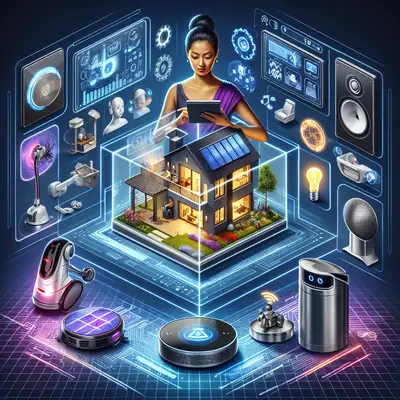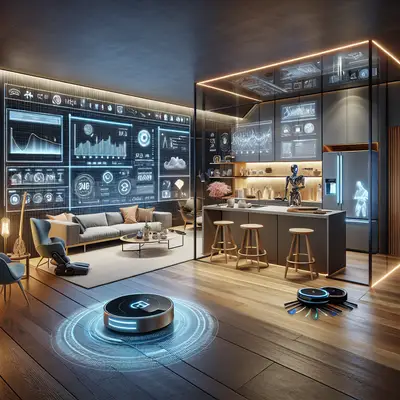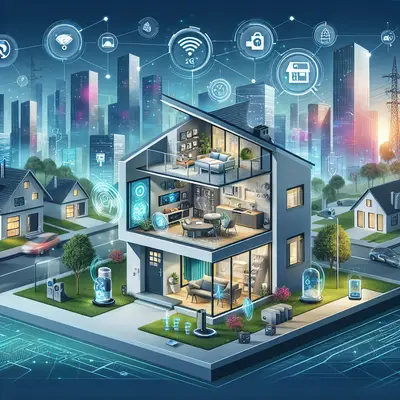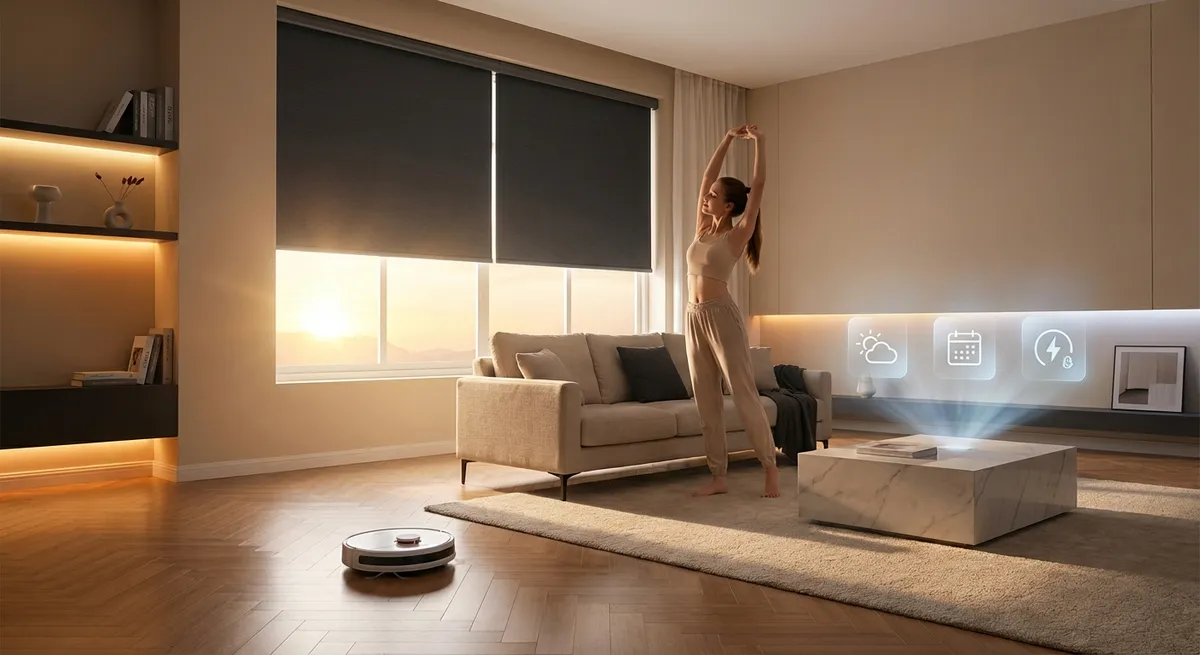
If your home still needs you to flick every switch, remember every chore, and babysit every appliance, it’s officially due for an upgrade. Smart homes aren’t just about gadgets anymore—they’re about creating a daily rhythm that feels smoother, calmer, and more you. Think: your space quietly handling the background tasks so you can focus on the good stuff.
Below are five innovative smart living ideas that go beyond “just add a smart bulb” and lean into lifestyle—how you move, rest, host, work, and recharge at home.
1. The “Set-It-and-Forget-It” Comfort Zone
Your heating, cooling, and lighting don’t have to be on your mind 24/7 to feel dialed in. A truly modern comfort system learns from you—your patterns, your preferences, and your off hours.
Start with a smart thermostat that adapts automatically instead of relying on rigid schedules. Over a few weeks, it can map when you’re usually home, when you sleep, and when the house is empty. Layer in motion sensors and smart shades so your home responds to sunlight and presence, not just the time on the clock.
The result: you walk into a space that’s already at your ideal temperature with lighting that feels intentional, not harsh. You save energy without micromanaging settings, and your home feels less like a machine you constantly adjust and more like a place that quietly adapts around you.
2. The Frictionless Kitchen: Where Tech Meets Everyday Cooking
The smartest kitchens don’t feel “techy”—they just make cooking smoother. Think of your kitchen as an ecosystem that supports how you actually eat, shop, and host, not a showroom of complicated appliances you never touch.
A smart oven that preheats from your phone while you’re on the way home. A fridge that lets you peek inside via an app before you decide what to make. Voice-controlled timers, recipe step reminders, and connected range hoods that turn on when you start cooking—all of this removes little frictions that usually clutter your brain.
You can also sync your digital grocery list to what’s in your pantry: barcode scanning and manual tagging turn “What do we even have?” into a quick check on your phone. For people who meal prep, cook in batches, or host often, an integrated system means fewer last-minute store runs, fewer forgotten ingredients, and a kitchen that feels like a low-key sous-chef rather than another chore zone.
3. The Adaptive Home Office That Knows When You’re “On”
The old “laptop at the dining table” setup doesn’t work when remote or hybrid work becomes your real lifestyle. A modern smart home office shapes your focus, your energy, and your boundaries almost automatically.
Imagine sitting at your desk and your space responds: lights shift to a daylight tone for focus, noise-cancelling panels or a sound machine activate, and your “Do Not Disturb” status syncs with your smart doorbell or intercom so deliveries don’t derail your video calls. A height-adjustable smart desk that remembers your favorite standing and sitting positions nudges you to move without you thinking about it.
You can also create scenes tied to time of day: a “Deep Work” scene that dims everything but your task lighting and a “Wrap-Up” scene that softens the lights, cues a playlist, and closes blinds. This isn’t about being hyper-productive 24/7—it’s about designing a home that helps you switch gears cleanly, so work feels contained and the rest of your life doesn’t get swallowed by your inbox.
4. Wellness-First Spaces That Quietly Support Your Routine
Wellness at home isn’t just yoga mats and water bottles—it’s the way your space supports your body and mind without asking you to be hyper-disciplined all the time.
Think smart lighting that gradually warms and dims at night to support your sleep cycle, or circadian lighting that shifts throughout the day to mirror natural daylight. Air quality monitors can quietly check for pollutants, humidity, and ventilation issues, then trigger purifiers or fans when needed. Smart mirrors or displays in a workout corner can guide on-demand classes, track progress, and log basic metrics while you move.
You can even create an “Unplug” scene: phones docked in a charging drawer, notifications silenced, music dropping to something slower, and overhead lights fading in favor of floor lamps. The goal isn’t a perfectly optimized biohacker home—just a space that nudges you toward better habits and makes it easier to actually relax when you say you’re done for the day.
5. Seamless Hosting: A Home That’s Guest-Ready on Autopilot
Hosting gets instantly easier when your home can “snap into” guest mode with one tap. This isn’t about being over-the-top; it’s about creating a welcoming experience without the last-minute scramble.
Set up a scene that turns on entryway and path lights, adjusts the thermostat a few degrees cooler or warmer (because more bodies mean more heat), puts on a curated playlist at just the right volume, and opens smart blinds or shades to show off your best views. If you have a guest room, a smart lock with temporary codes means friends or family can let themselves in even if you’re running late.
You can also share quick-start guides via QR code in the guest space: how to control lights, where to find extra towels, how to adjust the fan, and how to connect to Wi‑Fi. It’s subtle, modern hospitality—no big speeches, no complicated remotes—just a house that quietly tells guests, “You’re taken care of here.”
Conclusion
Smart homes aren’t about collecting gadgets; they’re about designing a daily experience that feels smoother, calmer, and more intentional. When your lighting, comfort, work, wellness, and hosting all sync around how you actually live, the tech fades into the background—and the lifestyle takes center stage.
The most impactful moves usually start small: one room, one routine, one “scene” that replaces three or four separate tasks. From there, your home slowly becomes less of a to-do list and more of a partner in how you want to live.
Sources
- U.S. Department of Energy – Thermostats and Control Systems - Explains how smart and programmable thermostats improve comfort and efficiency
- Consumer Reports – Guide to Smart Appliances - Overview of smart kitchen appliances and what features matter
- Harvard T.H. Chan School of Public Health – Healthy Buildings and Indoor Air - Research-backed insights on air quality and its impact on wellness at home
- Mayo Clinic – Sleep and Light Exposure - Discusses how lighting affects circadian rhythms and sleep quality
- Occupational Safety and Health Administration (OSHA) – Computer Workstations - Ergonomic principles that inform healthy home office and workstation design
Key Takeaway
The most important thing to remember from this article is that this information can change how you think about Smart Homes.