There’s a difference between a house full of gadgets and a home that just works. Modern home tech isn’t about flexing the latest device—it’s about creating a space that feels more intuitive, calmer, and tuned to how you actually live. These five ideas skip the gimmicks and lean into tech that quietly upgrades your day without turning your home into a showroom.
Adaptive Lighting That Follows Your Day, Not a Trend
Forget “all bright, all the time.” Smart lighting is finally moving beyond voice commands and into mood-aware, health-aware territory.
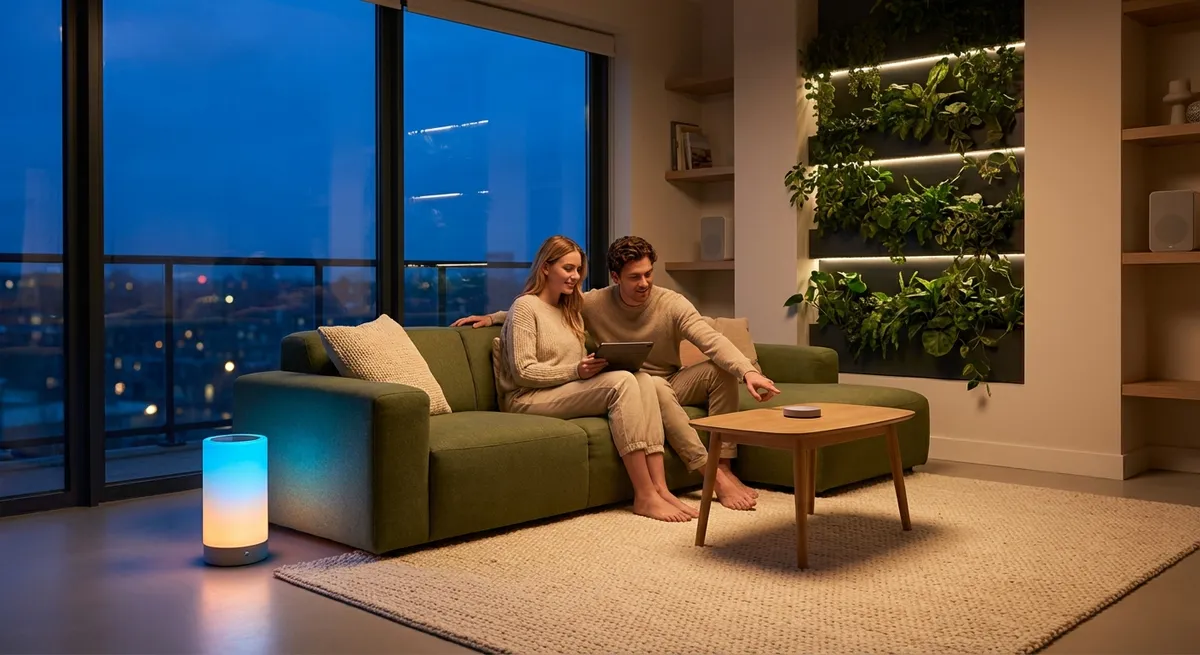
Set up tunable white bulbs that shift from cool light in the morning (to help you wake up and focus) to warmer tones in the evening (to cue your brain it’s time to wind down). Many systems can be automated based on time of day, sunrise/sunset, or even your sleep schedule. Add motion sensors in hallways and bathrooms for soft, low-level lighting at night instead of harsh overheads.
Layered smart lighting also lets you build “scenes” that match your routines: a calm, dim setup for dinner, a brighter, focused scene for working from home, or subtle, indirect lighting for movie nights. The real flex isn’t a rainbow-lit room—it’s a space that feels like it understands what you need at every hour.
Zoned Sound That Moves With You
Speakers don’t have to dominate your decor to dominate your sound. Multi-room audio has evolved from clunky setups to sleek, near-invisible systems that respect your style.
Create “zones” throughout your home—kitchen, living room, bedroom, even outdoor spaces—so you can stream a podcast in one room while someone else plays music in another. Many modern systems sync across platforms (Spotify, Apple Music, radio, audiobooks) and can be grouped or split with a tap on your phone.
The result: a home that feels alive without being loud. Morning news follows you from bedroom to bathroom. A dinner playlist softly reaches the patio. And when it’s time to switch off, one command or tap quiets the whole house. It’s less about cinematic volume and more about a seamless, background soundtrack to your life.
The Frictionless Entry: Smart Access That Feels Effortless
The front door is becoming less about keys, more about flow. Smart locks and access systems are shifting the entry experience from “Where are my keys?” to “I’m already in.”
Modern smart locks let you use digital codes, your phone, or even temporary access for guests, dog walkers, or deliveries. Set unique codes so you know who came and when, and revoke access in seconds if needed—no rekeying, no drama. Combine this with a smart doorbell camera, and you turn that first point of contact into something that’s both secure and convenient.
The lifestyle upside: no more lockouts, fewer “I’ll be there in 5” handoffs, and a front door that matches the pace of your day. It’s not about surveillance—it’s about smoothing the stress points of coming and going.
Subtle Climate Control: Comfort That Learns Your Rhythm
Thermostats used to be something you set and forgot—and then regretted when the bill arrived. Today’s smart climate tech is more about subtle comfort than dramatic temperature swings.
Smart thermostats and connected HVAC systems learn your habits over time: when you’re home, when you’re sleeping, and what temperatures feel right for you. Many can auto-adjust based on occupancy, weather, or set schedules. Add smart vents or room sensors, and you can stop freezing in one room while another feels like a sauna.
The goal is not just energy efficiency (though that’s a plus) but a home that feels consistently comfortable without constant tweaking. It’s the difference between “Who touched the thermostat?” and never really thinking about it—because it just feels right.
Invisible Organization: Tech That Quietly Reduces Mental Clutter
The most interesting home tech right now doesn’t scream “I’m smart”—it disappears into your routines and reduces mental load.
Think of connected appliances that send a ping when the laundry is done or the oven is preheated, so you’re not hovering or forgetting. Robot vacuums that map your home and quietly run when you’re out. Smart plugs that turn off rarely used devices on a schedule, cutting down on both energy and visual noise from blinking lights.
Layer in a central hub—whether that’s a smart display in the kitchen or an app on your phone—so you can see the status of everything at a glance: doors locked, lights off, climate set, tasks running. It’s not about remote-controlling every object; it’s about outsourcing just enough brainpower so your home feels lighter, less chaotic, and more intentional.
Conclusion
Home tech is finally moving past “look what this can do” and into “look how this feels.” The real upgrade isn’t a single device—it’s the way lighting, sound, access, climate, and quiet automation weave together to support your life in the background. When done right, your home doesn’t feel like a gadget store; it feels like a softer, smarter version of your everyday.
Sources
- U.S. Department of Energy – Lighting Choices to Save You Money – Explains the benefits and types of efficient, modern lighting solutions.
- ENERGY STAR – Smart Thermostats – Overview of how smart thermostats improve comfort and energy efficiency.
- Consumer Reports – Smart Locks Buying Guide – Independent guidance on features, safety, and convenience of smart locks.
- Harvard Joint Center for Housing Studies – The Future of Smart Homes – Research perspective on how smart home tech is evolving in everyday living.
- BBC Future – How Smart Tech Is Changing the Way We Live at Home – Explores lifestyle impacts of connected home technologies.
Key Takeaway
The most important thing to remember from this article is that this information can change how you think about Home Tech.