Smart homes aren’t just for tech obsessives anymore. The best setups today feel less like gadgets on display and more like a quiet, thoughtful backdrop to your life—editing the noise, softening the edges, and giving you time back. If your only reference point for “smart home” is a talking speaker and some color-changing bulbs, it’s time for an upgrade.
Below are five fresh, design-forward smart living ideas that go beyond the basics—built for people who care as much about mood and aesthetics as they do about specs.
1. Sensor-Led Spaces That Respond to You, Not the Other Way Around
Forget constantly tapping apps. The new smart home sweet spot is invisible automation that reacts to how you actually live.
Think: motion, presence, and ambient light sensors that trigger subtle changes without demanding your attention. Hallway and bathroom lights fade on at night at 20% brightness so you’re not blinded. Blinds automatically tilt when the sun hits your screen during work hours. The heating dials itself down when everyone leaves, then quietly warms up as the first person walks back in.
Done well, this kind of “responsive home” feels intuitive, not bossy. The key is stacking simple rules:
- Presence sensors that know if someone is in a room (better than basic motion)
- Light sensors adjusting brightness based on time of day and natural light
- Occupancy-based heating/cooling that follows people, not a fixed schedule
The result is a home that moves with your daily rhythm—no scenes to remember, no routines to maintain. You just live; the house edits the background.
2. The Hybrid Wellness Bathroom: Spa Meets Subtle Tech
The bathroom is quietly becoming one of the smartest rooms in the house—without looking like a spaceship.
Picture this: a gently heated floor that kicks in before your alarm, a smart mirror that shifts from bright, cool light for makeup to warm evening tones for unwinding, and a ventilation fan that turns itself on when humidity spikes and off when the air clears. Add a discreet waterproof speaker in the ceiling, and your daily routine suddenly feels like a hotel-level experience.
Some thoughtful upgrades that play well together:
- Smart mirrors with built-in lighting presets, defog features, and voice control
- Humidity-triggered fans that protect walls, paint, and air quality without you touching a switch
- Temperature-aware radiators or towel warmers that preheat on cold mornings only
- Water-use tracking devices that nudge you toward shorter showers without guilt
Wellness tech doesn’t have to scream “self-care.” When it’s embedded into the basics—light, air, heat, sound—it turns a regular bathroom into a low-effort reset space.
3. The Adaptive Kitchen: A Quiet Sous-Chef in the Background
The smartest kitchens don’t just connect to Wi-Fi; they quietly remove friction from daily cooking and cleanup.
Modern homeowners are leaning into small, high-impact shifts: an induction cooktop that heats fast but keeps surfaces cooler and safer; smart plugs on countertop appliances so you can check if you left the coffee machine on from your phone; or an oven you can preheat on your commute home so dinner starts when you walk in, not 20 minutes later.
A few ways the kitchen can start “thinking” with you:
- Smart induction cooktops that give you precise control, faster boiling, and better efficiency
- Ovens with remote preheat and cooking presets, so you spend less time hovering and guessing
- Connected fridges tracking temperatures and sending alerts if the door is left open or things warm up
- Voice-assistant displays on the counter to pull up recipes, timers, and conversions while your hands are busy
The lifestyle win: fewer “Did I turn that off?” spirals, less wasted food, better control over cooking time, and a space that quietly supports both meal-prep Sundays and last-minute weeknight pasta.
4. Zoned Comfort: Heating, Cooling, and Light That Match Your Day
Most people don’t need their whole home at the same temperature or brightness all day. Zoned comfort is about breaking free from the “one-setting-fits-all” mentality.
Instead of blasting AC or heat across the entire house, you create micro-environments: a cooler, focused work zone; a softer, warm-toned living space at night; a slightly cooler bedroom for better sleep. Smart thermostats, radiator valves, shades, and bulbs can all work together to support how each room feels, not just what the thermostat says.
Think in zones like:
- Work zone: brighter, cooler light, consistent temperature that keeps you alert
- Relax zone: dimmer, warmer lighting, slightly warmer air for winding down
- Sleep zone: cooler, darker, and quiet—blinds closed automatically, lights off, temperature dropping at a set hour
This is where smart homes move from “fun tech” to daily quality-of-life improvements. You’re not constantly adjusting a dial; you set the intention once and let your home handle the micro-adjustments based on time, presence, and even changing seasons.
5. Curated Sound and Light: Mood-First, Not Tech-First
The new luxury at home isn’t a bigger TV—it’s atmosphere on demand.
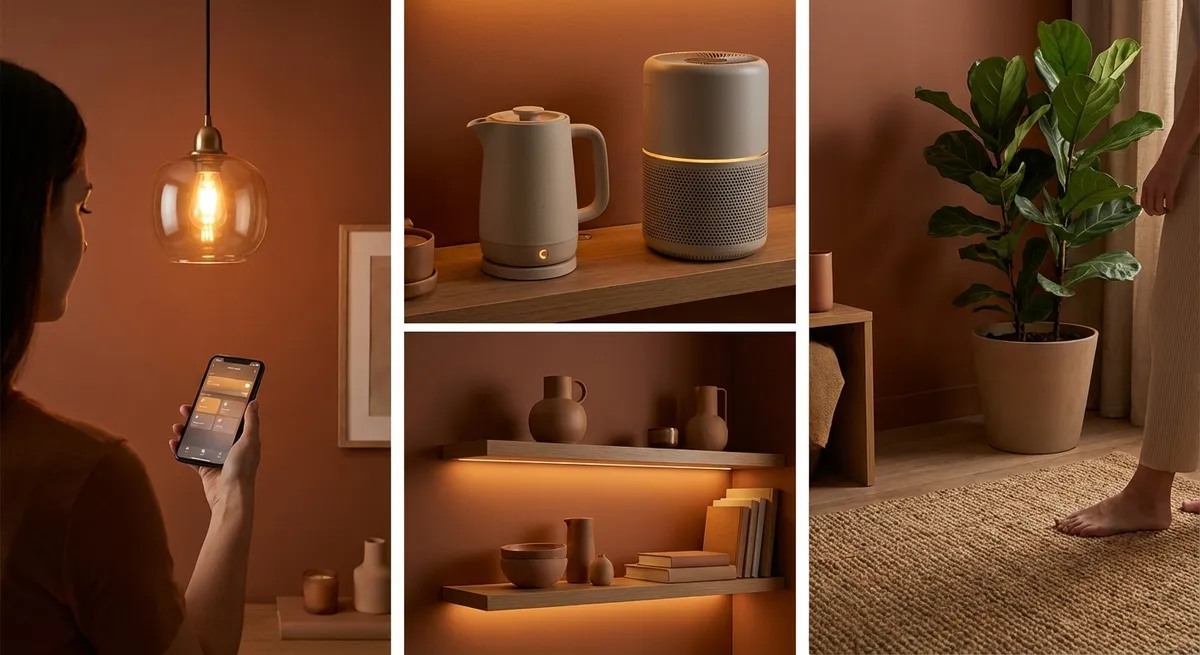
Smart lighting and audio have matured from “party tricks” to genuine mood tools. Think layered lighting scenes that shift from bright, even light in the morning to warm, low-level pools of light at night, paired with soft background playlists that follow you from the kitchen to the living room.
Some modern, lifestyle-focused moves:
- Whole-home audio that’s invisible—ceiling speakers or discreet soundbars instead of cluttered Bluetooth bricks
- Lighting scenes built around activities, not just “on/off”: deep work, Sunday cooking, late-night reading, movie mode
- Sunrise and sunset simulations that ease you in and out of the day, especially helpful in darker months
- App-free routines, triggered by time, presence, or a single switch instead of constant phone use
This approach isn’t about showing off your setup; it’s about using light and sound to cue your brain: now we work, now we slow down, now we rest. It becomes less “smart home” and more “mood architecture.”
Conclusion
Smart living in 2026 isn’t about filling your home with devices—it’s about editing your space so it supports how you actually want to live. The most interesting homes today are:
- Sensor-led rather than app-obsessed
- Calm, not cluttered
- Designed around mood, comfort, and wellness first—tech second
If you start with just one area—bathroom, kitchen, or lighting—focus on upgrades that remove tiny daily frictions and feel almost invisible once they’re set. The real flex isn’t a flashy gadget; it’s a home that quietly has your back, day after day.
Sources
- U.S. Department of Energy – Smart Home & Energy Efficiency - Overview of how smart technologies improve comfort and reduce energy waste at home
- Harvard T.H. Chan School of Public Health – Healthy Buildings Research - Research on how lighting, air quality, and temperature impact health and productivity
- Mayo Clinic – Sleep Environment and Temperature - Guidance on bedroom temperature, light, and routines for better sleep
- Consumer Reports – Guide to Smart Appliances - Independent insights on smart kitchen appliances and how they fit into everyday life
- International WELL Building Institute – WELL Building Standard - Framework connecting building design, air, light, and comfort to human wellness
Key Takeaway
The most important thing to remember from this article is that this information can change how you think about Smart Homes.