There’s a new kind of “done” in interior design—and it’s not about perfectly curated rooms or matching everything to a moodboard. Modern homes are lived-in, multi-purpose, and deeply personal. The new luxury is a space that works hard for your life while still feeling calm, intentional, and a little bit unexpected. These five innovative home living ideas are all about subtle upgrades with big impact—moves that make your home feel now without chasing every micro-trend.
Sculpted Minimalism: Furniture That Feels Like Art (But Still Works Hard)
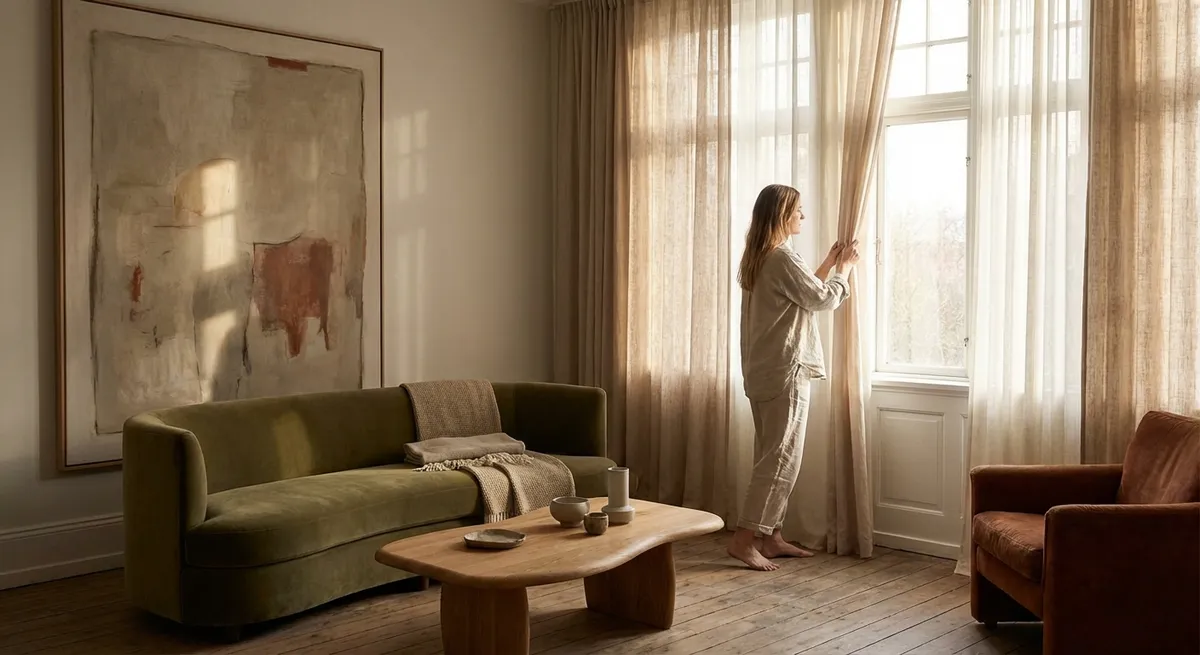
Minimalism isn’t dead—it just grew curves and softened its edges. Sculpted minimalism is all about pieces that are simple in palette but bold in shape: think cloud-like sofas, pedestal dining tables, oversized cylindrical side tables, and wavy headboards in tactile fabrics.
Instead of filling a room with lots of small furniture, choose a few substantial, sculptural pieces that instantly define the space. A chunky boucle lounge chair or a low, pill-shaped coffee table can act as a focal point without loud colors or busy patterns. Keep the base palette neutral—stone, sand, mushroom, soft white—and layer in depth via texture: nubby upholstery, brushed metal accents, matte ceramics, and natural wood. This approach keeps rooms feeling open and edited while still visually rich, making even small spaces feel intentional, not sparse.
Zoned Living: Designing Rooms Around How You Actually Use Them
Open-plan living is still desirable, but the way we use that open space has changed. Instead of one big everything-room, the modern move is “zoned living”: subtle spatial cues that define areas for working, lounging, eating, and recharging—without building any walls.
Use area rugs to visually mark out different zones in one larger space, and change up lighting to match each function (a floor lamp over a reading chair, a linear pendant over the dining table, a table lamp on a credenza that signals “evening wind-down”). Low bookshelves or console tables can act as soft dividers between a workspace and a living area. Even angle matters: turning a desk to face a window instead of the TV breaks the mental link between “work” and “rest.” When your home reflects the real rhythms of your day—spot to stretch, nook to focus, corner to chat—it feels bigger, calmer, and far more liveable.
Sensory Layering: Designing for How Your Home Feels, Not Just Looks
The most interesting homes right now don’t just photograph well—they feel good to be in. Sensory layering is about deliberately designing the experience of your space: sound, scent, touch, and light all working together.
Start with sound: add soft furnishings that absorb echo—textural rugs, fabric shades, upholstered dining chairs, and thick curtains to soften harsh acoustics. For scent, skip overpowering candles in every room and edit down to one or two “home signatures” (a grounding woody scent for living areas, something clean and subtle for bedrooms). For touch, mix cool and warm textures: linen against leather, ribbed ceramics next to smooth stone, natural wood beside polished metal. Finally, treat lighting like a dimmer-based playlist: warm, layered, and flexible. Use bulbs in the 2700K–3000K range for cozy evening light and add dimmers wherever you can, so your space shifts tone with your mood.
Elevated Everyday Storage: Hiding the Chaos in Plain Sight
Modern life comes with gear—tech cords, pet accessories, kid stuff, delivery boxes—none of which look good on a coffee table. Elevated everyday storage is about solving that problem beautifully by giving the “ugly essentials” a home that feels designed, not improvised.
Think storage benches in entryways that hide shoes and bags while offering a seat; sideboards in living rooms that hold board games, chargers, remotes, and extra candles; nightstands with deep drawers where books, hand cream, and devices can actually disappear at bedtime. In kitchens, appliance garages and pull-out pantries keep counters clear while keeping everyday tools within arm’s reach. The trick is to treat storage pieces like hero furniture: choose strong silhouettes, interesting hardware, and real texture (fluted wood, ribbed glass, woven fronts). When the things you use daily are easy to put away and easy to find, your home reads as calm, even when life isn’t.
Hybrid Social Spaces: Rooms That Work for Solo Nights and Big Gatherings
Entertaining has shifted from formal dinners to hybrid hangouts—game nights, potlucks, movie marathons, casual drinks that turn into late-night conversations. The sharp line between “everyday” and “company-ready” living spaces is fading, and design is following.
Build flexibility into your social spaces: nesting tables that expand when friends come over, ottomans that can turn into extra seating or a casual coffee table, dining chairs that are comfortable enough to pull into the living room. Consider a large, low sofa or sectional that invites people to sprawl rather than sit perched and upright. In smaller homes, a round dining table can double as a work zone by day, then transform with a simple tablecloth and candles at night. Add a dedicated “hospitality corner”—a bar cart, console, or sideboard with glassware, a carafe, and a tray—so hosting feels easy, not like an event that needs a week of prep.
Conclusion
The most interesting interiors right now aren’t about perfection; they’re about clarity. Sculptural furniture that holds the room without shouting, spaces mapped to your real routines, sensory details that quietly support your mood, storage that respects the realities of modern life, and social zones that flex with how you actually gather. When design leans into how you live instead of how you think your home “should” look, everything feels more relaxed—and somehow, more elevated too.
Sources
- American Society of Interior Designers (ASID) – 2024 Trends Report - Insights into evolving design priorities, including comfort, flexibility, and sensory-focused interiors
- Harvard Joint Center for Housing Studies – Remodeling and Design Trends - Research on how homeowners are rethinking layouts and multi-use spaces
- International WELL Building Institute – WELL Building Standard - Framework on designing spaces that support well-being through light, sound, and materials
- U.S. Department of Energy – Energy Saver: Lighting Choices - Guidance on lighting types, color temperature, and layered lighting strategies
- New York Times – The New Rules of Home Design - Ongoing coverage of lifestyle-focused design shifts, everyday luxury, and how people actually live at home
Key Takeaway
The most important thing to remember from this article is that this information can change how you think about Interior Design.