The homes that feel the most “now” aren’t the ones stuffed with trends—they’re the ones that tell a clear story about how you actually live. Think fewer random decor buys, more intentional choices that work hard in the background. These ideas aren’t about ripping everything out and starting fresh; they’re about small but smart shifts that make your space feel calmer, sharper, and way more you.
Below are five innovative home living ideas that tap into how modern homeowners really use their spaces—multitasking rooms, tech that hides instead of shouts, and materials that feel good to live with every day.
Sculpted Storage: Let Your Organization Be the Art
Storage is no longer just a row of cabinets; it’s part of the visual identity of your home. Sculpted storage leans into built-ins, curves, and unexpected forms that double as design moments.
Instead of boxy bookshelves, imagine a wall of arched niches that display books, ceramics, and speakers in one clean visual line. Entryways can become “landing zones” with floating consoles, hidden shoe drawers, and a single statement hook rail that looks like a gallery piece, not a coat rack. In living rooms, low, wall-mounted credenzas keep floors visually open while hiding cables, routers, and the chaos of daily life.
The goal: storage that looks intentional, not like an afterthought. Plan it as you would a feature wall—play with asymmetry, negative space, and color blocking. A muted palette with one contrasting tone (charcoal, clay, or deep forest green) can make built-ins feel architectural and elevated instead of just “practical furniture.”
Mood Layers: Lighting That Shifts With Your Day
Lighting is the quickest way to change how a room feels, and modern homes are moving beyond the single ceiling fixture. Mood layering uses three types of light—ambient, task, and accent—to create a space that can flip from “WFH focus” to “late-night wind-down” without feeling staged.
Start with warm, dimmable overhead lighting that doesn’t glare (think diffused shades, flush mounts, or integrated LED strips). Add focused task lights where you actually do things: a swing-arm lamp by the sofa, a slim desk lamp, or under-cabinet strips in the kitchen. Then finish with accent lighting: a small uplight on a plant, a LED strip behind the headboard, or backlighting for shelves that makes objects glow instead of crowding the room.
Modern homeowners are also paying attention to light color. Cooler white is helpful for productivity during the day, while warmer tones (2700K–3000K) are better for evenings and sleep. Using smart bulbs or smart switches lets you dial in scenes—“Dinner,” “Screen-Free,” “Late Work”—without turning your living room into a tech showroom.
Soft Zoning: One Room, Multiple Lives
Open layouts look great in photos but can feel chaotic in real life. Soft zoning is about carving out distinct “mini territories” inside one space using furniture, rugs, color, and subtle architectural tricks—no walls required.
In a combined living-dining space, an oversized rug can define the lounge zone while a different texture (like a flatweave under the dining table) marks the eating area. A slim console behind a sofa creates a visual “line” between the seating and the rest of the room, while a low bookcase or a bench can act as a divider without blocking light.
Color is a powerful soft zoning tool: keep one palette running through the whole space, but shift saturation or texture by zone. For example, deeper tones and heavier textures in the TV area for coziness, lighter woods and linen around the dining table to feel open and airy. Even in small apartments, a simple screen, curtain, or slatted divider can carve out a reading corner, yoga spot, or WFH nook that feels like its own micro-room.
Tactile Neutrals: Minimal But Never Flat
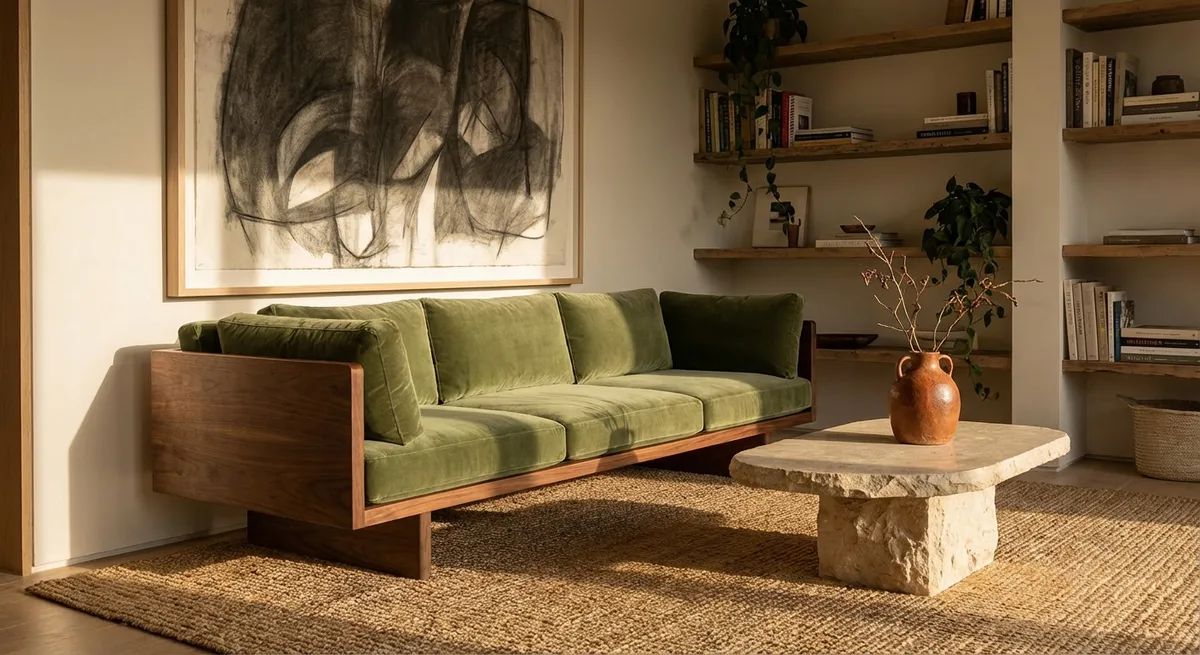
Neutrals aren’t going anywhere, but the most interesting spaces now are all about texture, not just color. Tactile neutrals use layers of materials—stone, wood, boucle, linen, plaster, matte metals—to make even a simple color palette feel rich and lived-in.
Instead of chasing loud accent walls or print-heavy decor, focus on how surfaces feel and catch the light. A limewash or plaster-effect wall instantly adds depth behind your sofa or bed with zero artwork. Swap a high-gloss coffee table for honed stone or wood with visible grain. Mix smooth ceramic lamps with a boucle chair, a jute rug, and cotton curtains; the room will feel quietly elevated without screaming “styled.”
This approach is also functional. Natural fibers and breathable fabrics are more comfortable in both warm and cool climates, and they tend to age gracefully. Keep the palette tight—shades of cream, sand, mushroom, and charcoal—then introduce one or two “anchor” pieces (like a rust velvet chair or deep blue cabinet) to ground the calm.
Hidden-Intent Corners: Designing Around Your Real Habits
The most innovative homes aren’t just beautiful; they’re brutally honest about how they’re used. Hidden-intent corners are small, designed zones built around specific rituals—morning coffee, reading, stretching, skincare, gaming—that usually end up happening in awkward spots.
If you always scroll emails at the kitchen counter, upgrade that zone: add a small sconce, a stool that tucks away, and a narrow organizer for chargers and notebooks so it becomes a legit mini work perch. If you wind down with skincare, treat your bathroom vanity like a beauty bar with drawer inserts, a magnifying mirror, and warm vertical lighting on either side of the mirror instead of one harsh overhead bulb.
Reading in bed? Layer a supportive headboard, mounted reading lights with individual switches, and a small shelf instead of bulky nightstands. Gamers can reclaim living rooms with a dedicated media wall—concealed cable channels, sound-absorbing panels that double as art, and low storage for consoles and controllers so the room flips from “hangout” to “movie night” instantly. The trick is designing for your real habits instead of fighting them.
Conclusion
Modern interior design isn’t about chasing whatever’s trending on your feed; it’s about making intentional moves that quietly upgrade how you live every day. Sculpted storage keeps your space sharp and uncluttered, layered lighting follows your rhythm, and soft zoning lets one room do more without feeling busy. Tactile neutrals and hidden-intent corners add that lived-in polish that makes your home feel both designed and deeply personal.
Pick one area that bothers you the most—visual clutter, bad lighting, noisy open space—and start there. A few focused changes can make your home feel calmer, more functional, and instantly more current, without needing a full-blown renovation.
Sources
- Harvard Joint Center for Housing Studies – Housing & Interior Trends - Research-based insights into how people are actually living and using space at home
- American Society of Interior Designers (ASID) – 2023 Trends Outlook - Professional perspective on evolving interior design priorities, including wellbeing and space planning
- U.S. Department of Energy – Lighting Choices to Save You Money - Practical guidance on efficient and effective residential lighting, including color temperature and layering
- IKEA Life at Home Report - Global research on real-life behavior in homes, from routines to space usage
- University of Minnesota Extension – Creating Functional Living Spaces - Educational resource on organizing and planning rooms for comfort and everyday function
Key Takeaway
The most important thing to remember from this article is that this information can change how you think about Interior Design.