Smart homes aren’t just about showing off gadgets anymore—they’re about curating a daily rhythm that feels smoother, calmer, and more intentional. The best setups fade into the background and quietly support how you already like to live, instead of forcing you to adapt to clunky tech.
Think of your home less like a device museum and more like a living system that understands your routines, energy, and mood. Below are five innovative ideas that modern homeowners are leaning into—each one focused on lifestyle first, tech second.
1. Mood-Based Lighting That Follows Your Day (Not the Other Way Around)
Forget manually dimming lamps every evening. Smart, circadian-inspired lighting uses tunable white and color temperature to mirror natural daylight patterns, helping support better sleep, focus, and relaxation.
In the morning, lights can slowly brighten with cooler tones to gently wake you up—paired with your blinds opening just enough to pull in soft sunlight. As the day moves on, your home can shift to warmer, cozier lighting that tells your brain it’s time to wind down, not keep grinding. This is more than ambiance; there’s real research behind how light affects your circadian rhythm and mood.
Layering smart bulbs, wall switches, and light strips lets you zone your home: energizing in the kitchen, deep-focus in the office, soft and cinematic in the living room. Instead of tapping apps all day, you can build scenes around your actual lifestyle: “Work Mode,” “Dinner,” “Unplug,” or “Late Night.” Integrate motion sensors in hallways and bathrooms for low-level night lighting that guides you without a harsh glare.
The key: design lighting around how you live, not just what looks good on Instagram. Your home should feel different at 7 a.m., 2 p.m., and 10 p.m.—and your lighting can quietly lead that shift.
2. A Kitchen That Thinks in Recipes, Not Just Appliances
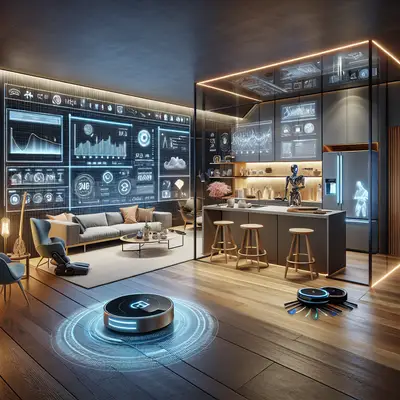
The modern smart kitchen is less about having the “smartest fridge” and more about connecting the full cooking experience—from what’s in your pantry to what lands on your plate.
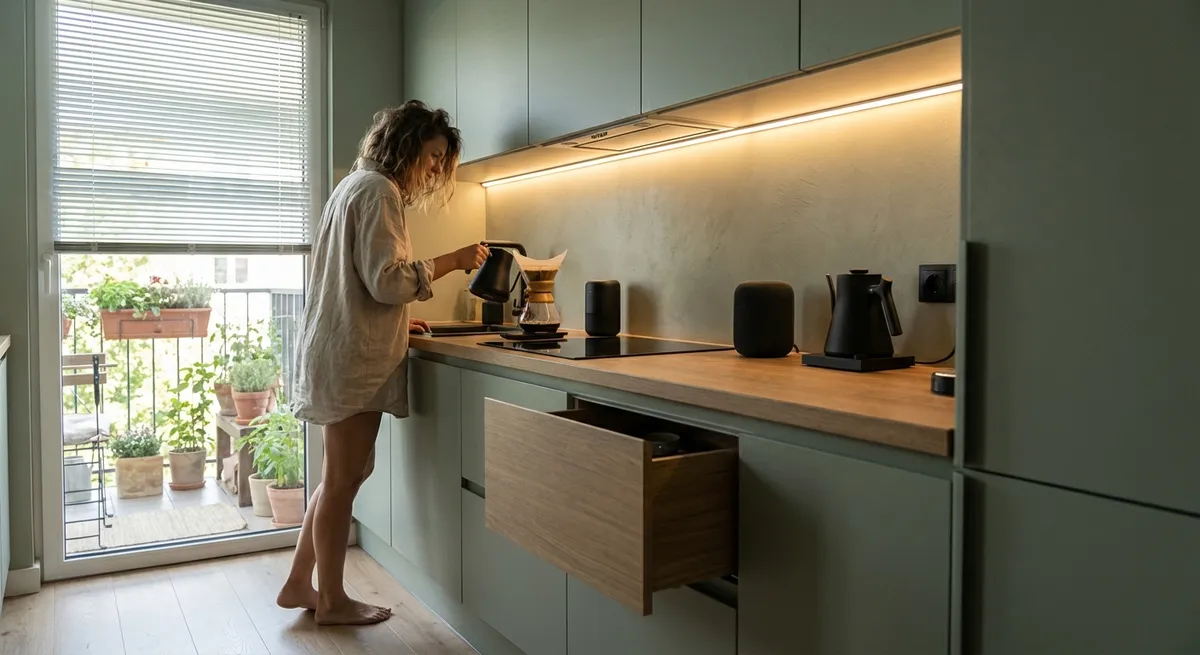
Imagine your kitchen as a low-key co-chef. Your grocery list updates automatically when you’re running low on staples. You can scan barcodes or use image-based recognition on your phone to log what’s in your fridge. When you’re staring at a pack of random ingredients at 7 p.m., you ask your voice assistant what you can make—and it suggests recipes based on what you already have.
Ovens that preheat to the exact temperature when you select a recipe, induction cooktops that adjust heat to prevent boiling over, and range hoods that turn on automatically when air quality changes all create a sense of “this kitchen has my back.” Smart faucets can dispense precise amounts (“fill 500ml” or “one cup”) so you’re not juggling measuring cups, and connected dishwashers can kick on during off-peak energy hours to save on bills.
Modern homeowners are also blending analog and digital beautifully: a stone countertop paired with a hidden induction stove, or a classic farmhouse sink paired with a voice-enabled faucet. The tech is there—but it doesn’t shout. The result is a kitchen that feels genuinely helpful, not hyper-digital.
3. Micro Wellness Studios Built Into Everyday Spaces
Wellness at home is getting smarter, but not in a flashy gym-mirror way for everyone. The new wave is subtle: wellness zones integrated into corners of your existing rooms, supported by discreet, intelligent tech.
Think about a small nook with a smart speaker, soft lighting, and an app-linked air purifier that adjusts based on indoor air quality. You roll out your yoga mat, and your space automatically shifts into “reset mode”—lights dim warmer, soundscapes start, and your wearable syncs with a guided breathwork or stretch session. No studio membership, no commute, no pressure.
Smart thermostats and radiator valves can fine-tune temperatures for sleep, workouts, or workdays. Connected blackout shades plus sunrise alarm lamps create a sleep cocoon at night and a gentle wake-up environment in the morning. For those working from home, ergonomic desks that remember your sitting/standing preferences and remind you to move can quietly support long-term health without spamming you with notifications.
The best part: these wellness micro-studios don’t need a dedicated spare room. A section of your bedroom, a corner of your living area, or even a balcony can turn into a ritual space when the tech, lighting, and sound work together. It’s about crafting cues that signal to your brain: this is where we slow down, move, or reset.
4. Neighborhood-Aware Security That Feels Less Fortress, More Peace of Mind
Security has evolved beyond burglar alarms and glaring floodlights. Modern homeowners want homes that feel open and welcoming—without sacrificing safety or awareness.
Smart doorbells with video, two-way audio, and package detection mean you can answer your door from anywhere, or check whether that knock is a friend, delivery, or stranger. Paired with smart locks, you can create temporary digital keys for guests, dog walkers, or cleaners—no spare key under the mat, no six different copies floating around.
Cameras and motion sensors are getting smarter too, distinguishing between people, animals, and cars. Instead of constant alerts for every leaf that moves, you can dial in what actually matters. Some systems can even work with your local neighborhood watch apps or community alerts, giving you broader context when something happens nearby.
Lighting, again, plays a huge role. Motion-activated pathway lighting feels welcoming for you and your guests but still deters unwanted visitors. You can set “Away Mode” so your lights, plugs, and even media simulate normal activity when you’re not home—subtle, not theatrical.
More people are also caring about privacy and control. That means choosing systems that offer local storage or strong encryption, plus the ability to customize exactly what’s recorded, when, and where it’s kept. Security that respects your lifestyle—and your data—is becoming the new standard.
5. Adaptive Comfort: Air, Sound, and Temperature That Self-Tune
We’re past the era where “smart” meant nudging your thermostat from an app. The new vision of comfort is fully adaptive: your home automatically tuning the invisible layers—air quality, temperature, and sound—so you feel good without thinking about it.
Smart thermostats learn your patterns, but they can go further when paired with room sensors, motorized shades, and even ceiling fans. Instead of blasting HVAC all day, your home can close shades before a heatwave, circulate air strategically, and only heat or cool the rooms you actually use. That’s more comfort and less energy waste.
Air quality monitors can track pollutants, humidity, and CO₂, quietly kicking on purifiers or bathroom fans, or nudging you to crack a window when levels climb. This matters more than ever in urban areas or during wildfire season, when indoor air can be just as important as outdoor data.
Sound is part of comfort too. Smart speakers and soundbars can act as gentle soundscapes—rain, white noise, soft playlists—to mask street noise or apartment living sounds. Some homeowners are using smart noise sensors to trigger white noise or shift audio levels based on ambient sound, creating a protective bubble for sleep or focus.
The goal isn’t to create an over-engineered lab—it’s to make your home feel consistently “just right” with minimal input from you. When comfort is automated thoughtfully, you simply notice that you’re less distracted, less irritated, and more at ease in your own space.
Conclusion
Smart living doesn’t have to look like a sci-fi showroom. The most interesting homes right now feel quietly intuitive: lights that move with your day, kitchens that support how you actually cook, wellness zones hiding in plain sight, security that reassures without overwhelming, and comfort that adjusts itself in the background.
If you’re updating your space, start with one zone that impacts your daily rhythm the most—lighting, kitchen flow, sleep, or security. Layer in tech slowly, test how it feels, and keep what genuinely makes life smoother. The smartest home is the one that feels the most like you.
Sources
- Harvard Medical School – Blue light has a dark side – Explains how light affects circadian rhythms, sleep, and overall health
- U.S. Department of Energy – Energy Saver: Smart Home Technology – Overview of how smart devices can improve efficiency and comfort in homes
- EPA – Indoor Air Quality (IAQ) – Details why monitoring and improving indoor air quality matters for health
- Consumer Reports – How to Make Your Home More Secure – Guidance on smart locks, cameras, and best practices for home security
- Mayo Clinic – How light affects your sleep – Breaks down the connection between lighting, screens, and sleep quality
Key Takeaway
The most important thing to remember from this article is that this information can change how you think about Smart Homes.