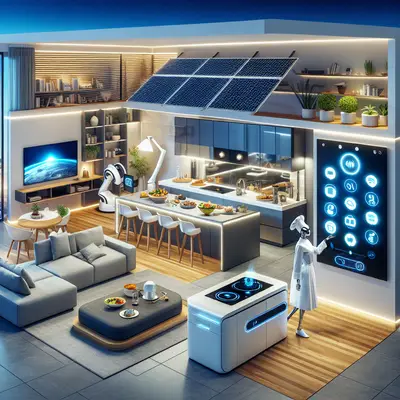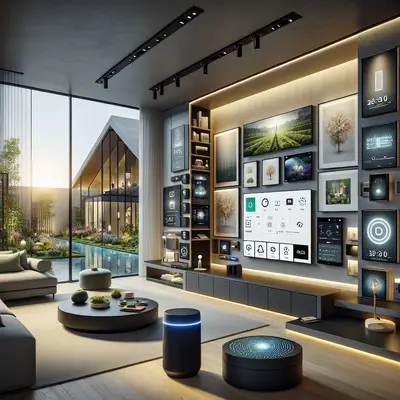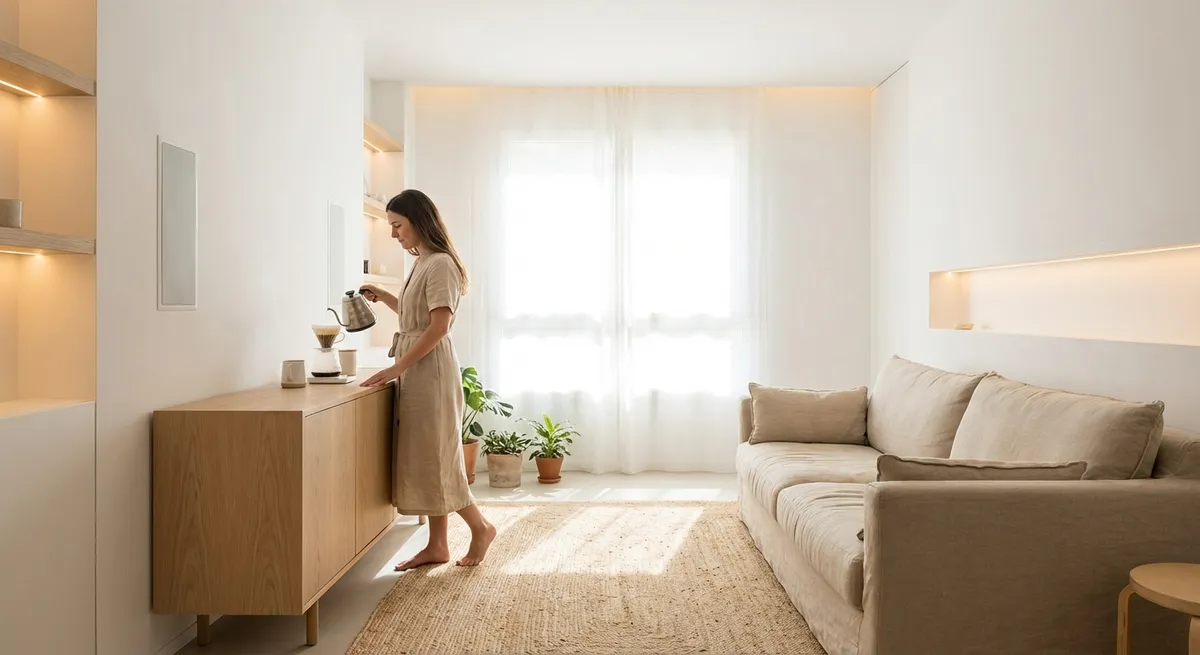
If “smart home” still makes you think of clunky voice commands and blinking blue lights, it’s time for a reboot. Today’s best home tech doesn’t scream for attention—it blends into your routines, supports how you actually live, and makes your space feel calmer, not busier.
These are the upgrades modern homeowners are gravitating toward right now: design-first, energy-aware, and quietly powerful in the background. No sci-fi vibes, no chaos—just tech that makes home feel more like you.
Adaptive Lighting That Follows Your Day (Not Just Your Switches)
The new wave of smart lighting is less “rainbow party mode” and more “beautiful light that makes you feel human.” Adaptive systems shift color temperature and brightness throughout the day: cooler tones in the morning to help you wake up, softer warmer light in the evening to signal your brain it’s time to wind down. Paired with presence sensors, lights follow you instead of staying on in empty rooms, so you’re saving energy without thinking about it.
Design-wise, tunable bulbs can now hide inside minimalist fixtures you’d buy even if they weren’t smart, so your home doesn’t look like a tech showroom. You can create scenes—like “Reading Corner” or “Dinner Glow”—that layer overheads, wall lamps, and accent lighting with a single tap. And if you work from home, adaptive lighting can anchor your focus blocks and break times better than any productivity app. It’s subtle, but you feel it: better sleep, clearer mornings, and a space that shifts with your mood.
Zoned Comfort: Climate Control That Knows Where You Actually Live
Most of us don’t use every room in our homes equally, but traditional heating and cooling systems treat every square foot the same. Zoned climate control flips that. With smart vents, mini-splits, or room-based thermostats, your home can direct heating and cooling where you actually spend time—office by day, living room in the evening, bedroom at night. The result: a more comfortable home and energy bills that finally make sense.
Modern systems pair with geofencing and schedules, automatically softening or boosting temps when they detect you’re on the way home or about to wake up. For open-concept spaces, sensors can track hot and cold spots and balance them out without you constantly tweaking the thermostat. Some setups even “learn” your patterns—like when you usually cook or host—and pre-condition spaces to feel right when you step in. It’s the difference between “smart thermostat on the wall” and an entire home that quietly feels like it’s looking out for you.
Seamless Soundscapes: Audio That Lives in Your Walls, Not on Your Shelves
Instead of bulky speakers on every surface, the new move is integrated sound that disappears into your architecture. In-wall or in-ceiling speakers paired with a central hub let you stream music, podcasts, or ambient sound wherever you are, without clutter. You can keep the kitchen upbeat while the bedroom stays quiet, or fill the whole home with the same playlist when friends come over—all from your phone.
What makes this feel next-level is how sound becomes part of the environment, not just entertainment. Soft rain sounds in the bathroom during a shower, lo-fi beats in your home office that fade out automatically at dinner, white noise in the nursery triggered at bedtime—all of it happens without dragging Bluetooth speakers from room to room. Many systems now support voice control but don’t require it; think quiet taps on your phone or subtle wall controls that look like modern light switches. It’s invisible luxury: sound when you want it, silence when you don’t.
Smart Storage & Hidden Charging That Declutters Automatically
Clutter isn’t just visual—it’s digital, too. Cables, chargers, tablets, laptops, e-readers, game controllers: they all end up on the same kitchen counter. Smart storage answers that with built-in charging drawers, console cubbies with power strips, and entry benches that hide device docks inside. You drop your tech where it naturally lands, and it recharges out of sight.
In the kitchen, appliance garages with integrated outlets let blenders and coffee makers live behind clean doors, ready to use without re-plugging. In bedrooms, nightstands with wireless pads and hidden USB-C ports keep cords off the floor and surfaces looking clean. For families, a dedicated “charging station” cabinet can double as a tech check-in zone—everything charged, nothing scattered across the sofa. The lifestyle shift is simple but big: your home looks calmer, and your devices are always ready without visual chaos.
Micro-Hubs: Creating Task-Based Corners Powered by Subtle Tech
Instead of trying to make every room do everything, modern homeowners are carving out micro-hubs—small, tech-supported corners designed for a single purpose. Think a compact coffee ritual station with a smart kettle on schedule and an under-cabinet light that clicks on at your wake-up time. Or a wellness nook with a slim screen for guided workouts, a hidden mat drawer, and ambient lighting that shifts into “stretch mode” after long workdays.
Work-from-home micro-hubs might be a fold-down desk with integrated power, a slim monitor, and a light that signals “in focus mode.” In living areas, a “wind-down” corner could pair a comfy chair with a nearby outlet, subtle task light, and a small speaker for evening playlists or audiobooks. The tech here isn’t loud or complicated; it’s intentional. You’re not turning your home into an office or a gym—you’re letting small, focused pockets of tech support the versions of you that show up throughout the day.
Conclusion
Home tech doesn’t have to mean more screens, more notifications, or more rules. The most compelling upgrades right now are almost invisible—quiet systems that adapt to your rhythms, clear space instead of filling it, and make your home feel more designed, more personal, and more effortless.
If you’re planning your next refresh, start with one of these ideas and build from there. Aim for tech that disappears into your lifestyle, not tech that demands you redesign your life around it. That’s the sweet spot where “smart home” finally feels like “better home.”
Key Takeaway
The most important thing to remember from this article is that this information can change how you think about Home Tech.