Your home doesn’t need to feel like a sci‑fi movie to be smart. The new wave of connected living is less about flashy gadgets and more about systems that quietly take care of the boring stuff: comfort, safety, savings, and flow. Think: subtle tech, intentional design, and a home that feels calmer instead of more complicated.
Below are five innovative home living ideas that modern homeowners are leaning into—not to impress guests with a wall of touchscreens, but to make daily life smoother, lighter, and a bit more “of course it just works.”
1. Adaptive Comfort: A Home That Reads the Room (Literally)
The smartest homes now focus on “ambient intelligence”—tech that notices what’s happening and responds without you needing to ask.
Instead of obsessing over a single smart thermostat, imagine a network of discreet sensors that track temperature, humidity, sunlight, and air quality across different rooms. Your home slowly learns your patterns: cooler at night, warmer in the morning, dimmer lighting during movie hours, lights brightening gently as you wake.
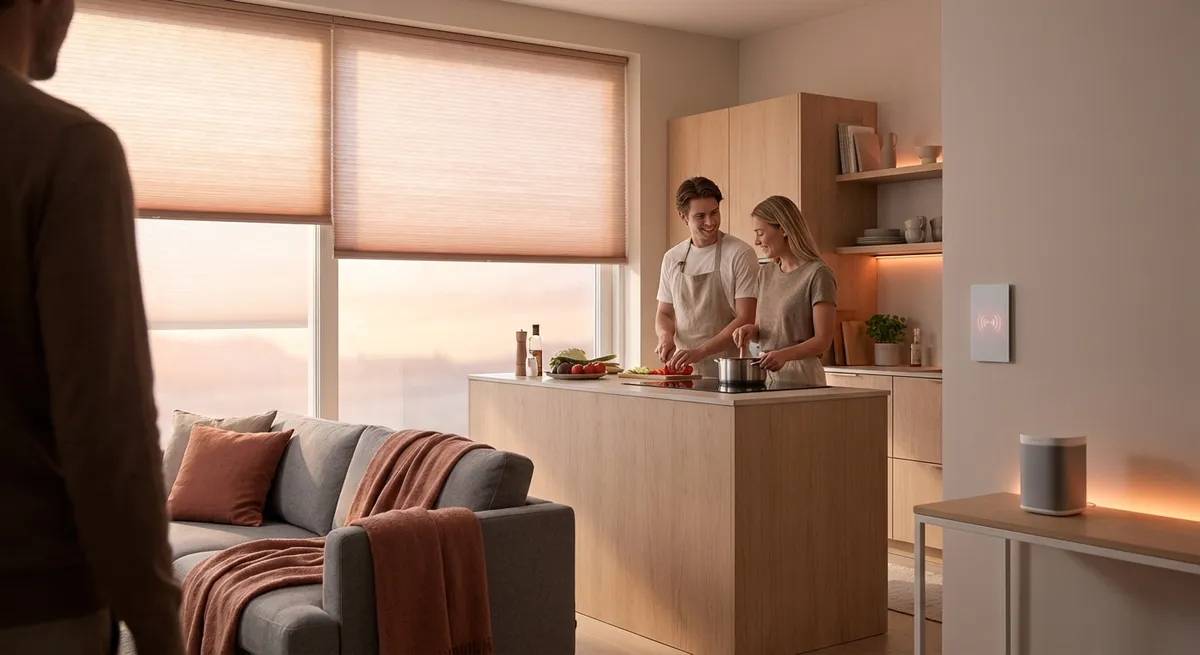
Modern energy systems can auto-shift heavy usage (like HVAC or water heating) to lower-cost times, saving money without you thinking about it. Smart vents, motorized shades, and zoning can keep one room cozy while another stays cool, instead of blasting the whole house.
The end result: your home feels “just right” most of the time, with fewer manual tweaks. It’s like having an invisible house manager constantly fine‑tuning comfort in the background.
2. Seamless Entry: Frictionless Access for Real Life
Keys at the bottom of your bag, guests stuck at the door, deliveries left in the rain—access is one of the most noticeable upgrades when it goes smart.
Today’s entry setups are moving beyond a single video doorbell. Smart locks, doorbell cameras, and entry sensors can work as a single, low‑stress system. You can create temporary digital keys for dog walkers, cleaners, or guests, then automatically revoke them when they’re no longer needed.
Packages can be dropped inside a secure vestibule or garage that opens just for verified deliveries. Facial recognition cameras (where allowed and used thoughtfully) can differentiate between unfamiliar visitors and known faces, triggering different automations—like unlocking, switching on the entry lights, or starting your “welcome home” playlist.
The goal isn’t to be watched by your own house; it’s to remove tiny friction points—no more “Where are my keys?” or sprinting to buzz someone in mid‑Zoom call.
3. Zoned Sound & Light: Curated Vibes by Space, Not Just Style
“Open concept” made homes look seamless—but live chaotic. Smart zoning brings back a sense of intentionality: one home, multiple moods.
With multi-room audio and dynamic lighting, each zone can have its own personality without clashing. A focused, cooler light and noise‑blocking soundscape in the office; warm, dimmable lighting and softer sound in the living room; a spa-like bathroom with humidity‑proof speakers and sunrise-simulating lights for early mornings.
Scene-based controls let you tap a single button or use a short voice cue to trigger a complete shift. For example, a “Reset” scene turns off work lights, pauses notifications, switches on softer bulbs in shared spaces, and starts a calming playlist. “Weekend” could boost natural light, open smart shades, and cue up music across the whole home.
Instead of tech as a focal point, sound and light become invisible tools for setting the tone of your day. Your home can subtly guide you from hustle to wind‑down—without you scrolling another app.
4. Kitchen Intelligence: Subtle Upgrades That Actually Get Used
The kitchen is where a lot of smart tech either shines or becomes expensive clutter. The newest wave focuses on small, meaningful automations that support how you actually cook, host, and snack.
Pantry sensors and connected fridges can help track what you have and how long it’s been there, quietly surfacing suggestions like “Use these veggies tonight” or “You’re low on milk—want to add it to your next order?” Induction ranges can link to your vent hood and lights, automatically adjusting fan speed or switching to brighter task lighting when you start to cook.
Smart faucets can deliver precise amounts of water (“500 ml,” “one cup,” “fill to the line”) and pull up preset temps for tea or baby bottles. Connected ovens can preheat on your drive home or follow guided recipes that adjust time and temperature based on what you’re making—no guesswork, fewer ruined dinners.
Instead of a “look what my fridge can do” flex, the modern smart kitchen aims to reduce food waste, clean up planning, and make weekday cooking feel less like a chore and more like a rhythm.
5. Wellness-First Spaces: Air, Sleep, and Micro-Retreats
Wellness at home has moved far beyond a yoga mat in the corner. Smart homes are now quietly tuning the environment around sleep, recovery, and mental clarity.
Air quality monitors can connect to ventilation, purifiers, and even smart windows—ramping up filtration during high pollution days or automatically venting after cooking. Smart humidifiers and dehumidifiers can maintain that sweet spot where your skin, sleep, and sinuses are happiest.
In the bedroom, circadian lighting gently shifts color temperature through the day—cooler and brighter for focus, warmer and dimmer at night to support melatonin and better sleep. Smart shades can sync with sunrise, while connected sleep trackers can nudge small changes: cooler room temperature, quieter fans, or adjusting wake-up alarms to lighter sleep cycles.
Micro-retreat spaces—a tiny reading nook with focused lighting and noise masking, a bathroom with a pre‑set steam and sound scene, a balcony with smart outdoor lighting and heater—all become easier to “activate” with a tap or schedule. Your home moves from being a place you simply return to, to a space that intentionally helps you decompress.
Conclusion
Modern smart homes aren’t about packing every surface with screens or filling your space with blinking devices. The most thoughtful upgrades feel almost invisible: comfort that auto-adjusts, access that just works, lighting and sound that support your day, kitchens that waste less, and spaces that quietly protect your sleep and wellbeing.
The future of connected living is less “Wow, look at this gadget” and more “Huh, my home already handled that.” When tech fades into the background and your life feels smoother in the foreground—that’s when a smart home truly earns its name.
Sources
- U.S. Department of Energy – Smart Thermostats and Home Energy Management – Overview of how smart controls improve comfort and cut energy use
- Harvard T.H. Chan School of Public Health – The Impact of Air Quality on Health – Research on why indoor air quality and ventilation matter for wellness
- National Institute of Standards and Technology (NIST) – Smart Home Cybersecurity Best Practices – Guidance on keeping connected homes secure
- Mayo Clinic – Sleep Environment: How It Impacts Sleep Quality – Details on temperature, light, and noise for better sleep at home
- Consumer Reports – Guide to Smart Home Devices – Independent reviews and explanations of common smart home products and systems
Key Takeaway
The most important thing to remember from this article is that this information can change how you think about Smart Homes.