There’s a new kind of “smart” home emerging—and it’s less about showing off gadgets, more about living better with zero extra effort. Think: lighting that syncs with your body clock, a kitchen that never runs out of your staples, and a home that feels curated to your habits without you constantly tapping an app. This isn’t sci-fi, it’s the quietly brilliant layer you can add to your space right now—no full renovation, no control-freak energy required.
1. Adaptive Lighting That Tracks Your Day, Not Just Your Switches
The harsh overhead light era is over. Modern homeowners are moving toward adaptive lighting: setups that shift color, brightness, and mood automatically from morning to night.
Smart bulbs and fixtures can be tuned to warmer tones at night to support melatonin production, while cooler, brighter light in the morning can gently nudge you awake and help you focus. Instead of relying on one central light source, people are layering table lamps, sconces, and LED strips—all connected to smart switches or hubs—so the whole room can “breathe” with the time of day.
You can set scenes for “slow mornings,” “deep work,” or “movie night” and trigger them with a single command or schedule. Some systems even adjust based on local sunset times, so your home always feels in sync with the outside world. The result is a space that feels naturally flattering, more relaxing, and noticeably more expensive with surprisingly small hardware.
2. The Self-Aware Kitchen: Appliances That Actually Think Ahead
The kitchen is becoming the quiet MVP of smart living. Instead of just one flashy appliance, the new direction is a connected ecosystem that helps you waste less food, cook more confidently, and simplify the everyday “what’s for dinner” stress.
Smart fridges can track use-by dates, suggest recipes based on what’s inside, and sync with your phone so you can “check” the fridge from the grocery store. Paired with smart pantry sensors or barcode-scanning apps, you can build a living inventory of what you own—perfect if you’re trying to cut down on food waste or impulse duplicates.
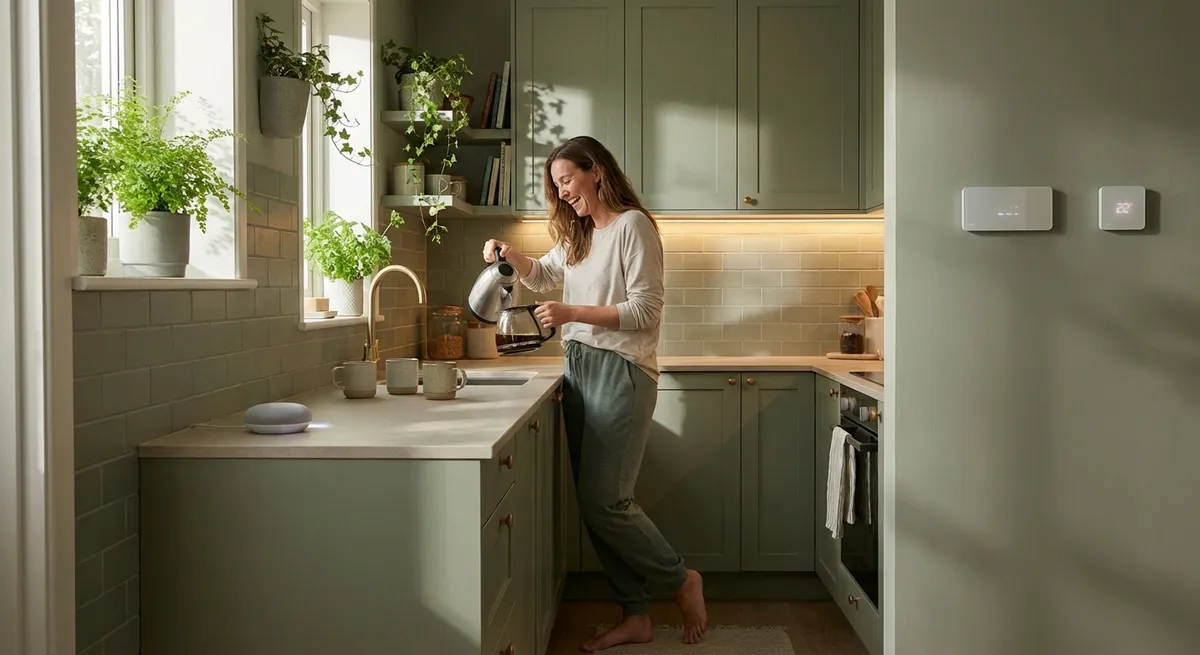
Ovens now come with app-based controls, built-in cameras, and guided cooking modes that adjust temperature and time automatically. Induction cooktops can be linked to smart range hoods that adjust ventilation based on heat and steam, without you touching a button. Even smaller devices—like connected coffee machines and kettles—can be programmed around your actual routine, so “morning person” you doesn’t have to negotiate with “half-asleep” you.
This isn’t about having the latest model of everything; it’s about picking key upgrades that make your daily habits smoother. A fridge that reminds you to use your produce, a cooker that prevents dinner disasters, a coffee machine that remembers your preference—tiny automations, big lifestyle payoff.
3. Wellness-First Climate: Air, Sound, and Comfort on Autopilot
Smart homes are shifting from “look what I can control” to “look how I feel here.” Wellness-focused climate control takes the usual thermostat upgrade and layers in air quality, sound, and comfort that adapts without constant micromanagement.
Connected thermostats learn your patterns—when you’re home, away, or sleeping—and precondition your space while trimming unnecessary energy use. Pair that with smart blinds that close in the afternoon heat or open on cold mornings to let in passive warmth, and suddenly your home is not just smarter, but more efficient and comfortable.
Indoor air quality monitors can track pollutants, humidity, and CO₂, then trigger purifiers or fans to keep things fresh. If you’re in a city apartment or a home with allergies and pets, this is a high-impact, low-effort upgrade. Add in soundscapes—white noise machines or speakers tied to routines that gently fade in or out based on time of day—and your space starts to feel more like a boutique hotel than a basic bedroom.
The goal isn’t obsessively perfect conditions, but subtle, background adjustments: air that doesn’t feel stuffy, temperatures that don’t swing wildly, and sound that supports focus or rest. Your home becomes a quiet collaborator in your mental and physical reset, especially after long screen-heavy days.
4. Invisible Security: Protection That Doesn’t Feel Paranoid
Security used to mean bulky cameras and obvious hardware that made your home feel like a fortress. The modern approach is softer, more discreet, and integrated into your actual lifestyle—not just worst-case scenarios.
Sleek smart doorbells, flush-mounted cameras, and low-profile sensors now blend into design-forward exteriors and interiors. Many systems let you customize notification levels so you’re not spammed every time a leaf blows past your porch. Advanced options use AI to distinguish between people, packages, animals, and vehicles, so you only see what matters.
Smart locks let you use temporary digital keys for guests, cleaners, or deliveries—no more hiding spare keys outside. You can check who’s at your door, confirm a package drop, or unlock for a friend from literally anywhere. For apartments, smart intercoms and access systems provide similar control without clunky hardware.
Crucially, these tools are becoming less “surveillance culture” and more “personal concierge”—helping you manage visitors, coordinate services, and keep an eye on things with a lighter, more lifestyle-oriented touch. You get peace of mind without your home feeling like a drama set.
5. Habit-Aware Spaces: Routines That Live in Your Walls, Not Your Head
The most interesting smart homes right now feel personal—not because they’re stacked with gadgets, but because those gadgets are choreographing the owner’s actual habits. Instead of you remembering everything, your space becomes the memory.
You can build micro-routines: a “leaving home” trigger that turns off unnecessary lights, pauses the music, locks the doors, adjusts the climate, and activates security with one tap or phrase. Mornings might start with blinds opening, a warm light scene, a specific playlist, and the heater nudged a little higher in winter. At night, another routine can dim everything, drop the thermostat slightly, switch the TV to a “no autoplay” input, and activate do-not-disturb scenes across your devices.
Voice assistants, smart switches, and sensors are the quiet infrastructure here. Motion in the hallway can turn on minimal night lighting. A door opening at certain hours can trigger a “welcome back” scene. Even less obvious upgrades, like smart plugs on lamps or fans, can be woven into routines for a space that always feels “set up” for what you’re doing next.
The modern flex isn’t memorizing a dozen commands; it’s designing two or three thoughtfully layered automations that genuinely remove friction. Your home starts feeling like it knows you—not in a creepy way, but in the same way a favorite hotel or café always seems one step ahead of your needs.
Conclusion
Smart living in 2024 isn’t about building a gadget museum—it’s about editing in the right layers so your home supports how you actually move through your day. Adaptive lighting, smarter kitchens, wellness-first climate control, discreet security, and habit-aware routines aren’t flashy add-ons; they’re the new baseline for a home that quietly works hard in the background.
Start with one zone—maybe your bedroom lighting, your entryway security, or your morning kitchen ritual—and build from there. The aim is simple: less managing your space, more living inside it.
Sources
- U.S. Department of Energy – Energy-Saving Smart Thermostats - Explains how smart and programmable thermostats improve comfort and reduce energy use
- Harvard Health Publishing – Blue Light Has a Dark Side - Details how light exposure affects sleep and why warmer evening lighting can help
- EPA – Guide to Indoor Air Quality - Covers the importance of monitoring indoor air quality and common pollutants
- ENERGY STAR – Smart Home Energy Management Systems - Discusses how connected home systems can optimize energy use
- Consumer Reports – Guide to Smart Appliances - Independent overview of what smart appliances can do and what to look for
Key Takeaway
The most important thing to remember from this article is that this information can change how you think about Smart Homes.