Smart homes don’t have to look like sci-fi movie sets or feel like you’re living inside an app. The new wave of smart living is softer, more intuitive, and designed to disappear into your day instead of taking it over. Think: tech that notices, adapts, and supports—without you having to shout at a device every five minutes.
Below are five quietly innovative ideas that modern homeowners are leaning into—each one designed to make your space feel calmer, more efficient, and more “you,” with just the right amount of smart.
1. Adaptive Lighting That Follows Your Mood, Not Just the Clock
Forget the harsh “on/off” lighting vibe. Adaptive lighting uses smart bulbs, tunable fixtures, and sensors to shift the color and intensity of your lights based on time of day, activity, and even your preferences over time.
In the morning, your lights can gently warm up from soft amber to cooler white, syncing with your natural wake-up cycle. During the day, bright neutral light keeps your focus sharp in work zones, while evening lighting leans warm and dim for a wind-down effect. Many systems can adjust automatically using circadian presets or learn your patterns—like knowing you always dim the dining room around 8 p.m.
The real win is mood: softer, smarter lighting changes how your home feels. A living room with layered, adjustable light becomes everything from a co-working lounge to a cozy cinema without a single lamp swap. Add a few scenes like “Dinner,” “Slow Sunday,” or “Focus Mode,” and your lighting becomes a silent interior designer working behind the scenes.
2. Zoned Comfort: Micro-Climate Control Room by Room
Most homes still rely on one thermostat to control the whole space—even though you don’t live your life in one room. Zoned comfort brings smart heating and cooling down to the room level so your bedroom, kitchen, and living area can all run on different comfort profiles.
Smart vents, radiator valves, or mini-split systems can be paired with sensors to track temperature, humidity, and even occupancy. The result: your bedroom can stay slightly cooler for better sleep, your home office can stay steady for productivity, and rarely used rooms can automatically dial down to save energy.
The lifestyle upside is huge. No more “house is freezing because one person likes it Arctic.” Zoned systems give everyone their ideal climate without a thermostat war. Pair with smart shades that automatically close in the afternoon to block heat, and your home starts to self-manage comfort before you even notice a change.
3. Kitchen Intelligence: Subtle Tech That Makes Cooking Feel Effortless
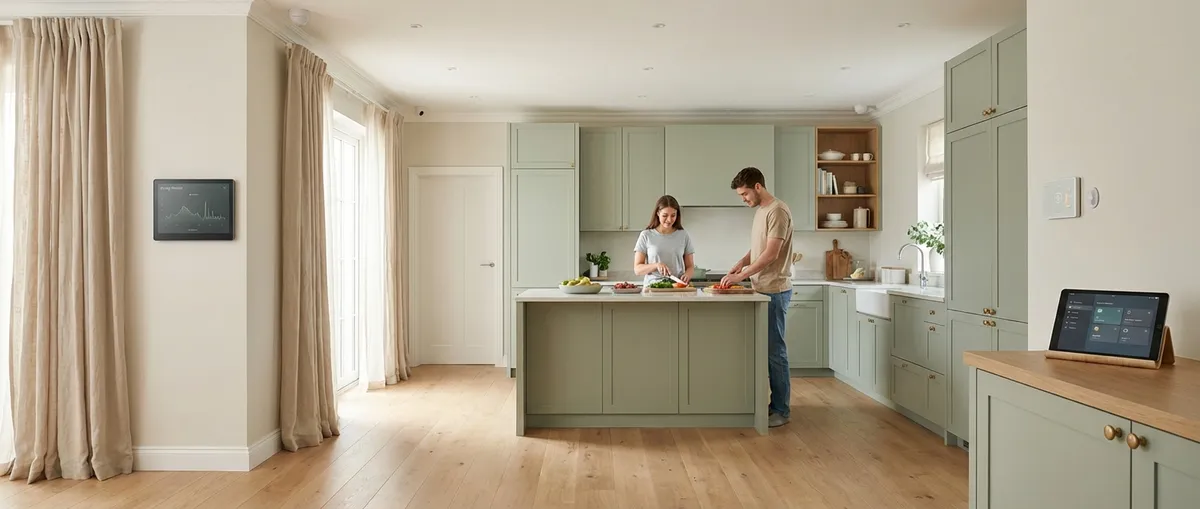
The smartest kitchens right now don’t scream “gadget.” Instead, they tuck the brains into places you already touch every day—appliances, faucets, and even the trash can.
Think induction cooktops that sync with smart exhaust fans, automatically adjusting ventilation as you sear, simmer, or boil. Ovens that preheat on your commute home and suggest temperature settings based on what you’re cooking. Fridges that quietly track expiration dates or alert you if the door was left open. Even smart faucets that dispense exact measurements by voice or touch—great when your hands are covered in dough.
What makes this feel modern isn’t the novelty; it’s the way it removes friction. Meal prep becomes less about checking timers and more about actually enjoying the process. Your kitchen turns into a soft assistant instead of a tech demo: less “Look what it can do!” and more “Dinner felt surprisingly easy tonight.”
4. Wellness-Driven Air: Invisible Systems That Protect Your Space
If the pandemic era did anything for home design, it was to move air quality from “nice-to-have” to “essential.” Today’s smart homes are taking air seriously—but doing it quietly, behind the scenes.
Smart purifiers, connected HVAC filters, and indoor air-quality sensors can continuously monitor pollutants, allergens, humidity, and CO₂ levels. When levels spike—say from cooking, candles, cleaning products, or outdoor pollution—systems can automatically kick into high filtration, open or close vents, or notify you if a window fix would do the trick.
Add in humidity control and you’re not just breathing easier; you’re also protecting wood floors, furniture, and artwork from long-term damage. The lifestyle impact is subtle but real: fewer headaches from stale air, better sleep, and a home that feels “lighter” the moment you walk in.
5. Space That Shifts: Furniture and Rooms With Built-In Smart Flex
Modern living is less about having more rooms and more about having spaces that can flex—a living room that can be a studio, a gym, or a guest room without feeling cluttered. Smart design is stepping in to make that shift almost seamless.
Think motorized wall beds with integrated lighting and USB ports that transform a lounge into a guest suite in under a minute. Adjustable-height desks that remember your preferred sitting and standing positions and shift with a single tap. Media walls with hidden projectors, speakers, and cable management so your space can go from clean and quiet to “movie night” without visual noise.
Layer in smart blinds, acoustic panels, and scene-based controls (lights + sound + temperature set together), and each room gets multiple identities. Morning yoga? Soft sound, diffused light, cooler air. Game night? Brighter overheads, rich audio, and blackout shades. Your home becomes less static and more like a stage you can reset depending on what your day needs.
Conclusion
Smart living doesn’t have to be loud, flashy, or filled with screens. The most interesting homes right now are the ones that feel almost analog on the surface—warm materials, calm layouts, personal details—while quietly running smart systems underneath that make life smoother, healthier, and a little more effortless.
Whether you start with adaptive lighting, zoned comfort, a smarter kitchen, wellness-first air, or shape-shifting spaces, the sweet spot is the same: tech that respects your routines, supports your lifestyle, and lets your home feel more like a sanctuary than a showroom.
Sources
- U.S. Department of Energy – Smart Home Savings and Benefits - Overview of how smart home tech improves comfort and efficiency
- Harvard T.H. Chan School of Public Health – Indoor Air Quality - Insights on the importance of air quality and ventilation in homes
- Mayo Clinic – Circadian Rhythm and Light - Explanation of how light impacts sleep and energy cycles
- Energy Star – Smart Thermostats and Zoned Comfort - Details on smart climate control and energy savings
- Consumer Reports – Smart Kitchen Appliances Guide - Independent look at connected appliances and their real-world benefits
Key Takeaway
The most important thing to remember from this article is that this information can change how you think about Smart Homes.