Smart homes aren’t just about voice assistants shouting from the kitchen or flashy gadgets on every wall. The real flex in 2026? A home that feels intuitive, low-drama, and quietly dialed-in to how you actually live.
Think less “sci-fi showcase,” more “this space just…gets me.”
Here are five innovative, real-life-friendly ideas that bring smart living into everyday routines—without turning your place into a tech museum.
1. Zoned Living: Spaces That Shift With Your Day
Instead of one big “smart” moment, imagine your home subtly shifting as your day does—morning, work, unwind, sleep.
Create “zones” that change vibe and function with a single scene:
- Wake zone: Lights slowly brighten to warm white, shades open halfway, coffee maker starts, and your preferred news or playlist fades in at low volume.
- Deep focus zone: Overhead lights dim slightly, desk lamp brightens, distractions silenced (smart speaker in “focus” mode, notifications paused on key devices).
- Wind-down zone: Cooler light tones shift to warmer, TV switches to your “no-brain-needed” list, smart diffuser releases a calm scent.
- Sleep zone: Thermostat drops a couple degrees, blackout shades close, bedroom lights go soft and then off, white noise or fan sound kicks in.
The magic here is automation that respects your rhythm. Set it once, tweak as you go, and your place quietly backs you up—without you constantly opening an app.
2. Fridge-to-Table Flow: A Smarter, Low-Waste Kitchen
The smartest kitchens now care less about showing off a screen on your fridge and more about helping you waste less and cook better.
Lean into a connected-but-chill kitchen routine:
- Use smart plugs or compatible appliances so your air fryer, slow cooker, or coffee maker can be scheduled or started remotely.
- Pair a grocery app with your smart speaker so adding items is as simple as saying, “Add oat milk and garlic to my list.”
- Keep a shared digital pantry list with your household so everyone sees what’s in rotation (and what’s about to expire).
- Choose appliances with eco or adaptive modes—many newer dishwashers, ovens, and fridges auto-adjust to save energy or optimize cycles.
If you want to level up, try a weekly “smart kitchen reset”: check your app-connected devices, see which foods are nearing their date, and build a couple of easy meals around what you already have. Your kitchen starts feeling less chaotic—and more like it’s on your side.
3. Wellness-First Rooms: Spaces That Watch the Vibe, Not the Clock
We’re done pretending wellness only happens at the gym or in a meditation app. The new move? Let your home quietly support your body and mind all day long.
Consider layering in:
- Smart air quality monitors that keep an eye on VOCs, humidity, and particulates, then trigger fans or purifiers only when needed.
- Circadian-friendly lighting that gradually shifts color temperature from crisp daylight to warm evening glow, supporting better sleep and focus.
- Adaptive temperature zones so bedrooms can be cooler at night while your living area stays cozy.
- Gentle wellness nudges: soft lights turning on as a reminder to stretch, a short mindfulness playlist queued up at your ideal break time, or blinds opening to give you real daylight.
Instead of chasing extremes—cold plunges, hardcore routines—this approach normalizes everyday micro-wellness. Your home starts doing the quiet maintenance: better air, better light, better rest.
4. Guest-Ready Mode: Hosting That Feels Effortless, Not Extra
Hosting used to mean sprint-cleaning and hoping the Wi‑Fi password was on a sticky note somewhere. Now, a smart home can make you look pulled together—even when you’re not.
Set up a “Guest Mode” scene that you can trigger before people arrive:
- Entryway lights brighten automatically, pathway and porch lights turn on at just the right level.
- Music shifts to a shared-friendly playlist at a moderate volume.
- Thermostat adjusts to a comfortable “company” setting (a bit cooler if lots of people are coming over).
- A guest Wi‑Fi network appears with a simple name and easy password (or QR code framed by the door or on the coffee table).
- Smart lock access codes for trusted visitors (dog walkers, cleaners, family) that you can time-limit or revoke without awkward key handoffs.
You’re not performing; you’re just making the experience smooth. Guests feel taken care of, and you’re free to actually enjoy your own gatherings instead of babysitting the environment.
5. Design-Led Tech: Hiding the Gadgets in Plain Sight
The biggest misconception about smart homes? That you have to be okay with black boxes, blinking lights, and weird cables everywhere. The modern direction is design-first, tech-second.
Aim for a home where the tech disappears into the aesthetic:
- Choose smart switches and dimmers that match your existing hardware instead of relying only on visible smart bulbs.
- Use frame-style TVs or ultra-short-throw projectors that look like decor (or nothing) when not in use.
- Hide hubs and routers in ventilated cabinets or decorative boxes—out of sight but not smothered.
- Go for neutral-tone smart speakers, fabric-covered hubs, or even wall-mounted control panels that look like art or minimal frames.
- Route cables cleanly through furniture, walls, or cord channels so the vibe stays intentional, not improvised.
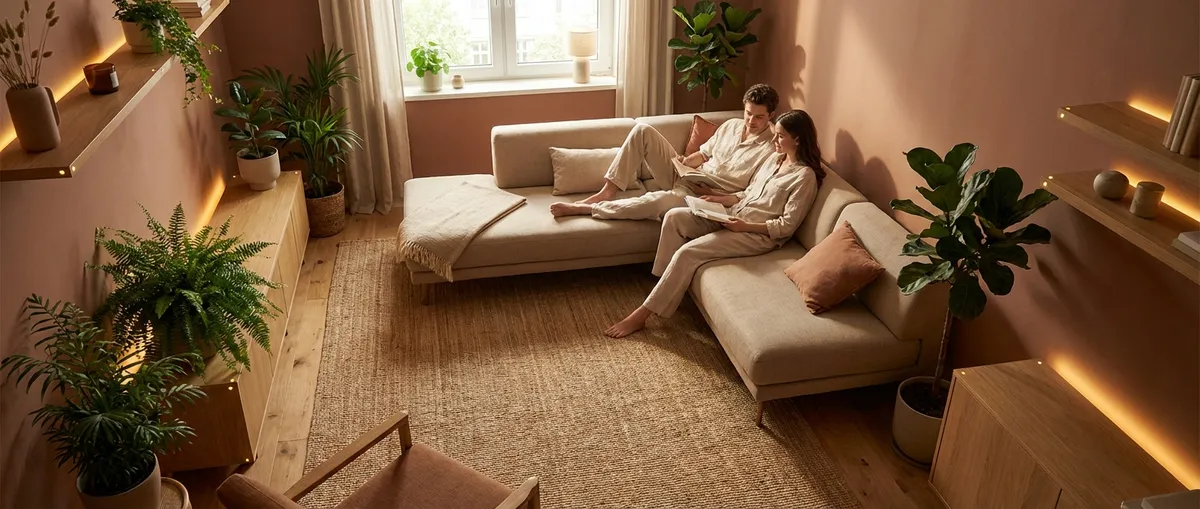
The goal: walking into your home feels curated, calm, and personal. The tech is there, but your eye lands on textures, art, and light—not wires and plastic.
Conclusion
Smart homes are evolving past the “look what my house can do” stage. The real win now is a home that feels soft, responsive, and personal—spaces that quietly rise to meet you instead of demanding attention.
By zoning your day, calming your kitchen, leaning into wellness, making hosting smoother, and letting design lead your tech choices, you get a home that feels both modern and deeply livable.
Not a showroom. Not a gadget graveyard. Just a quietly clever home that moves with your life.
Sources
- U.S. Department of Energy – Energy Saver: Smart Home Technology – Overview of how smart devices can improve comfort and efficiency at home.
- Harvard T.H. Chan School of Public Health – Air Quality and Health – Explains why indoor air quality matters for wellness-focused spaces.
- Mayo Clinic – Light and Sleep – Details on how light exposure and timing influence sleep cycles.
- Consumer Reports – Smart Home Guide – Independent insight on choosing smart home devices that fit real-life needs.
- Federal Trade Commission – Securing Smart Home Devices – Practical guidance on keeping connected home tech safe and secure.
Key Takeaway
The most important thing to remember from this article is that this information can change how you think about Smart Homes.