Your home doesn’t need to look like a sci-fi movie to feel ahead of the curve. The most interesting home tech right now isn’t the loud, flashy stuff — it’s the quiet upgrades that blend into your space, support your routines, and make everyday living feel smoother, calmer, and more intentional.
Think less “gadgets on every surface,” more “your home knows you well enough to stay one step ahead.”
Below are five innovative ideas modern homeowners are leaning into — not as show-off pieces, but as lifestyle upgrades that actually earn their spot.
1. Circadian-Friendly Lighting That Moves With Your Day
The new lighting flex isn’t just a beautiful fixture — it’s a system that changes with you.
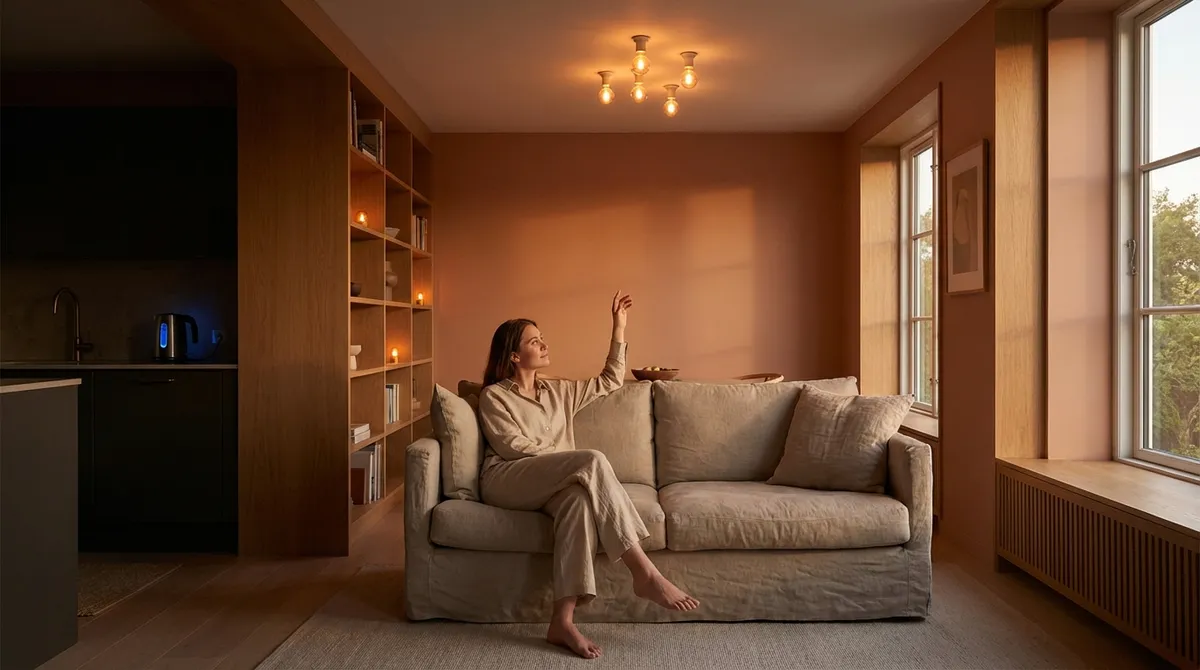
Smart, circadian-friendly lighting shifts color temperature and brightness across the day to match your natural rhythm: cooler, bright light to keep you alert in the morning, then warmer, softer tones at night to ease you toward sleep. It’s less about “smart bulbs” and more about whole-home mood design.
Paired with discreet sensors, your lights can gently turn on as you walk down the hallway, dim automatically as bedtime approaches, and create “scenes” that match your life: focus mode for work-from-home, dinner lighting that flatters everyone at the table, or just-woke-up lighting that doesn’t feel like a spotlight.
The magic is in the automation: set once, then forget. The result is a home that quietly supports your energy levels, helps protect your sleep, and makes every room feel more considered — without you constantly reaching for a switch.
2. Hidden Wellness Layers: Air, Water, and Sound You Don’t Have to Think About
Wellness at home isn’t only about yoga corners and bath rituals. It’s also about the invisible layers that affect how you feel: the air you breathe, the water you drink, and the noise you live with.
Modern homeowners are investing in:
- Whole-home air quality systems that filter pollutants, monitor humidity, and send subtle alerts, instead of bulky standalone purifiers in every room.
- Smart water filtration at the point of entry, so every tap in the house benefits — with connected monitoring that tracks filter life and, in some cases, even detects leaks.
- Soundscaping tech like built-in speakers that can mask city noise with curated sound profiles (soft rain, low ambient tones), turning busy streets into a softer backdrop.
These upgrades are quietly powerful because they don’t demand attention. Once installed, they just run in the background, improving your baseline comfort every day. Your home becomes a place your body can actually recover — not just where you store your stuff.
3. Adaptive Kitchens That Think Beyond Appliances
The smartest kitchens now are less about getting the newest fridge and more about creating a space that adapts to how you cook, host, and live.
A few shifts that feel especially current:
- Zoned lighting and power that focus where you actually prep, chop, and plate — paired with under-cabinet sensors so lights come on with you.
- Integrated induction surfaces that double as counter space when not in use, making smaller kitchens feel bigger and more minimal.
- Smart ovens and cooktops that sync with recipes on your devices, preheat themselves on schedule, and nudge you with subtle notifications instead of loud alarms.
- Pantry and fridge tracking through barcode scanning or app-based lists, helping cut food waste and making mid-week grocery runs less chaotic.
It’s not about a “robot kitchen” — it’s about taking the friction out of everyday cooking. Your kitchen becomes a space that reads your habits and gently aligns with them, from weekday solo dinners to big, loud weekend brunches.
4. Flexible, Tech-Aware Rooms for Hybrid Living
Most homes are being asked to do more: office, gym, classroom, creative studio, guest space — often all in the same square footage. The answer isn’t always more rooms; it’s smarter, more flexible ones.
Modern, tech-aware spaces lean on:
- Clean, invisible wiring and built-in outlets in the right places, so you can actually move your desk, sofa, or workout setup without fighting extension cords.
- Wall-mounted or ceiling-mounted projectors that switch from work presentations by day to movie nights by evening, without a massive TV dominating the room.
- Adjustable acoustic panels or soft materials that improve sound for video calls and streaming without looking like a studio.
- Modular furniture with integrated charging so any corner can become a workspace or reading nook at a moment’s notice.
Instead of assigning one fixed purpose to every room, homeowners are designing “fluid zones” where tech quietly supports different modes throughout the day. Your living room might be a polished backdrop for a 10 a.m. Zoom, a play space at 3 p.m., and a moody media lounge by 9 p.m. — and the room feels right in every version.
5. Low-Drama, High-Control Energy Management
Energy tech used to be about one big statement piece — like rooftop solar — and calling it a day. Now, it’s shifting into a more layered, lifestyle-focused conversation: how does your home use energy, and how much control do you actually have over it?
Today’s more intentional setups often include:
- Smart thermostats that learn your schedule and adjust automatically, with finer zoning so you’re not cooling or heating rooms you barely use.
- Connected plugs and power strips that quietly cut standby power to devices when you’re not home or when you’re asleep.
- Real-time energy dashboards that show what’s running and when, making it easier to spot waste and shift high-energy tasks (like laundry or dishwashing) to off-peak times.
- Battery storage or backup systems that keep essentials powered during outages and optimize how you use energy from the grid or solar.
The lifestyle win isn’t just a lower bill (though that helps). It’s the sense that your home is responsive and intentional — not just passively burning energy in the background. You get more transparency, more control, and a quieter confidence that your home is working with you, not against you.
Conclusion
The most interesting home tech right now doesn’t scream for attention — it integrates, softens, and supports. It lives in the lighting that follows your day, the air you don’t notice because it’s clean, the kitchen that makes cooking feel easy, the room that shapeshifts on cue, and the energy systems quietly optimizing in the background.
For modern homeowners, “smart” is no longer about filling your place with devices. It’s about designing a home that feels aware of how you actually live — and then quietly upgrading that experience, one subtle layer at a time.
Sources
- Harvard T.H. Chan School of Public Health – The Impact of Light on Sleep – Overview of how different light types and timing affect circadian rhythms and sleep quality.
- U.S. Environmental Protection Agency – Indoor Air Quality – Explains why clean indoor air matters and common strategies to improve it.
- U.S. Department of Energy – Energy Saver: Smart Thermostats – Details on how programmable and smart thermostats can reduce energy use and increase comfort.
- Rocky Mountain Institute – Residential Energy Use and Smart Homes – Discusses how smart home technologies can optimize residential energy consumption.
- National Kitchen & Bath Association – Design Trends Research – Industry-backed insights into how kitchens and baths are evolving with technology and lifestyle shifts.
Key Takeaway
The most important thing to remember from this article is that this information can change how you think about Home Tech.