Sustainable living isn’t about doing everything perfectly, all at once. It’s about setting up a home that quietly works in your favor—less waste, more comfort, and a lifestyle that still feels stylish and current. Think of it as giving your space a personality upgrade: smart, low-key, and aligned with the way you actually live.
Below are five innovative, real-world ideas that modern homeowners are using to make sustainability feel less like a chore and more like an upgrade to their daily routine.
1. The “Pantry-First” Kitchen: Designing Around What You Actually Use
Instead of starting with cabinets and finishes, start with your habits. A “pantry-first” kitchen is designed to make it easy to see, use, and rotate what you already have—so you waste less food and money.
Open shelving (used intentionally, not everywhere) lets you keep your most-used ingredients visible and within reach. Clear jars for grains, pasta, and snacks not only look good on a counter or shelf, they make it obvious when you’re low—reducing last-minute, duplicate grocery runs. Deep drawers for bulk items and appliances you actually use help prevent that “black hole” effect where food expires at the back of cupboards.
To take it further, pair your pantry layout with a simple Sunday ritual: a 10-minute “fridge edit” where you pull forward what needs to be eaten first and plan one or two meals around it. The design supports the habit, and the habit quietly cuts food waste, shopping stress, and impulse orders that blow your budget.
2. Micro-Climate Rooms: Tuning Each Space to How You Live
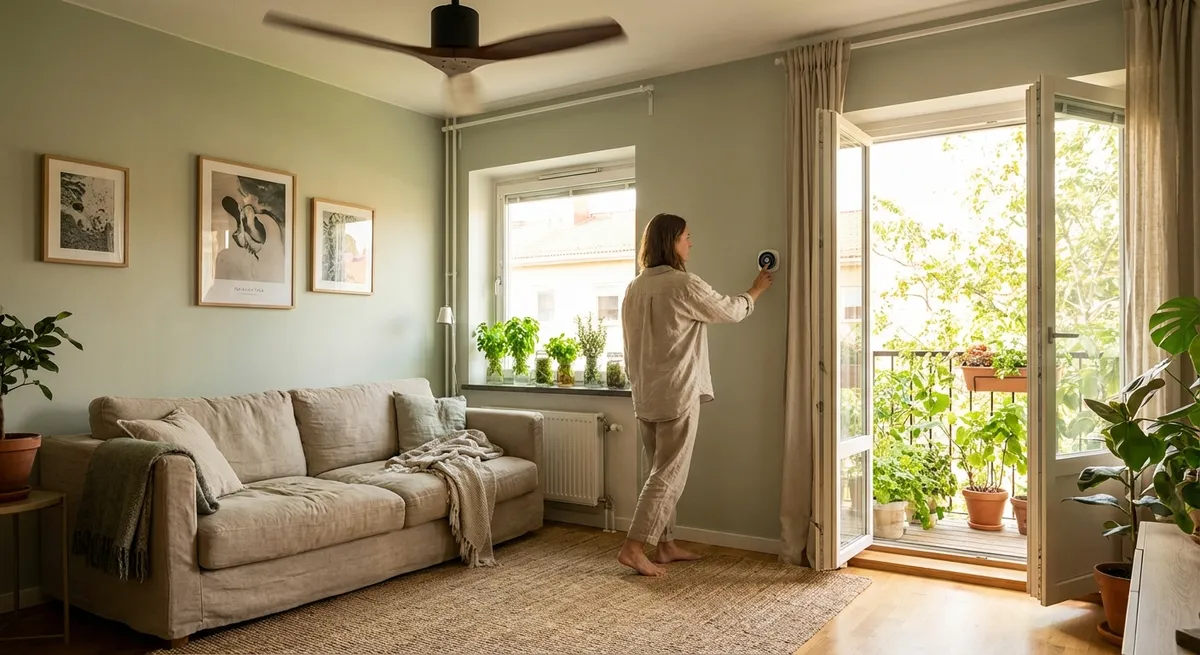
Instead of blasting heating or cooling across the whole house, think in terms of “micro-climates”—tuning each room to how it’s actually used. This is where sustainability and comfort intersect in a way that feels genuinely modern.
In practice, that might look like:
- A warmer, cozier bedroom with layered textiles, a draft-blocking rug, and a lower thermostat at night
- A cooler, brighter home office with a ceiling fan, breathable shades, and a targeted space heater or heated mat in winter instead of heating the entire home
- A living room with cross-ventilation (windows opened strategically), light-filtering curtains, and one well-placed air purifier rather than multiple devices
Zoned thermostats or smart radiator valves are ideal, but you don’t have to renovate to think this way. Even small moves—door drafts stoppers, heavy curtains in the most temperature-sensitive rooms, and sealing obvious air leaks—can create distinct, comfortable “zones” that let you run your central system less often.
The result: your home feels more tailored, less generic, and your energy bills and footprint respond accordingly.
3. Second-Life Design: Curating Instead of Consuming
Sustainable interiors don’t have to scream “eco.” The most interesting homes right now are mixing new, durable key pieces with character-rich secondhand finds—and doing it in a curated, intentional way.
Start with your “anchor items” where durability really matters: a well-made sofa, a quality mattress, dining chairs that can survive years of use. Then, add second-life pieces where they’ll have the most visual impact with the least functional risk: side tables, art, lighting, mirrors, and storage.
Look for:
- Vintage wood furniture that can be easily refinished
- Pre-loved designer lighting or statement lamps
- Framed art, rugs, and mirrors from secondhand marketplaces
- Solid storage pieces (dressers, sideboards, credenzas) that can be updated with new hardware or paint
You’re not just saving items from landfill—you’re also avoiding the “everything looks the same” trap of all-new, fast-furniture interiors. Over time, your home becomes a layered story instead of a single-season purchase.
4. Water-Savvy Living: Invisible Tweaks with Big Impact
Water might be the most underrated area of home sustainability. You don’t need to rebuild your bathroom to make your home more water-smart—you just need small upgrades that work quietly in the background.
Swapping in WaterSense-labeled faucets and showerheads is a subtle change with real impact; many modern models feel just as luxurious as their high-flow counterparts, thanks to pressure-boosting designs. In the kitchen, an efficient dishwasher used on eco-mode is often more water-saving than handwashing—especially if you wait for full loads.
Outdoors, rethinking how you water can be a game-changer. Rain barrels tucked near downspouts, drip irrigation in garden beds, and choosing region-appropriate plants can dramatically cut consumption while keeping your yard lush. Even something as low-tech as a simple timer on your hose or sprinkler reduces both waste and “oops-I-forgot-to-turn-it-off” guilt.
These are changes you barely notice day-to-day—but you do notice the long-term savings and the lighter footprint.
5. Low-Waste Routines: Building “Refill Stations” into Your Home
Sustainability sticks when it’s easy. One of the most effective (and aesthetically pleasing) trends is creating small “refill stations” around your home—micro-zones that nudge you toward low-waste choices without feeling forced.
Ideas to try:
- A laundry shelf with a refillable detergent bottle, wool dryer balls, and a jar for lost socks and pocket finds
- A bathroom caddy with solid shampoo bars, refillable soap dispensers, and a visible basket for used razor heads or toothbrushes headed to a recycling program
- A front-door setup with hooks for reusable bags, a neatly stored tote for returns and donations, and a small bin for batteries or electronics that need special recycling
Visually, it all reads as organized and intentional, not “eco project.” Practically, it means you’re far more likely to use what you already own, refill instead of rebuy, and manage waste in a calm, controlled way.
You’re designing for the life you want to live, not just reacting to clutter or guilt after the fact.
Conclusion
Sustainable living isn’t a separate lifestyle—it’s simply a better version of the one you already have. When you design your home around real habits—how you eat, work, relax, and store things—sustainability becomes less about restriction and more about refinement.
A pantry that prevents food waste, rooms that feel perfectly tuned, second-life pieces that tell a story, invisible water-saving upgrades, and low-waste routines that are built into your space—these are the quiet shifts that add up.
You don’t need a full transformation. Choose one area to experiment with, let it settle into your routine, and then layer in the next. Over time, your home becomes what it was always meant to be: a space that looks good, feels good, and does good—without trying too hard.
Sources
- U.S. Environmental Protection Agency – Food Loss and Waste - Data and guidance on reducing household food waste and its environmental impact
- ENERGY STAR – Heating and Cooling Tips - Practical advice on zoning, sealing, and optimizing home comfort systems for energy efficiency
- U.S. Department of Energy – Weatherization and Air Sealing - Detailed information on air sealing and creating more comfortable, efficient rooms
- EPA WaterSense – Products and Programs - Official directory and explanations of water-efficient fixtures and how they reduce consumption
- Harvard T.H. Chan School of Public Health – Built Environment and Health - Overview of how home and building design choices affect health and well-being
Key Takeaway
The most important thing to remember from this article is that this information can change how you think about Sustainable Living.