Sustainable living isn’t just burlap bags and beige basics anymore. It’s quietly radical choices baked into how you design, shop, clean, and unwind at home—without sacrificing comfort or style. Think less “doing without” and more “doing smarter”: homes that look good, feel good, and leave a lighter mark on the planet (and your monthly bills).
Below are five innovative, real-life home ideas that fit how people actually live now—busy, online, and craving spaces that support both wellness and the world outside their front door.
1. Refill-Ready Kitchens That Still Look Elevated
The modern sustainable kitchen isn’t about mismatched jars and chaos on the counter. It’s about designing your space so low-waste feels intuitive—even a little luxe.
Start with one drawer or one pantry zone dedicated to refills: decanted dish soap, dishwasher tabs, laundry strips, and bulk staples like rice, oats, and coffee. Use glass jars, labeled tins, or matte ceramic canisters so it looks intentional, not improvised. Then, build a simple loop: a tote or basket that lives by the door for empties and refill containers, so you never have to think twice when you head to the store or local refill shop.
To keep it functional, pair aesthetics with systems: a running notes app list for refills, magnetic labels for dates and sourcing, and one “overflow” bin for things you’re transitioning away from (single-use plastics, old cleaners) so you can use them up instead of tossing them. The result: a kitchen that feels clean, streamlined, and quietly low-waste each time you open a cabinet.
2. “Energy Mood” Zones That Work With Your Day
Instead of blasting overhead lights in every room, think in “energy moods.” The idea: you customize lighting and energy use to how each space actually feels and functions throughout the day.
In the morning, let natural light do the heavy lifting—sheer curtains, reflective light paint, and mirrors to bounce brightness deeper into your home. Add warm, low-watt task lamps in work or reading areas, and reserve the strongest lighting for short, high-focus tasks (like cooking or projects) rather than leaving them on by default.
Layer this with smart—but simple—switches: dimmers in the living room, timers for bathroom fans, and power strips with on/off toggles for media centers and office setups that quietly eat power. Over time, you can upgrade to LED bulbs, smart plugs, and high-efficiency appliances, but the core move is behavioral: your home becomes responsive, not constantly “on.” It’s cozy, intentional, and a lot kinder to your energy bill.
3. Furniture With a Second Life Already Built In
Modern sustainable design is less about buying “green” and more about asking: What happens to this later? When you’re choosing pieces, think beyond the showroom moment and plan for their second chapter.
Look for modular sofas and shelving that can be reconfigured as your life changes—separate pieces that can split between rooms, stack vertically, or be repurposed in a future home office or guest space. Prioritize real wood, metal, and easily replaceable fabrics over complex composites and hyper-trendy finishes that date quickly.
For smaller pieces, buy with “resale-ready” in mind: timeless silhouettes, neutral or versatile colors, and well-known brands or makers with established secondhand markets. Even better, source from reputable resale or vintage platforms to begin with. Your home ends up feeling curated rather than fast-furnished—and you keep furniture circulating in the design ecosystem instead of heading straight to landfill.
4. Micro-Greenspaces That Actually Fit Your Life
Not everyone can manage a backyard garden—or even a balcony. But nearly every home has room for a micro-greenspace that supports cleaner air, a calmer brain, and a more circular way of living.
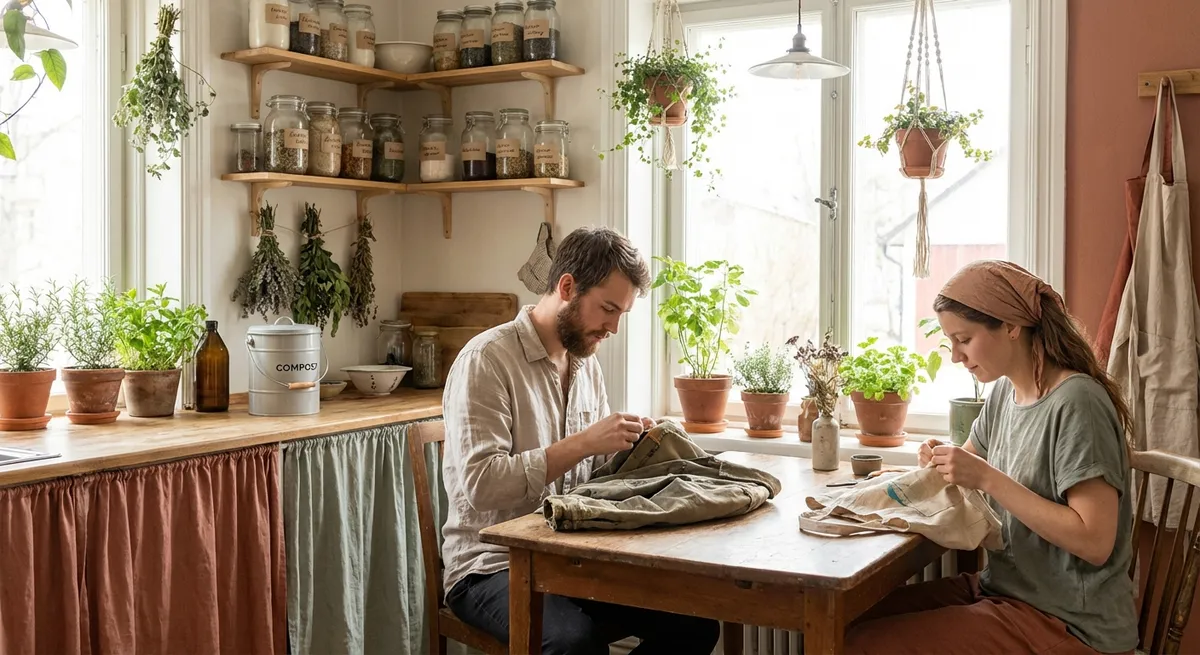
Start small: an herb strip by a sunny window, a cluster of low-maintenance plants in your living room, or a vertical garden rack in the kitchen where you grow leafy greens and microgreens. If you’re into cooking, prioritize herbs you reach for constantly—basil, cilantro, mint, chives—so you actually use what you grow.
Layer in tiny circular habits: save clean veggie scraps and coffee grounds for compost (even if it’s a city program or drop-off), use rainwater from a small barrel or collected in a bucket during storms for watering balcony plants, and propagate new plants from cuttings to share with friends or neighbors. You’re not trying to become a homesteader overnight; you’re quietly building a greener mini-ecosystem that fits your bandwidth and your floorplan.
5. Slow Cleaning Routines With Low-Toxic Products
The cleaning aisle has gone through its own quiet revolution—and your home can benefit from products that are gentler on both your indoor air and the planet, without sacrificing that satisfying “reset” feeling after a deep clean.
Consider editing your products down to a minimalist set: one all-purpose cleaner, a gentle scrub, dish and laundry solutions, and maybe a glass cleaner. Prioritize brands that are transparent about ingredients, low in volatile organic compounds (VOCs), and use refill or concentrate systems so you’re not constantly buying new plastic bottles.
Then, shift your cleaning from emergency mode to “slow maintenance”: 10–15 minute resets after dinner, a weekly “zone focus” (kitchen this week, bathroom next), and a once-per-season declutter that keeps surfaces clear and cleaning fast. Your home starts to feel like a sanctuary rather than a project, and you spend less money and waste fewer resources keeping it that way.
Conclusion
Sustainable living at home doesn’t have to mean starting from scratch or living like you’re in a cabin off-grid. It’s about weaving in smart, low-waste decisions in ways that actually match your rhythms: refill-ready kitchens, calmer energy use, furniture that lasts beyond this lease or this decade, pocket-sized greenspaces, and cleaning rituals that feel restorative instead of exhausting.
When sustainability feels like an upgrade—not a downgrade—you’re far more likely to stick with it. And that’s where the real impact begins: a home that looks like you, lives like you, and quietly supports a future you actually want to be part of.
Sources
- U.S. Environmental Protection Agency (EPA): Sustainable Management of Materials – Overview of waste reduction, reuse, and sustainable materials management in households and beyond
- U.S. Department of Energy: Energy Saver Guide – Practical tips on residential energy efficiency, lighting, and appliance choices
- Harvard T.H. Chan School of Public Health: Household Cleaning Products and Health – Research-based discussion of indoor air quality and the health impact of cleaning products
- Royal Horticultural Society: Container Gardening – Guidance on growing plants, herbs, and vegetables in small or indoor spaces
- The Ellen MacArthur Foundation: Circular Economy in the Home – Explains circular design principles that can be applied to furniture, products, and home living
Key Takeaway
The most important thing to remember from this article is that this information can change how you think about Sustainable Living.