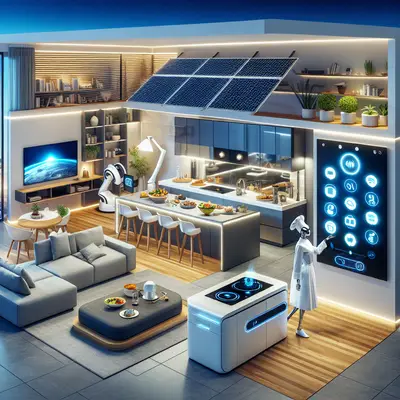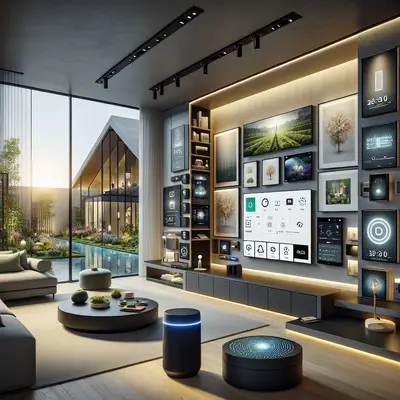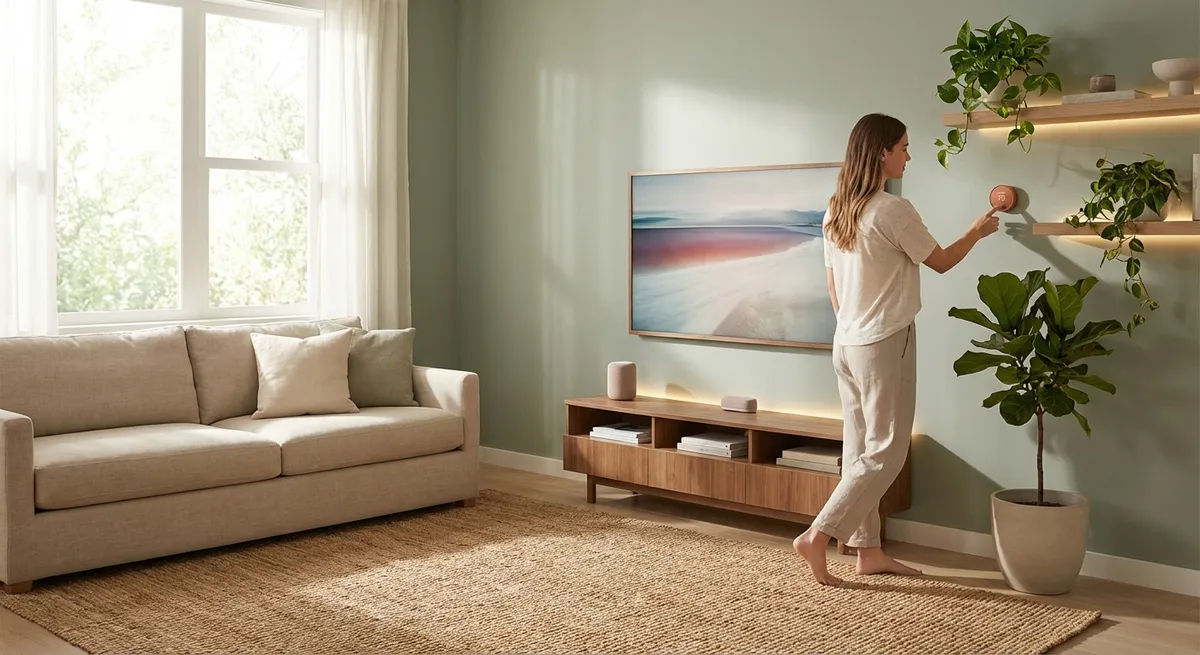
Tech is finally catching up to how people actually live: less “look at my gadget,” more “wait, is this just…built in?” The most interesting homes right now aren’t packed with flashy devices—they’re layered with quiet, invisible tech that supports how you move, work, rest, and host.
If you’re thinking about tuning up your space, these five ideas sit right in that sweet spot between future-facing and fully livable. No spaceship vibes required.
1. Adaptive Lighting That Follows Your Day (and Your Mood)
Harsh overhead lighting is out; responsive, layered lighting is in. Adaptive lighting systems shift color temperature and brightness automatically throughout the day—cooler light when you need focus, warmer tones when it’s time to unwind. Think less “flip a switch,” more “your home reads the room for you.”
Smart bulbs and fixtures can now sync with sunrise and sunset, your calendar, or even your sleep schedule. In the morning, lights can slowly brighten to mimic natural dawn, easing you into the day. In the evening, they can gently dim and warm, helping your body wind down and protect your sleep cycle. Some systems also adapt based on what you’re doing: brighter for cooking, softer for reading, richer and more dramatic for movie nights.
From a design perspective, this tech disappears into your space. You keep your favorite pendants, sconces, and floor lamps, but put the intelligence in the bulbs and switches. The result: your home always feels “set,” whether you’re working from the dining table, hosting late-night drinks, or taking a slow Sunday morning.
2. Invisible Audio: Sound That Lives in the Background (Beautifully)
The new luxury isn’t a wall of speakers—it’s sound that’s just there when you want it, without visually dominating a room. Hidden and low-profile audio setups let you stream music, podcasts, or ambient sound that fits your day without turning your living room into a recording studio.
In-ceiling and in-wall speakers are one option, but there are also soundbars that look like decor, frame-style TVs with built-in audio, and smart speakers that pass as sculptural objects. Many systems now offer multi-room audio, so you can walk from kitchen to bedroom with your playlist following you, or group everything for a whole-home vibe when people are over.
What makes this feel modern is how flexible it is. You might keep a discreet speaker in the bathroom for morning news, a stronger setup in the living room for movies, and a portable speaker you move between balcony and backyard. The tech stays low-key; the experience feels curated. Your home becomes an always-ready backdrop for whatever sound you’re into—without the clutter of visible hardware everywhere.
3. Climate Zones That Match How You Actually Live
Instead of blasting the whole house at one temperature, smarter climate setups let you dial in comfort room by room—and they learn from your patterns. This isn’t just about saving on utilities (though that’s a bonus); it’s about making spaces feel right for the way you use them.
Smart thermostats and sensor-based systems can map how you actually move through your home. Maybe your home office runs cooler while you work, your bedroom shifts warmer in the evening, and unused rooms stay neutral until someone walks in. Window and door sensors can also tell the system to adjust when fresh air floods in or a room heats up from afternoon sun.
Over time, the system gets better at predicting when you’re home, when you’re away, and how you like your spaces to feel—no constant tweaking required. Paired with good insulation, smart shades, and ceiling fans, it turns your home into a subtle comfort machine that’s tuned to your routines, not just the weather report.
4. Hybrid Work Corners That Disappear After Hours
The work-from-home era made one thing clear: nobody wants their laptop life dominating their living space 24/7. The new move is creating tech-ready “work corners” that feel professional when you need them—and practically vanish when you don’t.
Instead of a dedicated office (or the old dining-table setup), think modular: a compact desk with integrated cable management, a monitor disguised as an art display when it’s off, and a good-quality webcam and mic that store away. Fold-down wall desks, built-in bench seating with hidden storage, and sliding panels make it easy to tuck work gear out of sight.
Lighting and sound matter here too. A small, adjustable light for video calls, plus a sound-absorbing rug, curtains, or panels can instantly make a corner feel more “studio” and less “living room.” When the day ends, a single button or automation can power everything down, shift the lighting, and visually reset the space. The signal is clear: work hours are over, home mode is back.
5. Seamless Entry Routines: Smart Doors, Smarter First Impressions
Your entry is where daily chaos often lives—bags, shoes, packages, keys. Smart entry setups are less about flexing a digital lock and more about smoothing out that first 30 seconds when you walk in the door.
Tech-forward locks now let you ditch the key hunt: use your phone, a code, or even fingerprints to get in. Video doorbells give you quick clarity on deliveries or visitors, and many can now announce who’s at the door through speakers inside. But the real magic is in what happens next: lights can switch on to a soft, welcoming level, a hallway diffuser can start a favorite scent, temperature can bump up a notch, and soft audio can start playing.
Layer in a small charging station by the door, a shelf or tray for essentials, and maybe a hidden basket for mail and packages, and you’ve got a genuinely smart threshold. It feels less like “I have gadgets” and more like “my home knows I’m here and is already one step ahead.”
Conclusion
The most interesting home tech right now doesn’t scream for attention—it supports your lifestyle in ways you quietly feel every day. Adaptive lighting that tracks your rhythm, invisible audio that sets a mood, climate that responds room by room, work corners that vanish on command, and entry rituals that calm the chaos all add up to one thing: a home that feels effortlessly in sync with you.
You don’t need to overhaul everything at once. Start with one area that affects your daily routine the most—how you wake up, work, unwind, or come home—and build from there. The future of home living isn’t about owning more tech; it’s about choosing the right few pieces that make your space feel more like you.
Sources
- U.S. Department of Energy – Lighting Choices to Save You Money - Explains benefits of efficient, layered, and adaptive lighting for comfort and energy savings
- Harvard Health – Blue Light Has a Dark Side - Details how light exposure affects circadian rhythms and sleep, relevant to smart lighting setups
- Energy Star – Smart Thermostats - Outlines how smart climate control and zoning can improve comfort and reduce energy use
- Consumer Reports – Best Smart Locks for Your Front Door - Reviews and explains features of modern smart locks and entry tech
- Yale University – Working From Home: Tips for Remote Work - Provides insight into setting up more effective, healthy work-from-home environments
Key Takeaway
The most important thing to remember from this article is that this information can change how you think about Home Tech.