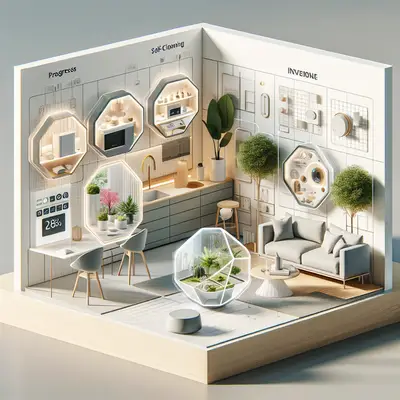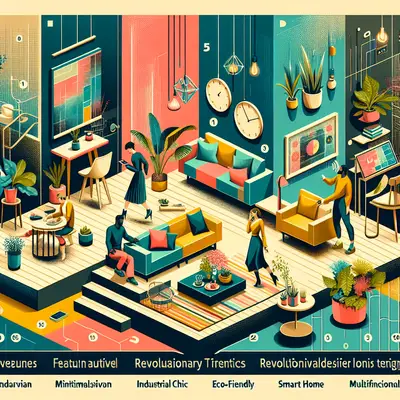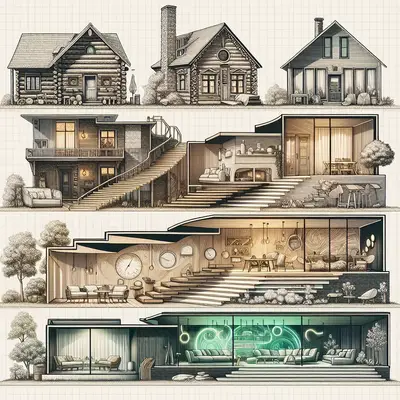
Your home shouldn’t feel like a finished product; it should feel like a system that’s always ready for its next chapter—new job, new city mood, new hobby, new era of you. Modern interiors aren’t just about a look anymore; they’re about how quickly your space can shift when life does. Think less “perfect Pinterest room,” more “modular lifestyle backdrop.”
Below are five innovative home living ideas built for modern homeowners who crave style, flexibility, and low-drama upgrades.
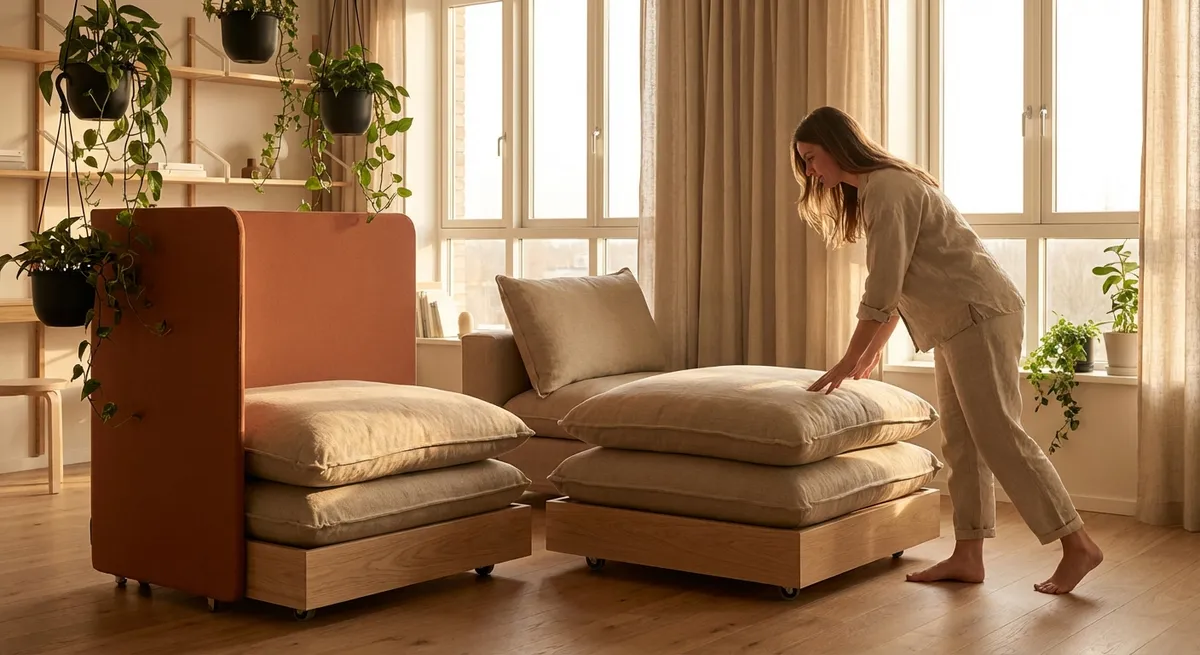
Shape-Shifting Rooms: Spaces That Double-Task All Week
The days of dedicating an entire room to a single purpose are over. Today’s smartest interiors treat space like a playlist—curated, intentional, and easy to remix.
Start by designing your rooms around zones instead of labels. A dining area can morph into a laptop station with a bench that opens for storage and a lightweight table that rolls out of the way. A guest room can double as a content studio with a fold-down Murphy desk, collapsible backdrops, and sconce lighting that works for both reading and filming.
Look for pieces with slim profiles and hidden hardware—dining tables with integrated leaves, ottomans that hide tech accessories, console tables that secretly extend into work surfaces. Layer your lighting so a single room can shift from “Zoom-ready” in the morning (task and directional lighting) to “wine-and-vinyl” at night (warm, dimmable fixtures and candles).
The goal isn’t to cram more stuff into a room, but to make each square foot do more emotional work—supporting focus, rest, connection, and creativity without feeling cluttered or chaotic.
Intentional Color Stories: Using Palette as Mood Technology
Color is one of the fastest ways to reset the energy of your home, and modern interiors are treating color less like décor and more like mood tech.
Think in “micro palettes” instead of one color scheme for the whole house. Your living area might lean warm caramel, moss, and soft white to feel grounding and social, while your workspace shifts to muted blues and charcoal for focus. Bathrooms can go spa-soft with pale neutrals, and entryways can carry bolder shades to signal “transition zone” energy.
If you’re not ready for full-paint commitment, use textiles and art to test-drive color: a rust-toned throw, sage velvet pillows, cobalt dining chairs, or a deep green runner. Once you know how a shade actually feels at 7 a.m. and 11 p.m., then decide if it deserves wall space.
Don’t underestimate undertones. Greige with a warm base reads cozy and forgiving; cool gray can turn flat and techy under LED lighting. Test swatches in both natural daylight and evening light to avoid surprise vibes. Treat your color choices like a playlist: edit, layer, and tweak until the emotional tone of each room feels precise, not accidental.
Material Mixes That Age Well: Investing in Texture, Not Trend
If you want a home that still feels relevant five years from now, focus less on the trend piece and more on the texture portfolio of your space.
Anchor your big-ticket items—sofas, dining tables, major storage—in materials that wear in beautifully: solid wood, linen, wool, stone, brushed metals. These age with character rather than simply looking old. Then layer trend-forward details (a sculptural side table, boucle accent, checkerboard rug) on top in smaller, easily swappable hits.
To keep things modern, play with contrast. Pair a sleek metal floor lamp next to a chunky woven armchair, or a super minimal sofa over a heavily textured jute or wool rug. Mix matte and glossy finishes in the same color family for depth that doesn’t scream for attention.
Durability is a key part of design now, especially for homes that double as offices, gyms, and creative spaces. Look for performance fabrics that resist spills and fading, sealed stone that can survive coffee and red wine, and rugs that handle high traffic. Design is shifting from “precious” to “lived-in luxe”—everything should invite use, not anxiety.
Soft Tech Integration: Designing for Devices Without Letting Them Take Over
Modern living is plugged in, but your home doesn’t have to look like a server room. The new luxury is tech that quietly disappears into beautiful design.
Start with power planning. Swap standard outlet covers for upgraded versions with USB-C, hide power strips in media consoles with cord grommets, and use furniture with built-in cable routing to keep wires from visually cluttering your walls and floors.
Choose tech with design-first thinking: slim-profile speakers that match your wall color, frame-style TVs that display art when not in use, routers hidden in ventilated cabinets or on styled shelves. Use baskets, lidded boxes, and sideboards as “tech catch-alls” where remotes, chargers, controllers, and headphones can live out of sight but within reach.
Lighting is another stealth-tech frontier. Dimmable bulbs, app-controlled scenes, and smart plugs let you shift from work mode to calm mode with one tap. Keep your fixtures themselves sculptural and timeless; let the “smart” part live in bulbs and switches you can update as tech evolves.
The idea: your home should support the digital life you actually live—calls, streaming, gaming, content creation—without screens and cords stealing the visual spotlight.
Daily Ritual Corners: Micro-Spaces for Real-Life Reset
Instead of waiting until you have a spare room for a dedicated gym or meditation space, carve out micro-zones for your real rituals right where you are.
Designate a “quiet corner” with a comfortable chair, warm throw, focused reading lamp, and a small side table for a book, tea, or journal. This doesn’t need its own room; it can live in a bedroom corner, under a stairwell, or beside a window. The styling cues—soft textiles, fewer objects, warmer light—signal your brain that this pocket is for slowing down.
If movement is your reset, create a foldaway workout setup: a minimalist cabinet or trunk that hides resistance bands, sliders, and yoga mats, plus a wall hook or lean-to stand for storing them vertically. A simple full-length mirror and a small speaker turn the area into a low-key studio when you roll the mat out.
For creativity, build a “maker station”—a slim console with art supplies, a sewing kit, or stationery, paired with a stool that tucks completely underneath. Leave it styled but ready: a tray with pens and tools, a lamp you love, and one project-in-progress visible so it’s an easy yes to sit down and continue.
Designing for rituals isn’t about more stuff; it’s about making the things that refill you the most convenient and beautiful option in your home.
Conclusion
Modern interiors aren’t just about keeping up with trends; they’re about building a home that moves with your life instead of locking you into one version of it. When your rooms can shift roles, your colors support your mood, your materials age gracefully, your tech stays subtle, and your rituals have a place to land, your home stops being a backdrop and starts acting like a collaborator.
Design with your next season in mind, not just your current one—and let your space be as flexible, layered, and future-ready as you are.
Sources
- Harvard Joint Center for Housing Studies – Housing and Lifestyle Trends - Research on how evolving work and lifestyle patterns shape the way people use their homes
- American Society of Interior Designers (ASID) – Interior Design Industry Reports - Professional insights on design trends, material choices, and wellness-focused interiors
- NYTimes – How Color Shapes Interior Design - Discussion of how color is being used intentionally to influence mood and atmosphere at home
- U.S. Department of Energy – Lighting Choices to Save You Money - Guidance on modern, efficient lighting options that pair well with layered interior lighting plans
- IKEA – Home Workspace and Flexible Living Ideas - Real-world examples of multipurpose rooms, modular furniture, and adaptable living layouts
Key Takeaway
The most important thing to remember from this article is that this information can change how you think about Interior Design.