If your TikTok feed has been serving you chunky camcorders, walkmans, and fake VHS filters on repeat, you’re not alone. Nostalgia is trending hard—and tech is catching up. A recent viral series by Argentine graphic designer Luli Kibudi, “Once Appon a Time,” imagines today’s biggest apps as 1980s-style gadgets, and it’s blowing up online. Think Instagram as a plastic point‑and‑shoot camera, Spotify as a neon cassette deck, and WhatsApp as an old-school beeping pager.
What started as a playful art project has accidentally tapped into something big: we don’t just want smart homes—we want smart homes with soul. The sleek, invisible tech era is fading. In its place? Home tech that feels tactile, playful, and a little bit nostalgic, without sacrificing any of the 2025-level brains.
Below are five ways the “1980s app” aesthetic is already sneaking into modern home living—and how you can bring that mashup of retro charm and cutting-edge tech into your own space right now.
1. Retro-Inspired Smart Speakers That Actually Look Like Decor
The days of letting a boring black cylinder hijack your living room vibe are numbered. Inspired by the throwback look celebrated in Kibudi’s 1980s app designs, brands are making smart speakers that double as actual decor—think soft pastels, rounded edges, and fabric textures that wouldn’t look out of place in a vintage Polaroid ad.
Look for smart speakers that lean into design: speaker-lamps with warm glow modes, units wrapped in boucle or linen, or compact radios that disguise Alexa or Google Assistant behind an old-school dial. Function-wise, nothing’s downgraded—you still get multi-room audio, voice control, and Matter-compatible smart home control. But visually, they blend in with books, candles, and framed prints instead of screaming “I’m a gadget.” For renters and homeowners who want a cozy, curated aesthetic, this is the sweet spot: the convenience of voice-controlled everything, inside something that looks like it came from a stylish thrift haul, not a server rack.
2. “Analog” Screens: Smart Displays That Feel Like Art, Not Billboards
The 1980s app art series reminded everyone how charming retro screens used to be—chunky fonts, simple icons, and a vibe that felt more human than hyper-polished. That same energy is now showing up in smart displays and TVs that don’t want to dominate your space 24/7.
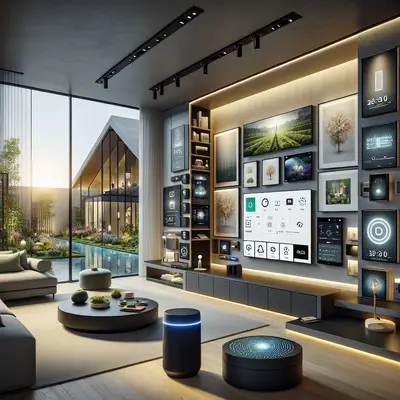
Lifestyle TVs with matte, anti-glare screens and art modes are becoming the new standard for design-conscious homes. Pair them with digital art that leans into lo‑fi aesthetics—pixel art, faux VHS filters, neon typography—and your living room suddenly feels less like a showroom and more like a curated gallery. Smart displays in the kitchen or bedroom can be set to “calm” layouts instead of cluttered dashboards: big, legible clocks, simple weather icons, and photo carousels that feel like analog prints pinned to a wall. It’s still tech-forward (you can cast recipes, control lights, check cameras), but visually it respects your space, not just your screen time.
3. Tactile Controls Are Back: Smart Dimmers, Dials, and “Clicky” Buttons
If you’ve ever found yourself missing real buttons while endlessly tapping flat glass, you’re in good company. One of the most surprising side effects of the 80s nostalgia wave is a renewed love for tactile interaction in the home. Inspired by physical cassette players and clunky remotes, homeowners are swapping hyper-minimal interfaces for smart controls you can actually feel.
Smart dimmer switches with satisfying sliders, clicky rotary dials for volume and lighting scenes, and wall panels with customizable, labeled buttons are all having a moment. Many are Wi‑Fi or Zigbee enabled, so a single “Movie Night” button can dim the lights, close smart blinds, and fire up your sound system. The difference is mood: instead of scrolling through a cold app, you’re physically doing something in your space. It’s more intuitive for guests, more accessible for kids and older family members, and it brings back that subtle joy of flipping a switch and hearing a real, audible “click.”
4. Zoned Lighting That Feels Like a Movie Set, Not a Tech Demo
The 1980s app series taps into cinema nostalgia—grainy frames, saturated color palettes—and that same cinematic language is now reshaping home lighting. Instead of flooding a room with one harsh white light, design-led homes are embracing “set design” thinking: different light zones for different moods, all powered by smart tech under the hood.
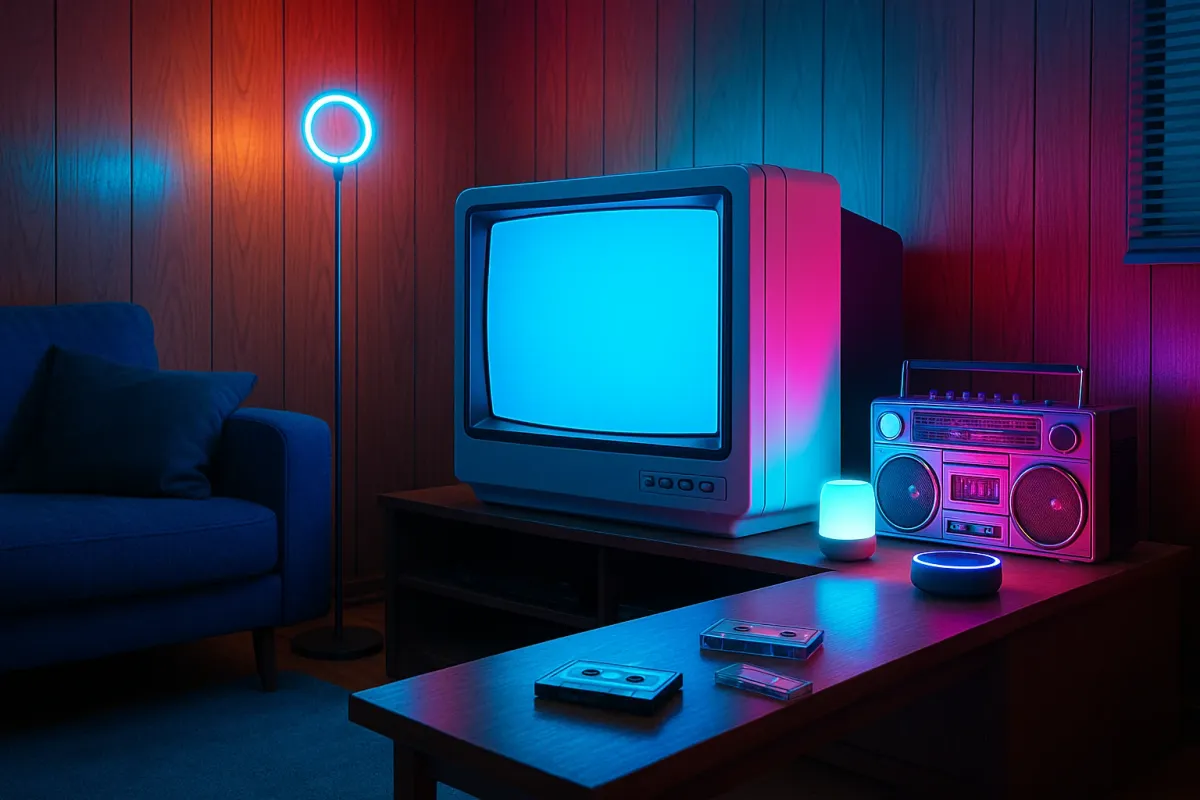
Think: a warm, low side lamp in the corner to mimic the glow of a retro TV, LED strips tucked behind shelving for a soft neon halo, and dynamic scenes pre-set for “VHS Night” with amber tones and deep shadows. Smart bulbs and fixtures let you save all of this as a tap-or-voice scene, but the aesthetic is pure throwback—gritty, warm, inviting. This trend is strong on social media right now, where creators are posting “room glow” videos that look like they came straight off an old videotape. For homeowners, the takeaway is simple: use tech to layer light like a director, not just to turn things on and off.
5. Hybrid Workspaces That Mix Retro Comfort with Future-Proof Tech
Kibudi’s nostalgic app reboots hit especially hard for anyone who spends all day at a screen. That crossover energy—digital but charmingly analog—is reshaping home workspaces in a big way. Instead of sterile, all-white setups, we’re seeing hybrid desks that balance timeless comfort with invisible smarts.
Picture this: a wood or metal desk with a simple, almost school-like silhouette; a smart monitor arm hiding cables; a wireless charging pad built into a vintage-look desk mat; and a small, retro-style clock or radio that secretly doubles as a Bluetooth speaker and voice assistant. Underneath that analog charm? Wi‑Fi 6E, cloud backups, fast USB‑C hubs, and a mesh network humming quietly in the background. The visible story is warmth and character; the invisible story is that your home office is more advanced than most corporate setups. It’s a conscious reaction to sterile tech—proof that you can live in the future without your home feeling like a showroom demo.
Conclusion
The viral “1980s versions of modern apps” series isn’t just a fun scroll—it’s a blueprint for where home tech is headed next. We’re moving away from cold, ultra-minimal gadgets and into a phase where design, nostalgia, and personality matter just as much as processing power.
For modern homeowners, the new rule is simple: if it lives in your space, it should earn its place visually and functionally. Smart speakers that look like decor, tactile controls that feel satisfying, cinematic lighting, and hybrid work nooks that feel like you—that’s the direction home tech is taking in 2025. The future of living isn’t just connected. It’s curated, cozy, and just a little bit retro.
Key Takeaway
The most important thing to remember from this article is that this information can change how you think about Home Tech.