Your home doesn’t have to look like a showroom to feel “designed.” The new wave of interiors is less about perfection and more about personality, comfort, and quiet cleverness. It’s about spaces that move with your life, not against it.
If you’re rethinking how you live at home right now—how you work, reset, host, and unplug—these ideas are designed for modern homeowners who want spaces that feel intentional without feeling overplanned.
1. The Hybrid Room: One Space, Multiple “Modes”
The most modern rooms aren’t single-purpose anymore—they shift. Your dining room doubles as a workspace, the guest room turns into a yoga studio, and the living room can flip from movie night to meeting-ready in minutes. The key is to design in “modes,” not labels.
Start by mapping out the three main activities you actually do in a room. For example, a living room might be: work, host, unwind. Then choose furniture and layouts that flex with that list. Think a slim console that’s gorgeous as a sofa table but deep enough to pull a chair up to for laptop days, or nesting side tables that pull apart when you have friends over.
Zoning is essential: use rugs, lighting, and low furniture to visually separate a reading corner from a media wall or a workspace. Add hidden storage (ottomans, benches, sideboards) so work clutter disappears at the end of the day and the energy of the room can reset. The result: one space that looks calm but works hard in the background.
2. Texture-First Styling: Making Minimal Feel Warm
Instead of filling a space with more stuff, modern interiors are leaning into better texture. When rooms feel flat or “cold,” it’s rarely about the color palette and almost always about the lack of tactile contrast.
Start with your big surfaces: sofa, rug, curtains, and bedding. If your sofa is smooth and structured, balance it with a chunkier knit throw or a slubby linen pillow. If your floors are hard (wood, tile, concrete), go for a rug with a visible weave or subtle pattern so it doesn’t read as one blank plane in photos and in real life.
Layer textures in quiet ways: matte pottery next to glossy ceramics, raw wood beside powder-coated metal, boucle or textured chenille on a single accent chair instead of across the whole room. Stick to a tight, calm color palette, but let the touch and finish of materials do the visual talking. This is what makes even a very minimal space feel intentionally cozy instead of empty.
3. Mood-Driven Lighting Instead of Just “Bright”
Lighting used to be about “Is the room bright enough?” Now it’s about “Does the room feel right for what I’m doing?” Thoughtful lighting design turns an average room into the version you actually want to spend time in.
Layer three types of light: ambient (overhead or uplighting that fills the room), task (focused light for reading, cooking, working), and accent (the glow that makes everything feel softer and more pulled together). Instead of relying on a single ceiling fixture, add dimmable table lamps, floor lamps, and wall lights at different heights.
Pay attention to bulb color temperature: warm white (around 2700–3000K) is flattering and calming for living rooms and bedrooms; slightly cooler (around 3500–4000K) can help with focus in kitchens or offices. If you don’t want to overhaul your wiring, use plug-in sconces and rechargeable table lamps to add pools of light where you need them most. Think of it as curating the “mood settings” of your home.
4. Display With Intention: Curated Surfaces, Not Clutter
Open shelves and surfaces can either look curated and personal or chaotic and stressful. The difference is intention. Modern homeowners are editing what’s on display, not hiding their personality—just giving it more space to breathe.
Start by stripping a shelf or console bare and re-adding in small groups. Use the “high–low–long” rule: something tall (a vase, stack of books), something low (a bowl, candle, or small object), and something long or horizontal (a tray, laid-down book, or low sculpture). Style in odd numbers—clusters of three work especially well visually.
Mix personal pieces (travel finds, inherited objects, art made by friends or family) with simple “quiet” items like plain ceramics or clear glass to balance the visual noise. Leave negative space. Not every inch needs to be filled; your eye needs breathing room just as much as you do. The goal is a home that tells your story without shouting it.
5. Micro-Retreats: Built-In Calm in Everyday Corners
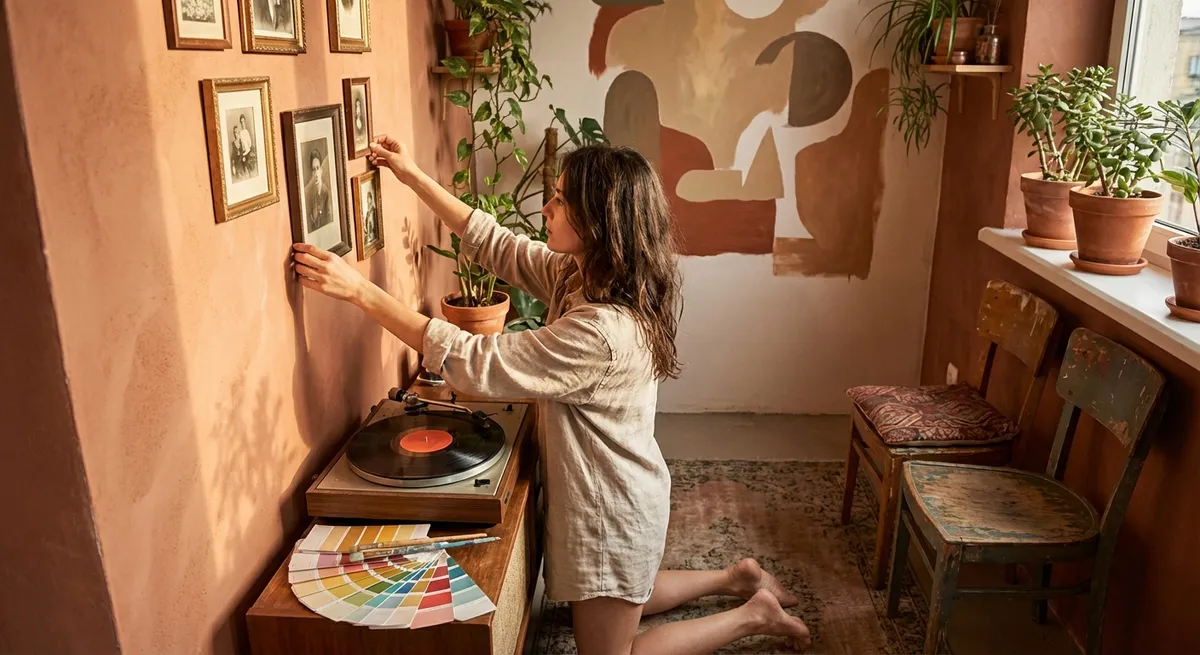
Instead of trying to turn the entire home into a sanctuary, a lot of people are creating micro-retreats: tiny, highly intentional corners where they can reset, even for five minutes. It’s less about square footage and more about how a spot makes you feel.
Look for underused areas—a window ledge, a corner of the bedroom, a landing at the top of the stairs. Add a chair or floor cushion, a soft throw, and a small surface for a candle, book, or cup of coffee. Good lighting is non-negotiable, whether that’s a small lamp, a candle, or natural light.
Decide what the retreat is for: morning journaling, quiet reading, phone-free scrolling, stretching. Style it around that function. Keep the color palette calm and limited, and avoid turning it into additional storage. This is your “no-dump zone”—a small, visual reminder that your home exists to support you, not just your to-do list.
Conclusion
The most interesting homes right now aren’t defined by one aesthetic; they’re defined by how they feel to live in. Hybrid rooms, layered texture, thoughtful lighting, intentional display, and tiny built-in retreats are all ways to make your space work harder while looking softer.
You don’t need a full renovation to get there. Shift a layout, swap a lamp, edit a shelf, claim a corner. Small, considered changes can move your home closer to the version of your life you’re actually living—and the one you’re quietly working toward.
Sources
- American Society of Interior Designers (ASID) – 2024 Trends Outlook - Insights on how people are using their homes, including multifunctional spaces and wellness-focused design
- Harvard Joint Center for Housing Studies – Housing Perspectives - Research-backed analysis on how lifestyle shifts are changing the way we live at home
- Architectural Digest – Lighting Design Basics - Practical guidance and inspiration for layering light in residential spaces
- IKEA – Life at Home Report - Global study on how people actually live in and feel about their homes today
- The New York Times – How to Declutter Your Home - Helpful framework for editing and simplifying surfaces and storage without losing personality
Key Takeaway
The most important thing to remember from this article is that this information can change how you think about Interior Design.