Smart homes aren’t just about voice commands and flashy gadgets anymore—they’re about creating a space that quietly understands you, supports your routines, and feels more like a lifestyle upgrade than a tech experiment. Think less “sci-fi movie,” more “this makes my Tuesday mornings way easier.”
Below are five innovative, real-world smart living ideas that modern homeowners are actually using—and loving.
1. The “Invisible Butler” Kitchen
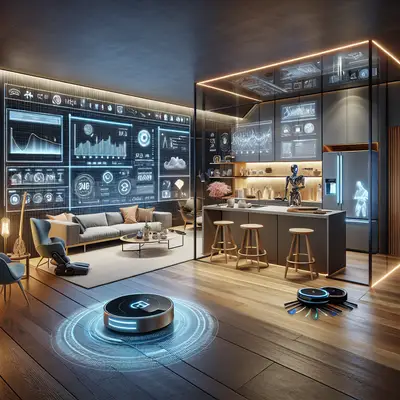
The most exciting smart kitchens don’t look like tech labs—they look like calm, intentional spaces where everything just happens a little smoother.
Imagine your kitchen lights shifting automatically from warm and dim during early coffee runs to bright and energizing when you’re cooking dinner. Your oven preheats from your phone on your commute home. A smart faucet dispenses a precise cup of water with a voice command. Your fridge doesn’t just tell you what’s inside; it helps you track expiration dates and reduce food waste.
Modern touches that feel elevated, not overdone:
- Smart induction cooktops that heat fast, cool quickly, and help prevent burns
- Discreet under-cabinet lighting linked to motion sensors for late-night snack runs
- Smart plugs on countertop appliances so one tap can shut everything off when you leave
The goal is a kitchen that’s responsive and intentional—where tech supports how you cook, host, and unwind, without shouting for attention.
2. Lighting That Follows Your Mood (and Your Day)
Lighting has quietly become one of the most powerful smart upgrades—because it changes how your home feels without changing how it looks.
Dynamic, human-centric lighting can:
- Mimic natural daylight patterns: cooler light in the morning to wake you up, warmer in the evening to help you wind down
- Shift automatically based on sunrise and sunset in your exact location
- Create “scenes” for reading, working, movie nights, or entertaining with a single tap or voice cue
- Dim bedside lamps
- Turn off living room lights
- Turn on a soft hallway light at 20% brightness
- Lock the front door and arm the security system
Layered lighting (overhead, wall, floor, accent) becomes even more luxe when it’s all connected. A “Goodnight” routine can:
Smart bulbs, switches, and dimmers can be mixed and matched so you don’t need to rewire your entire house in one go. Start with the rooms where you spend the most time—bedroom, living room, kitchen—and build from there.
3. A Home Office That Feels Designed Around You
Remote and hybrid work aren’t going anywhere, and the most livable smart homes are treating the home office as a long-term lifestyle feature, not a temporary fix.
A future-facing workspace can include:
- Motorized standing desks that remember your preferred sitting and standing heights
- Smart blinds that reduce glare automatically during certain hours
- Adjustable white noise or soundscapes for focus, controlled via app or voice
- A smart thermostat or smart vent in the office to fine-tune temps without freezing the rest of the house
Presence sensors can quietly do the rest:
Walk in, and the room brightens to your preferred level, your desk lamp turns on, and your monitor powers up. Step away for 15 minutes and everything eases into eco-mode.
The result feels less like “work invaded my home” and more like “my home is set up to support work—on my terms.”
4. Wellness-First Smart Home Habits
Wellness tech at home is moving beyond fitness trackers and into the actual environment you live in.
Consider weaving in smart features that support how you feel, not just what you do:
- Air quality monitors that track pollutants, humidity, and ventilation, and can trigger air purifiers or fans automatically
- Smart showers with preset temperature profiles so everyone in the household gets their ideal setting instantly
- Sleep-aware bedrooms with blackout smart shades, gentle wake-up lights that simulate sunrise, and thermostats that cool the room slightly at night
- A “Recover” scene that lowers lights, queues up calming music, and gently cools the room after a workout
- A “Wind Down” scene that limits bright overhead light, mutes notifications on certain devices, and plays ambient sounds or a favorite playlist
You can also build “wellness rituals” into your home’s automation:
It’s less about chasing performance metrics and more about designing a home that quietly nudges you toward rest, balance, and better habits.
5. Seamless Entry, Security, and Guest-Friendly Living
Security has gotten smarter—but the most livable systems focus on feeling safe without feeling watched.
Modern, guest-friendly entry setups often include:
- Smart locks that let you create one-time or time-limited access codes for dog walkers, cleaners, or guests
- Video doorbells that let you see and talk to visitors from anywhere, but with privacy settings that limit recording zones
- Garage and gate controls connected to your phone so deliveries or visitors can be managed remotely
- Set your door to auto-lock after a certain time each night
- Create a “Leaving Home” routine that locks doors, arms cameras, closes the garage, and turns off lights with one command
- Get alerts only for what you care about (packages, people, not every leaf that moves)
For day-to-day ease, you can:
Smart security becomes part of hospitality too: guests can receive a unique code, instructions via text, and even have lights turn on automatically when they arrive for the first time. Your home feels confident and composed—no spare keys or awkward handoffs required.
Conclusion
The smartest homes right now aren’t the ones with the most devices—they’re the ones where each detail feels intentional, personal, and surprisingly effortless.
Start where your life naturally happens: your kitchen, your lighting, your workspace, your bedroom, your entryway. Add one or two smart layers at a time, and pay attention to what genuinely makes your day feel smoother, calmer, or more supported.
That’s the real upgrade: a home that quietly keeps up with you, so you can stay focused on living.
Sources
- U.S. Department of Energy – Smart Home Technology - Overview of how smart home devices can improve energy efficiency and comfort
- Harvard T.H. Chan School of Public Health – Healthy Buildings and Indoor Air Quality - Research on how indoor environments and air quality impact wellness
- Mayo Clinic – Light and Your Health - Explanation of circadian rhythms and the health effects of light exposure
- Consumer Reports – Smart Lock Buying Guide - Independent guidance on choosing and using smart locks
- EPA – Guide to Air Cleaners in the Home - Official information on air purifiers and improving indoor air quality
Key Takeaway
The most important thing to remember from this article is that this information can change how you think about Smart Homes.