Sustainable living isn’t just about swapping plastic straws or buying the “eco” version of everything. For modern homeowners, it’s about crafting a space that looks good, feels calm, and quietly does better for the planet in the background. Think: lower bills, smarter rituals, and a home that supports your life instead of draining it. These five ideas are less about strict rules and more about building a lifestyle that feels slow, intentional, and surprisingly elevated.
Rethink the Daily Flow: Design Around Your Real Routines
Most homes are arranged around furniture, not behavior. Flip that. Start with how you actually move through a weekday, then shape your space to support that flow with less waste built in.
If mornings are chaotic, create a “launch zone” by the door: hooks for bags, a tray for keys, a basket for reusable totes and water bottles. When reusables are part of your path out, you’ll actually use them—and skip impulse coffee cups and plastic bags. In the kitchen, cluster what you reach for most (mugs, coffee, kettle, water filter) into a single “ritual corner” so you’re not darting around turning on extra lights and opening every cabinet at 6 a.m.
Look at your laundry flow too: a divided hamper (lights/darks/towels) saves water and energy by letting you run full, intentional loads instead of constant “emergency” washes. In the bathroom, a simple shower caddy with refillable bottles of shampoo and body wash cuts clutter and reduces packaging over time. When your home is designed for your actual life, living more sustainably stops feeling like a project and starts feeling like a natural side effect.
Turn Your Fridge Into a Food-Saving System (That Still Looks Chic)
Food waste is one of the biggest hidden climate drains at home, but your fridge can become a quiet sustainability tool without turning into a chaotic science project. Start visually: clear glass or recycled plastic containers instantly upgrade your shelves and make leftovers feel like curated options instead of sad mystery boxes.
Designate a “use-me-first” zone—one shelf or bin where slightly tired veggies, half-cut citrus, and open sauces live. Make it the first place you look before ordering takeout. A weekly “fridge reset” (10 minutes every Sunday) where you wipe shelves, group similar foods, and move older items forward has real impact: you’ll see what you already have, plan simpler meals, and avoid duplicate purchases.
You can push it a step further by building a few “default recipes” around what typically gets wasted in your home: stir-fries for limp veg, frittatas or fried rice for leftover grains and bits of cheese, blended soups for anything that’s about to turn. Store a small bin in the freezer for “stock scraps” (onion peels, herb stems, carrot tops) and simmer a homemade broth once it’s full. The goal isn’t perfection—it’s incremental, almost lazy-feeling changes that make throwing food away the exception, not the habit.
Style With Second-Life Pieces (Without Looking Vintage-Overload)
Sustainable design doesn’t have to read as “boho thrift store.” The new wave of second-life styling is about blending pre-loved pieces with clean, modern lines so your home feels curated, not cluttered.
Start with one statement item: a sculptural wood dining table, a mid-century credenza, or a vintage leather chair with good bones. Let that be the character piece, then layer in streamlined newer items (minimalist lighting, simple linen curtains, a low-profile sofa) to keep the overall look fresh and current. This high-low mix feels intentional and editorial—and happens to keep big items out of landfills.
Online resale platforms, local buy-nothing groups, and architectural salvage yards are goldmines for materials and fixtures: reclaimed wood for shelving, old doors reimagined as headboards, vintage hardware that instantly upgrades basic cabinets. When you do buy new, look for brands that share material transparency and repair options, so you’re choosing items designed to last more than a trend cycle. The bonus: your home ends up with a story, not just a shopping list.
Make “Hidden Efficiency” Your Home’s Quiet Superpower
Not every sustainable choice needs to be visible. Some of the most powerful upgrades live behind the scenes—and once they’re set up, you barely have to think about them.
Swapping to high-efficiency appliances, low-flow faucets, and WaterSense-labeled toilets is one layer. Another is tightening your home’s envelope: better insulation, weatherstripping, and double- or triple-glazed windows to reduce both heating and cooling needs. These changes don’t scream “eco,” but they show up on your utility bills and in your comfort levels.
You can also create micro-systems that automate good habits. Smart plugs that cut power to media consoles at night, motion-sensor lights in closets and pantries, and thermostats that adjust based on your actual routine all lower your consumption without adding mental load. Even small tweaks—like LED bulbs that match your preferred color temperature, or blinds that you actually like enough to close during peak heat—stack up over time. The aesthetic remains whatever you want; the sustainability is built into the bones.
Bring Nature Back In (For Mood, Not Just Aesthetics)
Indoor plants are everywhere on social feeds, but they can be more than a backdrop. Thoughtfully placed greenery can help you regulate light, buffer sound, and even shift how you feel in a space—while subtly supporting a lower-impact lifestyle.
Choose plants for function as much as looks: tall, leafy ones to soften harsh corners and block glare near windows; trailing plants to visually lower high shelves; hardy species (snake plants, pothos, ZZ plants) for lower-maintenance zones like hallways or guest rooms. If you cook often, a window-sill herb garden is both pretty and practical, keeping you from buying a plastic clamshell of parsley you’ll use once.
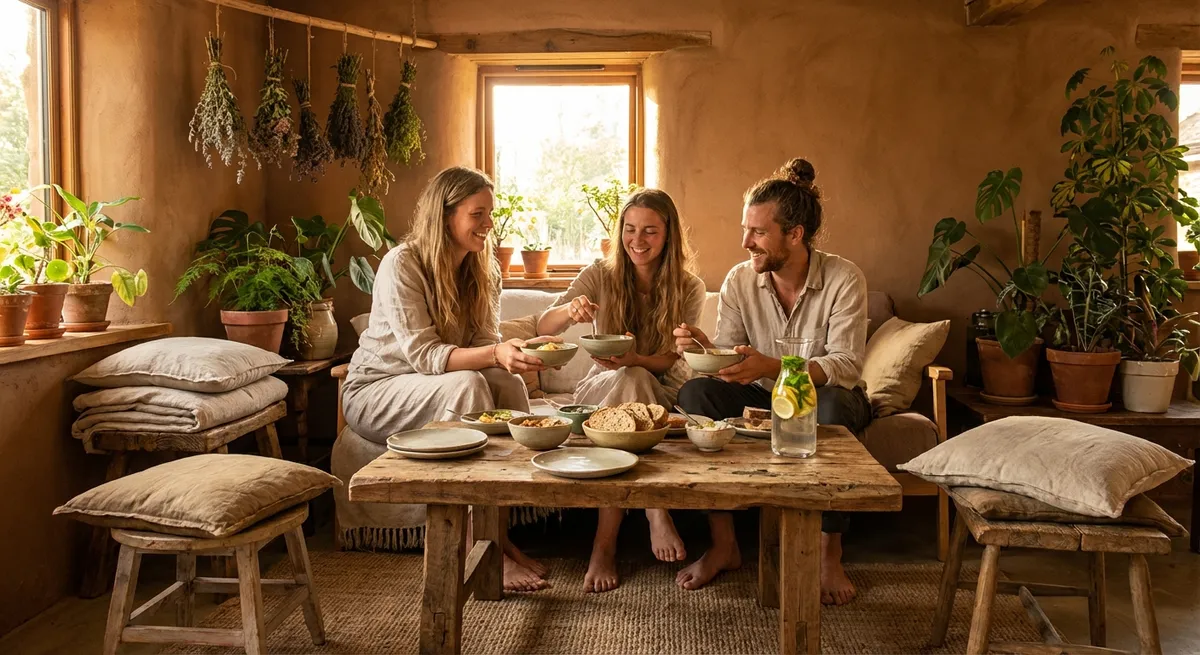
Pair plants with natural, tactile materials—ceramic pots, jute or wool rugs, linen cushions—to create a more grounded feel that naturally encourages slower, tech-light evenings. Bonus points if you add a compost setup for plant trimmings and kitchen scraps: a countertop bin or balcony-friendly system can transform “trash” into soil for your own green corner. The result: a home that doesn’t just look alive, but genuinely supports your wellbeing.
Conclusion
Sustainable living at home doesn’t have to feel like a full lifestyle overhaul or an aesthetic compromise. It’s about making small but intentional design choices that line up with how you actually live right now. When your routines are supported, your space is thoughtfully layered, and your home quietly runs more efficiently in the background, “eco-friendly” stops being something you chase—and becomes part of how your home simply works.
Sources
- U.S. Environmental Protection Agency – Reducing Wasted Food at Home - Data and strategies on cutting food waste and its environmental impact
- U.S. Department of Energy – Energy Saver Guide - Practical tips on home efficiency upgrades, appliances, and insulation
- WaterSense (EPA) – What Is WaterSense? - Overview of water-efficient fixtures and how they reduce household water use
- Harvard T.H. Chan School of Public Health – Food Waste - Research-backed perspective on why reducing food waste matters
- Royal Horticultural Society – Houseplants for Healthier Homes - Evidence-based look at the wellbeing benefits of indoor plants
Key Takeaway
The most important thing to remember from this article is that this information can change how you think about Sustainable Living.